Renewed tariff threats tied to Greenland, a pullback in big technology stocks and lingering geopolitical risks are driving volatility and caution across global equities. With several high-impact developments unfolding at once, investors are reassessing risk as a busy week of economic data approaches.
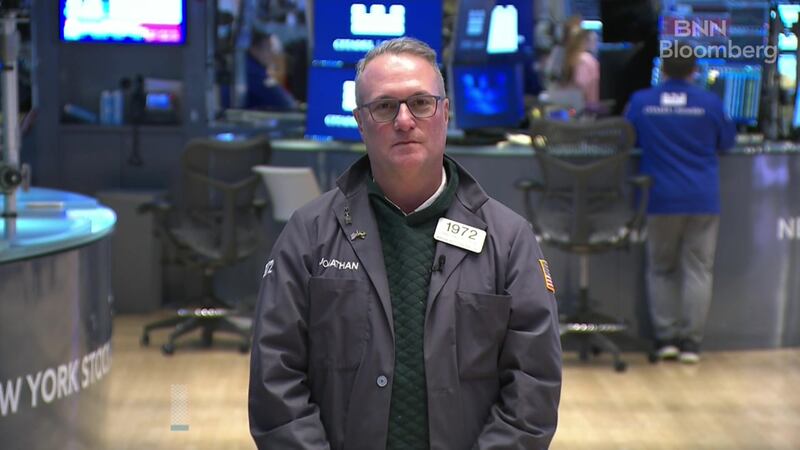
BNN Bloomberg spoke with Jonathan Corpina, senior managing partner at Meridian Equity Partners, about why tariff rhetoric, unresolved tensions with Iran, credit card rate caps and Federal Reserve politics are shaping short-term investor behaviour.
Key Takeaways
- Tariff threats linked to Greenland are exposing fragile investor sentiment and prompting short-term risk reduction.
- Large-cap technology stocks are leading the selloff, magnifying broader equity weakness.
- Geopolitical risks tied to Iran remain unresolved and could escalate quickly despite fading headlines.
- Proposed caps on U.S. credit card interest rates at 10 per cent create uncertainty for banks and consumers.
- A compressed week of GDP and inflation data is unlikely to alter expectations for a Federal Reserve pause.
Read the full transcript below:
ANDREW: Let’s get more on this selloff from Jonathan Corpina, senior managing partner at Meridian Equity Partners. Jonathan, thanks very much. Alarming headlines, of course. There are fears over the integrity of NATO here, with this faceoff between the Europeans and the U.S. What are you telling investors right now?
JONATHAN: Yeah, you know, it’s kind of an interesting risk-off trade that we’re seeing after this long weekend. As you mentioned, markets were closed yesterday. Comments coming out of Washington — President Trump is really digging his heels in the sand about his position on acquiring Greenland and the implications if countries in NATO don’t go along with this. We’re seeing pressure in the markets today because of exactly that.
There are other factors out there that can certainly move markets, but I think that’s the primary one right now. What this is showing us is how fragile markets are. I don’t think markets should be overreacting the way they are, but it shows how fragile things are. We’re trading close to highs in some indices, we’ve seen some pretty good movements in sectors, and investors are looking for reasons to take some money off the table. They’re using this as an excuse right now.
I wouldn’t expect this particular headline to drive markets for the rest of the week. There’s a lot of other things going on. A couple of other headlines have gone quiet — for example, conversations about invading Iran or any attacks on Iran got very quiet very quickly heading into the long weekend. We’ve also discussed the 10 per cent cap on credit card interest rates, with President Trump’s deadline today. How is that going to play out? That was a very big headline last week that no one is really talking about right now.
Between Iran and credit card companies, there are a few things that could come up. We’ll see how it plays out and what the impact is on markets.
ANDREW: Thousands are said to have been killed in Iran amid these protests, and I see the head of one of Japan’s huge shipping firms, Mitsui O.S.K., saying we can’t ignore the risk here, including potential disruption to traffic through the Strait of Hormuz.
JONATHAN: Yeah, clearly the geopolitical risks out there are alarming. On top of that, the way the global economy and global trade work, things can get disruptive. How does that impact companies, countries and individuals? It’s clearly something we’re keeping an eye on.
How this plays out and when it plays out will be interesting. Keep in mind, last week it was hot and heavy on Iran, and this weekend there were no headlines at all. Now we’ve shifted to Greenland. I don’t know if this is a way of distracting over here while something is going on over there — we’ll have to see how it plays out.
The uncertainty around so many things right now is causing investors to pull money out. I do think this is a bit of an overreaction, but maybe it’s needed to flush things out a little, wake people up and see whether money that’s been waiting on the sidelines starts to come back in as we see more discounted prices.
ANDREW: Meanwhile, a domestic U.S. story — Trump’s demand that credit card rates be capped at 10 per cent — apparently shook investors and bank stocks. What’s the latest there? We do hear it would be a tough move for Trump to make legislatively.
JONATHAN: Yeah, but that hasn’t stopped him before. I think he’s going to continue to power through. We’re still trying to work through the ripple effects. If you cap rates at 10 per cent, yes, that helps consumers, but do they use that to pay down balances, or do they draw more because rates are more attractive?
From the credit card and financial company point of view, they capture a large amount of fees from high interest rates, especially from creditors with lower credit scores. How does that impact the bottom line for credit card companies? You can argue both sides. I see how it helps consumers, but it doesn’t help credit card companies.
For President Trump to vocalize this and try to implement it quickly, I don’t know if it gets the traction he wants in the short term. We’ll see how it plays out. He did put a deadline on today, but he has a lot of other things on his plate. I don’t think this goes away quietly. Last week we had big bank CEOs on television pounding the table on the implications.
ANDREW: And finally, Treasury Secretary Scott Bessent is not happy that Fed chair Jay Powell will attend a Supreme Court hearing on the president’s attempt to dismiss a Fed governor. He says if you’re trying not to politicize the Fed, for the chair to be there is a real mistake. Though President Trump has been trying to politicize the Fed.
JONATHAN: Yeah, it seems like everyone is playing in the sandbox with the same rules now. The White House has been trying to pull the strings at the Fed for some time. We’ve seen comments made directly and indirectly about what the Fed should do.
The Fed has always said it will remain apolitical and data-dependent. This move by Powell might play into Trump’s hands. He could use this to say the Fed is being politicized, despite what it has claimed. There are a lot of pieces being moved on the chessboard right now.
ANDREW: Jonathan, before we let you go, how would you characterize the mood on Wall Street right now? Is there a feeling that maybe investors should step back from equities for a while?
JONATHAN: If I had to summarize it in one word, I’d say quiet. There’s a lot going on. Going back to Venezuela a few weeks ago, and what we’re seeing now, there are many things that could pivot markets quickly.
Wall Street feels quiet in the sense that people are waiting. There are serious implications and potentially historic measures being discussed. How this all plays out will be significant for the economy and security. We may be reading about this in history books one day.
We’re watching Davos, watching headlines from there with the time difference, and looking ahead to the Fed next week. All expectations are that the Fed will pause. I don’t think upcoming data will change that right now. We’re very much in a holding pattern.
ANDREW: Jonathan, thank you very much. I really appreciate it.
JONATHAN: Thank you. Have a great day.
ANDREW: Jonathan Corpina, senior managing partner at Meridian Equity Partners.
---
This BNN Bloomberg summary and transcript of the Jan. 20, 2026 interview with Johnatan Corpina are published with the assistance of AI. Original research, interview questions and added context was created by BNN Bloomberg journalists. An editor also reviewed this material before it was published to ensure its accuracy and adherence with BNN Bloomberg editorial policies and standards.

