Global equities are under renewed pressure as geopolitical tensions resurface and historical patterns suggest returns often moderate after extended rallies, raising concerns about volatility in the months ahead.
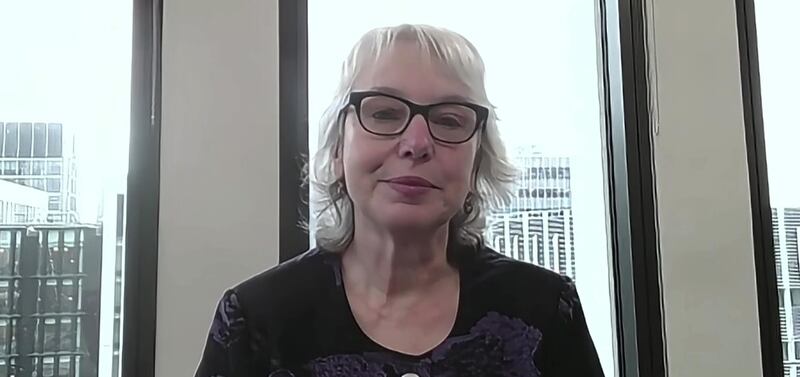
BNN Bloomberg spoke with Melissa Brown, managing director of investment decision research at SimCorp, about why high valuations, subdued trading volumes and trade uncertainty are shaping investor caution.
Key Takeaways
- History shows it is extremely rare for equities to post four strong years in a row, with returns typically falling below long-term averages after three consecutive gains.
- High valuations mean much of the good news on earnings and growth is already priced into stocks, limiting upside potential.
- Low trading volumes suggest investors remain uncertain, a dynamic that can amplify market swings and volatility.
- Markets have reacted harshly to earnings, even when results beat expectations, reflecting concern about future growth.
- Non-U.S. markets may have greater room to outperform after years of lagging returns, particularly if global trade patterns shift.
Read the full transcript below:
ANDREW: Hello there. Welcome to The Open here on BNN Bloomberg. We’ve just heard U.S. President Donald Trump speaking in Davos, Switzerland, doubling down on the U.S. claim on Greenland and threatening to impose new tariffs on any European countries that oppose the takeover, whether by sale of the territory or other means.
Our guest says that even if we ignore everything happening right now on the geopolitical front, history shows it is rare for equities to deliver four strong years in a row.
Joining us now is Melissa Brown, managing director of investment decision research at SimCorp. Melissa, thank you very much for joining us.
MELISSA: My pleasure.
ANDREW: And thank you for your patience. The president’s speech did run long. I’m not sure how much of it you were able to catch. Did anything jump out for you?
MELISSA: I caught a lot of it. Nothing really new jumped out to me. You know, still talk of tariffs and of Greenland, and maybe doing away with the military option. But I didn’t really hear anything new.
ANDREW: He is, for now, ruling out military action, which is obviously welcome news. Just to get back to the markets, perhaps we could look at how the S&P 500 is trading right now. You note that after three strong years for equities, a fourth might be a little much to hope for.
MELISSA: Yes. If we go back, we have 100 years of data on U.S. equities. It has been extremely rare — I think it’s happened one time — that we’ve had four strong years in a row. That occurred coming off some really bad periods, and after that the market was weak for quite a while.
A lot of good news is already discounted into stock prices. Valuations are high, earnings expectations are high, and that is probably already impounded into stock prices. So it’s not surprising to expect a weaker year. I’m not saying stocks would necessarily be down, but returns would likely be much lower than the average over that 100-year period.
ANDREW: I thought you raised an interesting point about trading volumes being relatively low right now, which can increase swings in volatility.
MELISSA: Yes. I haven’t looked through yesterday — I’m guessing volumes ticked up a bit — but trading volume in January has come down from prior peaks, even from what we saw in December, which is typically a low-volume month.
Some investors are sitting on their hands. They’re not quite sure what to do, so they’re not trading. When you get stock moves on lower volume, the magnitude of those moves tends to be bigger.
ANDREW: You’ve also said that even when earnings have been good, the market reaction hasn’t been particularly welcoming in some cases.
MELISSA: So far, fourth-quarter earnings reports are coming in quite strong, in some cases better than expected. But with valuations so high, the market likely wants to see earnings much better than expected to drive stock prices higher.
It has been a little unusual to see stocks getting punished whether earnings are good or bad.
ANDREW: Can you give us an idea of how investors should be thinking about positioning right now, or what kind of game plan makes sense?
MELISSA: At SimCorp, we’re not managing portfolios — we’re focused on risk management. But in this kind of environment, seeking safety, which many investors are doing right now, is probably not a bad choice.
That could mean sectors typically seen as lower volatility, or different types of stocks. If we look at the U.S. versus the rest of the world, the U.S. market, while it underperformed last year, has outperformed for a long period of time. Looking elsewhere for better gains this year is certainly a reasonable strategy.
ANDREW: And just to clarify, SimCorp also provides tools that help investors hedge against risk?
MELISSA: We do. We offer products that allow clients to put on effective hedges. We also offer an investment management platform and the ability to stress-test portfolios. If you think tariffs are going to come back in a big way, for example, you can test the impact on your portfolio today and see how you might want to reposition it.
ANDREW: We’ll leave it there. Melissa, thank you very much, and again, thanks for your patience while we waited for the president’s speech.
MELISSA: My pleasure.
ANDREW: Melissa Brown, managing director of investment decision research at SimCorp.
---
This BNN Bloomberg summary and transcript of the Jan. 21, 2026 interview with Melissa Brown are published with the assistance of AI. Original research, interview questions and added context was created by BNN Bloomberg journalists. An editor also reviewed this material before it was published to ensure its accuracy and adherence with BNN Bloomberg editorial policies and standards.

