Earnings season is set to pick up with major technology companies reporting next week, as investors weigh whether recent softness in the sector reflects a pause or a setup for renewed gains in 2026. Attention is also turning to select Canadian stocks tied to defence, resources and real estate as broader investment themes evolve.
BNN Bloomberg spoke with Jamie Murray, president of The Murray Wealth Group, about the shift in AI spending from model training to inference, the outlook for integrated tech platforms, and why certain Canadian stocks stand out amid rising Arctic investment, strong commodity prices and a stabilizing REIT landscape.
Key Takeaways
- Tech stocks have been flat to down in recent months as investors digest slower near-term demand, heavy capital spending and questions about the sustainability of AI investment.
- Integrated technology companies with exposure across infrastructure, platforms and applications are better positioned to benefit from rising AI inference, cloud usage and enterprise adoption in 2026.
- Heightened focus on Arctic security and logistics could support Canadian companies with exposure to northern surveillance, aviation and infrastructure spending.
- Strong base metal prices and well-funded miners are setting the stage for increased exploration activity, with tight labour and equipment availability potentially boosting margins.
- Healthcare-focused real estate offers defensive income and long-term demographic support, with balance sheet repair and renewed acquisitions improving the outlook for the sector.
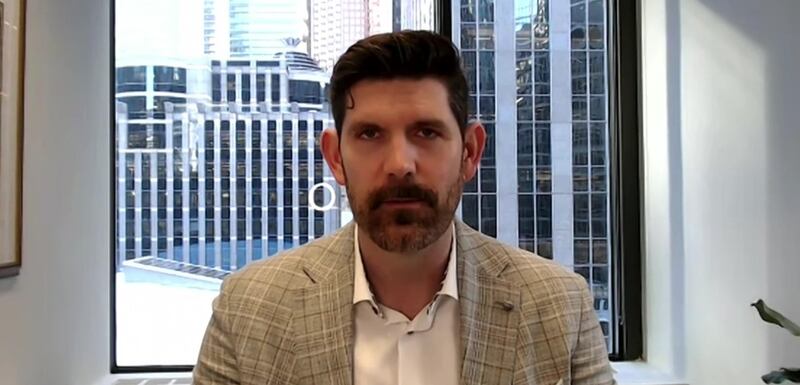
Read the full transcript below:
ANDREW: We’re set to get earnings reports from major technology companies, with Meta and Microsoft reporting next week. Let’s get some perspective on how to approach tech stocks this year from Jamie Murray, president of The Murray Wealth Group. Thanks very much for joining us, Jamie. What themes will you be watching for in these earnings reports?
JAMIE: We’re really moving from the early adoption phase of AI, which was chatbots, ChatGPT and a big focus on training and building models, into the inference phase. That’s running the models, potentially agentic commerce, and bringing AI into enterprise settings. Every time we see a new adoption, a new tool or a new use case, it creates additional demand for these technologies.
We also have new chips from Nvidia coming out this year that are much more powerful than what we saw last year, and they will be more cost-effective to run. We think that will drive continued growth in the inference market. That’s positive for the hyperscalers like Microsoft, Amazon and Alphabet, which own much of the infrastructure and application layers that allow corporations around the world to run these products across their organizations.
ANDREW: Do you think traditional software companies — I’m thinking of names like Constellation Software or Adobe — are still under pressure?
JAMIE: I think so. Microsoft has a lot of software embedded in its business, and we’re now learning the differences between various software companies. There’s a big distinction between pure SaaS-based desktop software used by employees across an organization and software like Uber that’s integrated into a physical marketplace and network. We’re seeing some bifurcation there, which makes this more of a stock-picker’s market within software.
I don’t believe software is dead, but there are real headwinds across different parts of the sector. Adobe is a good example. It has strong lock-in with its core developer and creative user base, including photographers and media buyers. But there’s also a lot of lower-end functionality — generating charts or images — that basic users can now do for free using tools like ChatGPT. That creates a modest headwind. I don’t think Adobe will be significantly disrupted over the long term, but it will likely continue to generate noise and headlines into 2026.
ANDREW: High-end users will still need Adobe tools, but for the rest of us, you can do some impressive things with ChatGPT or Copilot.
JAMIE: Exactly. We’re seeing something similar with Salesforce. Some companies use CRM software simply to store and organize client and prospect data. With chatbots and APIs, enterprises could replicate parts of that functionality in-house. But there’s another layer of Salesforce users who are deeply embedded, connected to multiple systems across an organization. That plumbing effect is very difficult for AI to disrupt in the short to medium term.
ANDREW: Let’s shift to Davos. You’ve said the back-and-forth over Greenland is another example of Donald Trump’s bark being worse than his bite.
JAMIE: Yes. We often have clients call and ask whether Trump’s latest comments are bad for markets or whether they should reduce U.S. exposure. Our view is that this doesn’t upend the last 60 years of global order. It is a very different tone from the U.S., and Washington is clearly applying pressure on NATO allies to move closer to U.S.-centric goals, often in unconventional and less diplomatic ways. That’s a notable change.
Ultimately, though, the U.S. wants Greenland secured as part of a broader Arctic defence line stretching from Europe to Alaska. That’s why we’re hearing Canada talk more about Arctic investment, without significant criticism from the U.S., and why the U.K.’s defence posture hasn’t drawn pushback either. Greenland is the focal point. The message appears to be: if Europe won’t secure it, the U.S. will. As we’ve seen, these situations tend to de-escalate, with Washington achieving much of what it wants. From Trump’s perspective, there’s little downside to applying pressure this way.
ANDREW: You’ve brought a few stock ideas. Let’s start with Exchange Income Fund, EIF. It’s one you own. What’s the appeal?
JAMIE: This is one of our largest holdings in our income fund. We like its diversified business model, but especially its northern Canada aviation assets. When you talk about Arctic security, including Greenland, that plays directly into Exchange Income’s strengths. The company already performs intelligence and surveillance work off the coast of Greenland under contract.
We expect increased Arctic activity in Canada as well, where Exchange dominates aviation north of Winnipeg and through Nunavut. That creates significant growth opportunities. The market is starting to recognize this, and the stock is beginning to re-rate from a manufacturing-style multiple toward a higher defence-related multiple. Many of these contracts are fixed margin, which limits risk and provides earnings visibility, assuming strong execution.
ANDREW: Major Drilling is another name you like. Copper and gold prices have been strong. Does that set it up well?
JAMIE: Absolutely. Copper and gold have both been very supportive. The stock has already moved higher, but when the mining cycle really accelerates, all the exploration capital raised in 2025 and the strong cash flow miners are generating now will eventually flow back into drilling and exploration. Before any mine is built, extensive drilling is required to define and optimize the resource.
We think Major Drilling has a strong three- to four-year outlook. Anecdotally, we’re hearing that by 2026 there could be shortages of drilling rigs and skilled labour. That’s positive for pricing power and margins. We think this company could see a very strong next 12 months.
ANDREW: Finally, Northwest Healthcare. You’re getting about a six per cent yield, and you say it’s your favourite REIT.
JAMIE: We think Northwest Healthcare is a compelling opportunity. The stock has started to move as the new management team improves communication and visibility. We’ve owned it for several years and followed the restructuring process, including asset sales to reduce debt. The balance sheet is now in good shape, and the company is issuing investment-grade debt.
It owns hospitals and healthcare properties, which are economically defensive. We recently met with management, and for the first time in several years the company is back in acquisition mode. As the market recognizes that growth has returned, we think Northwest Healthcare will attract more attention from real estate investors.
ANDREW: Jamie, we’ll leave it there. Thanks very much for joining us.
JAMIE: Thanks for having me.
ANDREW: Jamie Murray, president of The Murray Wealth Group.
---
This BNN Bloomberg summary and transcript of the Jan. 22, 2026 interview with Jamie Murray are published with the assistance of AI. Original research, interview questions and added context was created by BNN Bloomberg journalists. An editor also reviewed this material before it was published to ensure its accuracy and adherence with BNN Bloomberg editorial policies and standards.

