Investors are heading into a crucial stretch as attention turns to the U.S. Federal Reserve’s interest rate decision, a busy earnings calendar and signs of a broadening rally beyond mega-cap technology stocks. While economic data remains resilient, questions around inflation, policy direction and sector leadership continue to shape market sentiment.
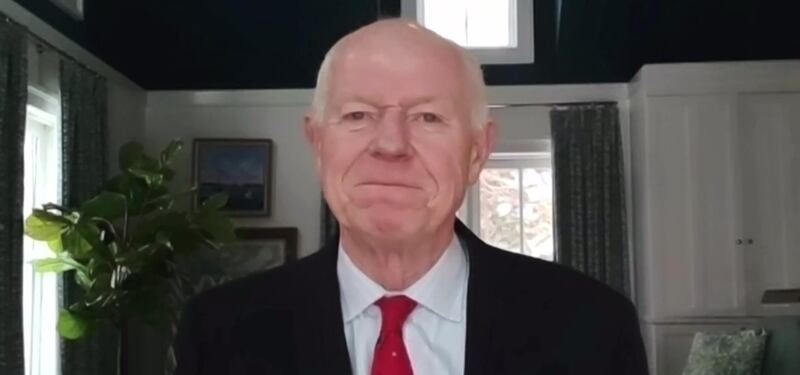
BNN Bloomberg spoke with David Dietze, chief investment strategist at Dietze Wealth Management Group, about expectations for the Fed, where investors may be rotating within equities, and how commodities, industrials and select dividend stocks could fit into portfolios.
Key Takeaways
- The U.S. Federal Reserve is widely expected to hold rates steady, shifting investor focus to chair Jerome Powell’s guidance on inflation and future policy direction.
- Earnings season remains a key driver for equities, with outlooks likely to matter more than headline results for industrial and technology companies.
- Portfolio positioning is gradually shifting away from mega-cap tech toward mid-caps, small caps and sectors that have lagged in recent years.
- Materials and commodities are drawing renewed interest as inflation hedges and as demand grows from AI infrastructure and energy transition projects.
- Select dividend-paying stocks in financials, consumer staples and fintech are attracting attention amid elevated yields and compressed valuations.
Read the full transcript below:
ANDREW: We’re expecting an interest rate decision from the Federal Reserve south of the border today. Let’s get more from David Dietze, chief investment strategist at Dietze Wealth Management Group. David, thanks very much for joining us.
DAVID: Andy, pleasure to be with you today.
ANDREW: What is your call? Do you think the Fed will cut?
DAVID: No, I don’t. I think policy is going to be sitting tight. There’s just a three per cent chance, according to federal funds futures, that there would be a change. I think what’s going to be a lot more interesting is the press conference afterward with Jerome Powell, because people are going to want to know what the outlook looks like and where policy is going down the road. Of course, he’s under tremendous pressure from the president, from the Trump administration, to lower interest rates.
But we just saw a very strong GDP report for Q3. We’ve seen inflation not moving back down toward that two per cent target. We’ve got the stock market at all-time highs, and some indicators of inflation, like precious metals and other commodities, are flashing warning signs as they hit all-time highs, even on an inflation-adjusted basis.
DAVID: So the Fed is finally halting the cuts because, as usual, the economy sends mixed signals — hardly surprising with a huge and complicated beast like the U.S. economy.
ANDREW: Yeah, absolutely. Of course, whatever he says may be overshadowed, because there are some rumours that President Trump could announce his pick to replace Jerome Powell this coming week. Whoever he selects, however, I think market participants can take comfort in the fact that it would likely be a more dovish approach than Jerome Powell is taking. And looser monetary policy, lower interest rates, is really manna from heaven for stocks, at least in the short term. That’s kind of a positive going forward.
ANDREW: Broadly, how are you playing things right now? Are you steering clear of some of the massive AI names, the so-called hyperscalers?
DAVID: I think it’s very appropriate to be rebalancing portfolios here. Take some profits in the big AI names, the mega-cap techs, and join the trend we’ve been seeing of a broadening market. Add money to mid-caps, add money to small caps, and add money to sectors that have been left behind a little bit, including health care, for example.
Overseas exposure also continues to look attractive. We’re seeing some weakness in the dollar, which helps create better value for U.S. investors putting money to work internationally.
ANDREW: There’s a lot of optimism around copper right now. Do you spend much time on mining stocks, and are you trying to own materials — lithium, copper?
DAVID: I think materials stocks make a lot of sense for a number of reasons. One is that the inflation genie hasn’t been put back in the bottle, and commodities as hard assets have historically been a good hedge against inflation.
Second, these materials are critically important for the buildout of data centres and the AI economy. They’re also important for the transition to greener energy production. Ultimately, as the economy strengthens and interest rates move lower, we’re going to need more energy and more materials across the board. So yes, I do think there’s a big push toward commodities and securing what we need.
ANDREW: We’re going to get earnings tomorrow from Boeing and GM, two iconic American industrial names. What are your thoughts?
DAVID: GM’s stock, in my view, hasn’t fully reflected the job Mary Barra is doing. There’s been a shift in strategy — less emphasis on EVs and more focus on hybrids — and with interest rates generally coming down and some easing in tariff tensions, I think General Motors can do well. I expect strong earnings, but as always, the outlook will matter most.
With Boeing, it’s a linchpin of the aviation economy and the country’s largest exporter. The company has worked through some very difficult chapters, and the question now is what comes next. There’s strong competition from Airbus and continued exposure to tariff disputes, but we’re still seeing meaningful aircraft orders coming in globally. Over the longer term, we remain optimistic on Boeing.
ANDREW: You have a couple of stock ideas, and we’re tight for time. F&G Annuities & Life — what attracts you there?
DAVID: It’s a bargain at about five times earnings, with a three-and-a-half per cent dividend and trading well below book value. The business itself is very solid, focused on fixed annuities and other low-risk insurance products.
Most of the shares had been owned by its parent, Fidelity National Life, which has recently been selling stock. That doubled the public float, and the market couldn’t absorb it, pushing shares down about 35 per cent over the past year. We don’t think that reflects the fundamentals, and we see it as an opportunity to buy a well-run company at an attractive price.
ANDREW: Kraft Heinz has struggled and is often cited as a mistake by Berkshire Hathaway. You still see value there?
DAVID: I do. About a quarter of the shares are owned by Berkshire Hathaway, and while the investment hasn’t worked out as planned, any talk of selling has weighed on the stock. That overhang has nothing to do with the company’s underlying operations.
You’re looking at a dividend yield near 6.8 per cent, less than 10 times free cash flow, and some of the most iconic food brands in the world. The company is also planning a breakup to unlock value. If you can take a longer-term view, I think consumer staples like this can do well once the uncertainty fades.
ANDREW: And finally, PayPal.
DAVID: PayPal is a leading fintech player trading at about 10 times earnings as investors debate how it fits into the future of e-commerce and AI-driven commerce. The company recently made a key acquisition that strengthens its ability to integrate with AI platforms and automate merchant services.
The stock is down about 30 per cent over the past year, but we think PayPal’s scale, brand and positioning leave it well placed to benefit as commerce continues to evolve.
ANDREW: David, thank you very much.
DAVID: Thank you.
ANDREW: David Dietze, chief investment strategist at Dietze Wealth Management Group.
---
This BNN Bloomberg summary and transcript of the Jan. 26, 2026 interview with David Dietze are published with the assistance of AI. Original research, interview questions and added context was created by BNN Bloomberg journalists. An editor also reviewed this material before it was published to ensure its accuracy and adherence with BNN Bloomberg editorial policies and standards.

