Gold prices are trading near record highs as geopolitical uncertainty and safe-haven demand push investors into precious metals. But the rapid rise in gold and silver is raising concerns that speculation may be overtaking fundamentals, increasing the risk of a correction.
BNN Bloomberg spoke with Tim Regan, managing director at Kingwest & Company, about why investors may be underestimating downside risks in materials, how speculative behaviour often marks turning points, and where he sees better opportunities in Canadian equities.
Key Takeaways
- Gold and silver’s rapid gains show classic signs of speculative excess, increasing the risk of a correction.
- Central bank buying has supported gold, but price moves of this magnitude are difficult to justify on fundamentals alone.
- Extreme investor behaviour, such as melting household silver, has historically marked turning points in commodity cycles.
- Financials remain attractive due to stronger earnings growth, higher returns on equity and more reasonable valuations.
- Selective exposure to copper can make sense, but broad materials exposure appears overextended.
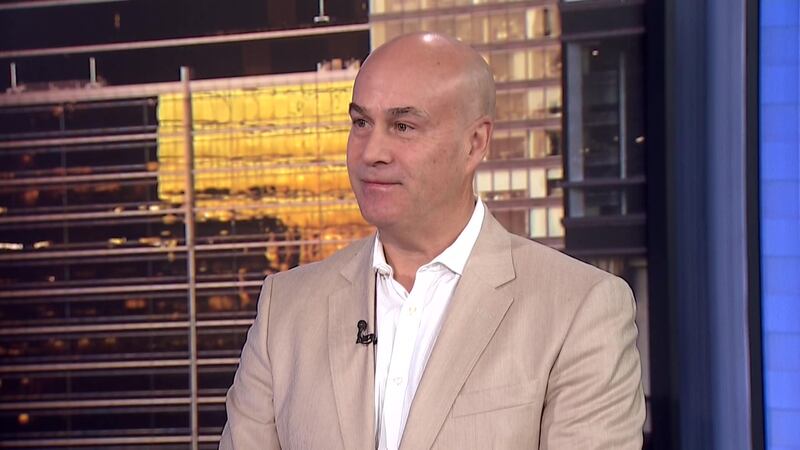
Read the full transcript below:
ANDREW: Gold is trading near US$5,100 an ounce, an extraordinary move after what’s been a parabolic run higher over the past few weeks. Our next guest says the market may be underestimating the risk of a correction in gold and other metals. We’re joined by Tim Regan, managing director at Kingwest & Company. Tim, great to have you with us.
TIM: Good to be here, Andy.
ANDREW: Maybe we can put up a 20-year chart for gold, because I feel like a broken record on this. It hit a record high in 2011 and then went basically nowhere for almost a decade. We’ve seen this movie before, to some extent.
TIM: Yes. When you look at gold today, you have to ask what really drove it last year. There was central bank buying — up roughly 25 per cent — largely from emerging markets such as Kazakhstan, Poland and Brazil. But there’s also a lot of speculation in the market right now, and gold seems to be at the forefront of that. We’ve seen bitcoin come down a bit, and we’ve seen this story again and again. Now people are talking about US$6,000 or US$7,000 gold. As Mark Twain once said, “It’s not what you don’t know, it’s what you know for sure that just ain’t so that gets you into trouble.” I don’t know if gold corrects tomorrow or next year, but I wouldn’t want to bet on it continuing to rise the way it did last year.
ANDREW: It’s not a normal commodity, though, because the vast bulk of gold ever produced has been sitting above ground since the pharaohs.
TIM: It’s been a speculative asset for 10,000 years, and that hasn’t changed.
ANDREW: Some historians argue gold and silver were fundamental drivers of the Roman Empire.
TIM: The Roman Empire, the Spanish going to the New World — it’s always been about gold and silver. Silver, in particular, has been incredible lately. I think the Hunt brothers would be rolling in their graves.
ANDREW: Let’s look at silver, because that chart is dramatic. RBC has highlighted companies with significant exposure to silver at these prices. Some of them started as silver producers before diversifying, but now roughly half their revenue is tied to silver.
TIM: What’s incredible is how long the price didn’t move. If you look at a multi-decade chart, and then suddenly you’re up about 250 per cent in a year. I’ve even heard of people going through their parents’ silverware drawers to see if they can melt it down. I’m not joking.
ANDREW: Historically, that kind of behaviour has marked peaks.
TIM: Exactly. It’s been an incredible run, but when you talk about parabolic arcs, I’ve rarely seen anything this dramatic.
ANDREW: You almost need logarithmic charts just to make sense of the move.
TIM: Absolutely. These commodities do have industrial uses, and central banks are moving away from the U.S. dollar and into gold. But moves of this magnitude don’t make a lot of fundamental sense.
ANDREW: What about crypto? I joke that it’s criminals’ and money launderers’ best friend, which I know the industry doesn’t love hearing. Is that trade losing momentum?
TIM: I don’t know. You hear about money laundering, terrorism financing and arms deals — a lot of that exists in the world. But crypto continues to survive and attract capital.
ANDREW: How are you positioning in Canadian stocks right now? Is there a group you think is being undervalued?
TIM: We still like financials. We have a significant weighting there. We look for faster earnings growth, higher returns on equity and cheaper valuations. That kind of portfolio tends to be more resilient in speculative environments, and over time it comes through.
ANDREW: You’ve said investors should be wary of a correction in metals, yet Lundin Mining stands out for you.
TIM: We bought a small position, and it’s done well. The thesis was really about copper coming on stream in the future and how cheap the stock had become. It’s the only materials stock we own today. We’re not talking out of both sides of our mouth — we want stocks that go up, but even with Lundin we’re asking how much more upside is left over the next six months.
ANDREW: You’re referring to their large copper project.
TIM: Yes, and it’s still years away. But earlier in the year the stock was very depressed, and it’s had a strong run since then. It’s been a good investment for us.
ANDREW: You also like Amrize, AMRZ, in New York. What do they do?
TIM: Amrize is essentially the former Lafarge North America. Lafarge was acquired by Holcim, and the North American assets were later spun out. The company focuses on aggregates and also has a roofing business. It’s about a US$30-billion company. We like it because infrastructure growth requires aggregates, and the stock trades cheaply because of how it was spun out. The former Holcim CEO actually left, invested his own money in Amrize and now runs it. We like management teams with real skin in the game.
ANDREW: Tim, great to have you with us. Thanks very much.
TIM: Thank you.
ANDREW: Tim Regan, managing director at Kingwest & Company.
---
This BNN Bloomberg summary and transcript of the Jan. 27, 2026 interview with Tim Regan are published with the assistance of AI. Original research, interview questions and added context was created by BNN Bloomberg journalists. An editor also reviewed this material before it was published to ensure its accuracy and adherence with BNN Bloomberg editorial policies and standards.

