U.S. stocks climbed to new highs, with the S&P 500 briefly touching 7,000 as investors remained focused on artificial intelligence and earnings from the largest technology companies. Confidence in AI-driven growth continues to support equity markets, even as questions persist around spending, profitability and valuations.
BNN Bloomberg spoke with Neela White, senior portfolio manager at Blue Wing Advisory Group, Raymond James, about what is sustaining the rally, how investors are evaluating big tech results and why long-term demographic trends are shaping portfolio positioning beyond near-term economic cycles.
Key Takeaways
- The S&P 500’s move to the 7,000 level underscores continued investor confidence in artificial intelligence as a core driver of equity performance.
- Technology earnings remain a key test for markets, particularly whether heavy AI and data centre spending is translating into sustainable profitability.
- Artificial intelligence is increasingly viewed as a broad-based growth catalyst, supporting sectors beyond technology, including health care.
- Expectations around monetary policy continue to influence sentiment, with easier financial conditions seen as supportive for growth-oriented stocks.
- Aging populations represent a durable, non-cyclical investment theme driving demand for medical devices, pharmaceuticals and long-term care services.
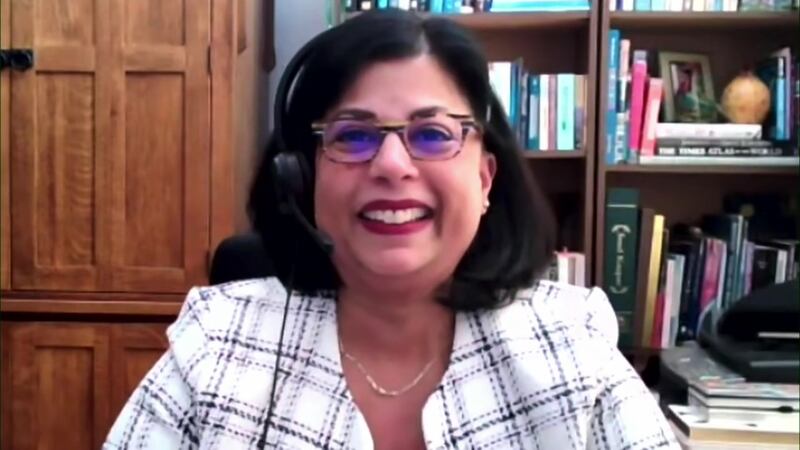
Read the full transcript below:
ROGER: Joining us to talk more about this is Neela White, senior portfolio manager at Blue Wing Advisory Group, Raymond James. Neela, thank you very much for joining us.
NEELA: Thanks for having me today.
ROGER: Let’s talk about 7,000. It’s kind of a magical number. We went above it briefly, then pulled back. What are your thoughts on that move and the pullback?
NEELA: When I look at what happened this morning and the small flattening or pullback we’re seeing, I think the market is still being driven by strong confidence in the AI theme. We’re also starting to see how AI from the Magnificent Seven is being distributed and used in other core industries and sectors, with health care being one of them. On the U.S. side, investors are also looking for language from the Fed when it announces at two o’clock that could suggest interest rate cuts later in the year, even if there isn’t one today.
ROGER: There has also been talk of 8,000 by the end of the year if we do see rate cuts.
NEELA: I wish I could prognosticate that. This is one of those periods where today is one thing and tomorrow’s announcement could be something else, and the market momentum shifts accordingly. It feels like a bit of whiplash, and it can be mind-boggling.
ROGER: If we do see rate cuts — most people are predicting two or three this year — is that already baked in, or could it still spur markets?
NEELA: It could still spur the market. From our perspective, there have been no cuts so far, and there may not be any until later in the year. If cuts do come, that could encourage investors, particularly as prices move higher and fear of missing out brings money back into the market, pushing it further.
ROGER: Today feels like one of those waiting days — waiting for the Fed, then waiting for earnings from Meta, Microsoft and Tesla. Meta and Microsoft seem to be the big focus.
NEELA: Yes, markets have been slightly down for much of the morning. When we look at earnings later today, investors will be listening closely to the language and whether all the money that’s been spent on AI, data centre buildouts and related infrastructure is being reflected in profit numbers. It’s a wait-and-see moment. Companies are talking about how 2025 ended and what they see for the rest of 2026. It’s early days, but there’s a lot going on. The key question is whether higher spending actually translates into growth and profitability.
ROGER: Are you looking for the same thing from all of these companies, or different signals from Tesla, Meta and Microsoft?
NEELA: It’s a bit of both. If we include Apple in that group, for example, it has delayed updates to Siri and has been slower to roll out AI features compared with competitors like Google’s Gemini or ChatGPT-based tools. That slower pace could be a negative, but it also means Apple hasn’t spent as aggressively as others. Microsoft remains a company I like fundamentally, but after the massive spending on data centres, investors are now asking how that spending shows up in profitability. There’s a common theme around how spending reflects in results, but each company has its own nuance depending on its business and sector.
ROGER: Let’s turn to some stock ideas. First up, Stryker. What do you like there?
NEELA: Knees and hips.
ROGER: I know those well.
NEELA: When I look at investments tied to the aging demographic, I see a structural theme that’s in place for decades. These companies can benefit regardless of short-term economic conditions. Stryker is a global leader in hip and knee replacements, and what makes it unique is its Mako SmartRobotics platform — a robotic arm controlled by a surgeon. It’s being adopted in orthopaedic centres, hospitals and teaching hospitals, creating a strong global tailwind.
ROGER: Next up, AbbVie, which focuses on chronic diseases like arthritis.
NEELA: Supporting the aging demographic is a core theme for me. AbbVie targets chronic conditions such as arthritis, cancer and degenerative eye diseases, which unfortunately become more prevalent as populations age. One of its major immunology drugs, Humira, has come off patent, but the company has replaced it with Rinvoq, which is patented until 2037. That provides longer-term revenue visibility and pricing protection.
ROGER: Finally, let’s touch on The Ensign Group.
NEELA: Ensign focuses on post-acute care and skilled nursing. When we look at the 80-plus age cohort across North America, that population is growing rapidly. Demand for these services is increasing, while skilled labour supply is more constrained. That combination supports pricing power. When you look at these themes together, it comes down to medical necessity — demand that is largely independent of broader economic conditions.
ROGER: Neela, thanks very much for joining us.
NEELA: Thank you for having me.
---
This BNN Bloomberg summary and transcript of the Jan. 28, 2026 interview with Neela White are published with the assistance of AI. Original research, interview questions and added context was created by BNN Bloomberg journalists. An editor also reviewed this material before it was published to ensure its accuracy and adherence with BNN Bloomberg editorial policies and standards.

