Equity markets have surged sharply from last spring’s lows, supported by strong earnings and heavy capital spending, but valuations are becoming harder to justify after a powerful rally. With volatility picking up, investors may need to reassess near-term risk while staying focused on longer-term growth drivers.
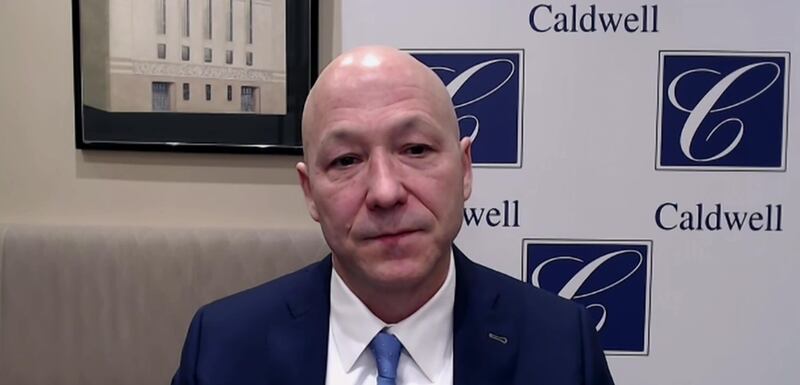
BNN Bloomberg spoke with Denis Taillefer, senior portfolio manager at Caldwell Investment Management Ltd., about why he is becoming more cautious in the near term, even as earnings growth, capital spending and structural demand trends continue to support markets over a longer horizon.
Key Takeaways
- Major equity indexes have climbed roughly 40 per cent from April lows, pushing valuations deeper into the fourth year of the bull market.
- Earnings results remain supportive, with strong margins and double-digit growth, but market leadership is narrowing.
- Interest rate risks tied to Federal Reserve balance-sheet policy could limit further valuation expansion.
- Longer-term return expectations are more modest, with high single-digit gains anticipated as markets mature.
- As volatility increases, investors are being rewarded for stock selection rather than broad market exposure.
Read the full transcript below:
ANDREW: Our guest says investors may need to become more cautious in the near term. We’re joined by Denis Taillefer, senior portfolio manager at Caldwell Investment Management Ltd. Denis, thanks very much for being here. You’re a little wary of valuations right now?
DENIS: Well, yes. The market has done very, very well. If you look at where we are from the April lows, the market is up about 40 per cent, and valuations are a little stretched here. We’re now in the fourth year of a bull market, following three years of very strong returns. So we do think things may be a little ahead of themselves.
We still have a positive view for the year overall, but given how strong the start has been, some parts of the market look frothy in the near term. Precious metals are a good example. They had significant runs earlier this year and became very overbought. We’ve since seen a meaningful pullback, but year to date, gold is still up about eight per cent and silver close to 10 per cent.
So overall, we remain constructive for the year, but we’re seeing more volatility and believe some areas of the market were getting a little too frothy in the near term.
ANDREW: Give us a reason to continue buying stocks right now.
DENIS: A lot of the same arguments we were making in 2025 still apply. Capital spending remains very strong, especially in the U.S., but globally as well, and much of that is tied to the AI theme. We still see that as a powerful driver.
We also think there are benefits coming from deregulation in North America and improved tax policy in the U.S. We’re hopeful to see some progress on that front in Canada as well. Those are all tailwinds that should support equities.
That said, valuations are stretched, and interest rate risks may be more balanced or even skewed to the upside. With the appointment of a new Federal Reserve chair, Christopher Waller has historically been more hawkish, which could present a headwind. As a result, multiple expansion may be more challenged, but we still see solid support for earnings and growth given the broader backdrop.
ANDREW: One of the big issues with Waller has been his view on reducing the size of the Federal Reserve’s balance sheet.
DENIS: That has certainly been his position. He was never a big supporter of quantitative easing, particularly QE2 and QE3. If he follows through on that approach, it would likely push longer-term interest rates higher, which would again be a headwind for valuation multiples.
It’s still early, but over the next few months we should get more clarity on where he stands today on the balance sheet. From there, markets will begin to price in expectations on a forward-looking basis.
ANDREW: You’ve highlighted a couple of stocks you favour, starting with CAE, particularly given increased global defence spending.
DENIS: On the defence side, we’re seeing significant growth in global defence spending. What we like about CAE is that it’s largely platform-agnostic. Regardless of which aircraft platforms countries choose, CAE can train pilots across nearly all of them.
That positions the company very well to benefit from increased spending. We also like the defence business because while revenue has been growing over the past seven or eight years, profitability had been under pressure. That’s now improving. Over the past few quarters, margins have been moving higher as the company works through lower-margin contracts and shifts to a higher-margin backlog.
Between rising demand and improving margins, we really like the defence side of the business.
ANDREW: Another name you’ve mentioned is Hammond Power Solutions, with electrification and data centres driving demand.
DENIS: Data centres are the dominant driver, but there are other tailwinds as well. Hammond Power Solutions produces dry-type transformers, which are critical for stepping down high-voltage electricity to power data centres, hospitals and industrial facilities.
This is very much a “picks and shovels” play on AI-related capital spending. Transformers have become a bottleneck in the supply chain, which gives the company strong pricing power. Despite higher tariffs and commodity costs, Hammond has been able to pass those costs through because demand is so strong.
They’ve also expanded manufacturing capacity in Mexico. As that new capacity ramps up over the next few years, we expect margins to improve. Given the strength of demand, we believe the company will likely need to continue investing in additional capacity.
ANDREW: And finally, Extendicare, which recently closed a large home health-care acquisition.
DENIS: Home health care is becoming a much larger part of the business, and we really like that segment. It’s supported by government funding, particularly in Ontario. Two years ago, the province increased funding by $2 billion over three years, followed by another $1 billion commitment in 2025.
There is a significant shortage of long-term care beds. Ontario alone is short roughly 48,000 beds today and will need an additional 200,000 over the coming years. Investing in home health care is a faster and more cost-effective way to address that pressure.
Home care costs roughly $100 to $200 per day, compared with about $300 per day for long-term care facilities. It also helps relieve pressure on hospitals by allowing seniors with chronic needs to receive care at home. The recent acquisition expanded Extendicare’s geographic footprint and strengthens its position in that market.
ANDREW: Denis, thanks very much for your time.
DENIS: Thanks for having me.
ANDREW: Denis Taillefer is senior portfolio manager at Caldwell Investment Management Ltd.
---
This BNN Bloomberg summary and transcript of the Feb. 2, 2026 interview with Denis Taillefer are published with the assistance of AI. Original research, interview questions and added context was created by BNN Bloomberg journalists. An editor also reviewed this material before it was published to ensure its accuracy and adherence with BNN Bloomberg editorial policies and standards.

