Gold and silver are stabilizing after a sharp, technically driven selloff that followed a rapid run-up, with recent price action highlighting the role of speculative positioning and algorithmic trading.
BNN Bloomberg spoke with Jake Hanley, chief growth officer and director of investments at Teucrium, about leveraged ETF activity, risks tied to short-term speculation, and why copper’s supply-demand dynamics stand out despite near-term volatility.
Key Takeaways
- The recent selloff in gold and silver was largely technical, driven by speculative positioning and algorithmic trading rather than a breakdown in fundamentals.
- Leveraged precious metals ETFs amplified volatility, creating outsized losses for investors not actively managing short-term exposure.
- Gold continues to be supported by central bank and emerging market demand amid geopolitical uncertainty and reserve diversification.
- Copper fundamentals remain the most compelling, with a structural supply deficit and rising demand from AI infrastructure and data centre buildouts.
- Long-term electrification trends, including electric vehicles and grid upgrades, are increasing metal intensity even as global growth risks persist.
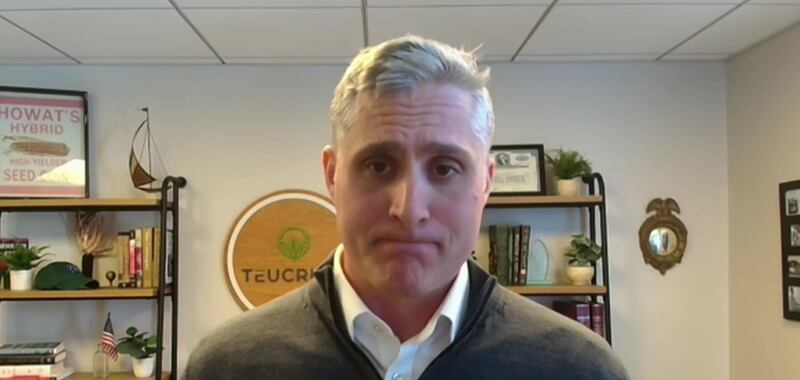
Read the full transcript below:
ANDREW: Let’s take another look at gold and silver. We saw signs of both regaining some momentum today, but there was a brutal selloff at the end of last week, and prices remain well below the record highs they hit. Let’s get more now from Jake Hanley, chief growth officer and director of investments at Teucrium. Thanks very much for joining us.
JAKE: Thanks for having me, Andrew.
ANDREW: Just to clear the decks here, you’re well known for your exposure to commodities — particularly agriculture — but you don’t actually have a gold or silver ETF, correct?
JAKE: That’s right. And actually, we don’t have a copper ETF either.
ANDREW: I’m sorry.
JAKE: No, that’s quite all right. I am pretty bullish on copper, so I understand the confusion. We’re primarily focused on agriculture — corn, wheat, soybeans and sugar. That said, we do publish a commodities model portfolio, which includes metals, and we make that available to anyone who would like to receive it. So we follow these markets very closely.
ANDREW: Right, of course — the soybean fund, corn fund, sugar fund and the broader agriculture fund. For some reason I thought you had a copper product. In any case, what have we learned about the gold and silver markets over the past few weeks?
JAKE: For anyone who started watching these markets recently, it’s been a crash course in speculation and volatility. What we’ve clearly seen, especially in silver, is that the crowd got ahead of itself. Prices moved well beyond what fundamentals could justify. There’s an old saying that prices will keep going up until they don’t — and when they stop, they can reverse quickly.
The selloff we saw was large, and some have described it as disorderly. I would argue that while the magnitude was significant, it was relatively orderly. Behind the scenes, a lot of structural risk-management programs kicked in, allowing institutional traders to cover positions and avoid broader contagion. Importantly, this selloff was largely contained within gold and silver. It didn’t meaningfully spill over into equities and only marginally affected copper. Given the size of the move, I was encouraged that it didn’t bleed into broader markets.
ANDREW: The Wall Street Journal has pointed out that it’s relatively easy for retail investors to speculate in gold and silver, particularly through ETFs. We saw leveraged gold and silver ETFs — such as UGL and AGQ — post massive turnover before plunging as much as 60 per cent in one case on Friday.
JAKE: That’s right, and investors need to be very careful. It’s critical to understand the risks, especially with leveraged products. Many of them track daily performance rather than longer periods, so unless you’re actively day trading, your experience may be far worse than expected.
I’ve been looking closely at the flows, and interestingly, it appears that a leveraged silver ETF posted record trading volume during Friday’s selloff. Based on the tape, it looks like some of that activity reflected buying, as the fund saw inflows following the decline.
ANDREW: You touched on the broader narrative here — that speculators played a major role in driving gold and silver higher. The Wall Street Journal also argues that markets can move quickly from one “shiny object” to the next.
JAKE: That’s true, but I would stress that there is still a fundamental case for silver, for gold and for copper. Speculators can certainly amplify volatility, as we’ve seen, but the underlying supply-and-demand story remains intact. It would be a mistake to ignore the longer-term trends developing in these markets.
If you’re trading purely on momentum, you’re going to be in and out frequently, and that creates volatility. But if you zoom out — look at longer-term charts or focus on fundamental dynamics — it’s hard not to be constructive over the long term.
There are risks, of course. Some have suggested that speculation around Kevin Warsh potentially becoming Fed chair helped trigger the selling, but the impact of that remains to be determined. Global GDP growth is another risk — a slowdown could weigh on inflation expectations and copper demand. Even the AI buildout could cool, which would reduce metal demand. But if your base case is global growth continuing around three per cent and geopolitical uncertainty persisting, then assets like gold and copper should remain well supported.
ANDREW: There’s the old cliché that an ounce of gold buys you a decent men’s suit. At US$5,000, that’s a pretty good suit. Maybe a little flashy.
JAKE: You look very dapper, Andrew. These days I stick to quarter-zip sweaters — I don’t have a 5,001st suit.
ANDREW: Fair enough. Thanks very much, Jake. I really appreciate it. That’s Jake Hanley, chief growth officer and director of investments at Teucrium.
---
This BNN Bloomberg summary and transcript of the Feb. 3, 2026 interview with Jake Hanley are published with the assistance of AI. Original research, interview questions and added context was created by BNN Bloomberg journalists. An editor also reviewed this material before it was published to ensure its accuracy and adherence with BNN Bloomberg editorial policies and standards.

