Investors are digesting a fresh round of corporate earnings, with Ford posting its first quarterly miss since 2024 and Mattel shares tumbling after a weak profit outlook. Ride-hailing company Lyft also disappointed, while debate grows over lofty artificial intelligence spending plans.
BNN Bloomberg spoke with David Sekera, chief U.S. market strategist at Morningstar, who said U.S. equities are trading at a modest discount to fair value as investors brace for volatility and weigh AI upside against value-oriented protection.
Key Takeaways
- Ford’s fair value remains $16 per share despite its largest earnings miss in four years, as tariff pressures and softer U.S. auto sales offset cost controls and stronger EBIT guidance.
- Lyft’s fair value was cut to $15 from $18 after weaker-than-expected growth and declining engagement relative to competitors.
- Mattel shares fell more than 25 per cent pre-market after issuing a weak 2026 outlook, though longer-term margin recovery is expected as digital gaming expands.
- U.S. auto sales are projected to decline to between 15.8 million and 16 million units this year from 16.2 million previously.
- U.S. stocks are trading at roughly a three to five per cent discount to fair value, supporting a balanced portfolio approach that pairs AI leaders with value stocks to manage volatility.
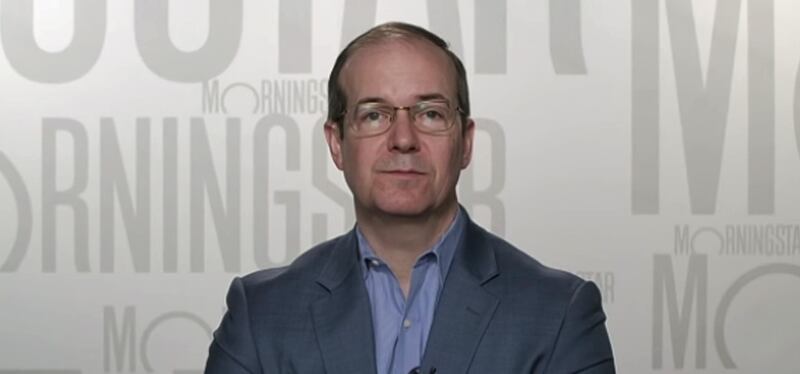
Read the full transcript below:
ANDREW: Investors are looking over a slew of U.S. earnings today. Ford reported a miss but pointed to improvement in 2026, and Mattel shares came under pressure after issuing a disappointing profit forecast. We’re joined by David Sekera, chief U.S. market strategist at Morningstar. David, thanks very much for joining us. Let’s take a look at Ford stock. Anything interesting for you in these results?
DAVID: Not really. First, I do have to admit my bias toward Ford. I’m certainly positively inclined to the company. My household — I grew up with a 1966 Ford Mustang convertible. But as far as the stock goes, I have no interest. Our fair value is unchanged at $16 a share. That puts it in the three-star range, meaning it’s in the range we consider fairly valued. They are in the midst of their turnaround. They’re doing a very good job on cost controls. That allowed them to increase their EBIT guidance for the year. But we still see a lot of pricing headwinds ahead. They still need to push through some of the tariff increases they’ve had to absorb over the past year. Overall, when we look at the U.S. auto industry, we’re looking for a decrease in auto sales this year. Our analyst is calling for a range of 15.8 million to 16 million units. That’s down from 16.2 million. As much as I like Ford, I just don’t have an interest in the stock. I think there are further headwinds ahead that the U.S. auto industry needs to get through this year.
ANDREW: Lyft — you’re not impressed with the company right now. You say it’s losing ground to rivals.
DAVID: Exactly. In fact, we just lowered our fair value to $15 a share from $18 after earnings. When I exclude some of the one-time items in the earnings release, growth was definitely below our expectations. We see them negatively diverging from competitors on both engagement and the number of rides. That was really the reason we cut our fair value. We think there are competitive disadvantages relative to Uber. It’s not a stock I have much interest in at this point either.
ANDREW: What about Mattel? That stock got hammered in the pre-market.
DAVID: That’s the understatement of the morning. Last I saw, it was down more than 25 per cent. Our fair value coming into the earnings report was $25 a share. Our analyst noted she plans on lowering our fair value by a mid-single-digit percentage. Admittedly, it was a very tough holiday season. But we think the market is overreacting to the downside. We think the selloff has gone too far. We still like the stock over the longer term. We think operating margins will be able to improve and move back toward historically normalized levels, though not to where they’ve been in the past. Over the long term, we’re looking for an average operating margin of 13.5 per cent over the next decade. Historically, those were in the mid-teens over the past 10 to 15 years. So we don’t think margins will return to prior peaks, but there is still upside from here. Probably 10 to 11 per cent operating margin this year, with another couple of hundred basis points to come. It’s going to take some time for the company to prove itself out. But overall, we still think it has some of the most important brands in the U.S. toy market.
ANDREW: They are investing in video games — online video games — and have released four games based on established intellectual property, including the UNO card game.
DAVID: That’s also a favourite in the Sekera household with the kids. As they build out their digital games business, that should help improve their mix over time. Digital games carry much higher operating margins than some of their legacy brands like Hot Wheels and Barbie. That’s part of why we expect margins to move higher over time. They were under a lot of pressure during a very tough holiday season in the United States. If you look at U.S. retail sales, the latest reading was flat, which was well below what our economics team had been expecting for the holiday season.
ANDREW: Apparently Mattel is being cautious. They’ll only go in for massive promotions once they feel they have a surefire hit on their hands.
DAVID: When you look at operating margins, it’s a combination of promotions and tariffs this year. Tariffs are one of those things that, over the longer term, probably even out. Promotional activity was likely higher than what we had modeled for the fourth quarter last year. That should start normalizing over time as well.
ANDREW: Broadly on the market, remind us of your take on the S&P 500 as a whole in record territory. Do you get a feeling there’s too much euphoria?
DAVID: I don’t think there’s too much euphoria overall. When I look at our valuations across the board, the market is probably trading at about a three to five per cent discount to our fair values. We use a bottom-up view, with intrinsic valuations on more than 700 U.S.-listed companies. It’s trading at a bit of a discount — not enough for me to say you should be overweight equities — but enough to remain market weight. I expect we’ll see a lot of volatility this year. We only had one bout of volatility in early 2025 when markets sold off about 20 per cent and then roared back. I think we’ll see more choppiness this year. I like a barbell approach to portfolios. Retain that AI upside, but focus on companies at the forefront of artificial intelligence technology — the Nvidias and Broadcoms of the world. I would steer clear of some of the commodity-style hardware names that have soared, like Micron and SanDisk. As supply comes on to meet demand, we could see some of the air come out of those stocks. Balance that AI exposure with value stocks that can cushion downside moves. If we see significant selloffs, you can rotate into AI. Conversely, if AI runs too far to the upside, you can take profits and reinvest in value.
ANDREW: Thank you very much, David. Really appreciate it.
DAVID: Thank you.
ANDREW: David Sekera, chief U.S. market strategist at Morningstar.
---
This BNN Bloomberg summary and transcript of the Feb. 11, 2026 interview with David Sekera are published with the assistance of AI. Original research, interview questions and added context was created by BNN Bloomberg journalists. An editor also reviewed this material before it was published to ensure its accuracy and adherence with BNN Bloomberg editorial policies and standards.

