Canadian stocks may face a more challenging backdrop in 2026 after a strong year, with leadership broadening beyond traditional winners.
BNN Bloomberg spoke with Brian Belski, CEO and chief investment officer at Humilis Investment Strategies, who said investors should be more selective in banks, lighten up on gold and look to small-cap stocks and specific sectors for opportunities.
Key Takeaways
- Canada could see slower gains in 2026 after a strong year, as broader market leadership favours the more diversified U.S. index.
- Gold may face weaker returns after an outsized rally, with analysis suggesting elevated risk following extreme performance.
- Canadian banks remain core holdings but are expected to be more mixed, requiring greater selectivity among institutions.
- Energy pipelines and select consumer discretionary names are viewed as relative bright spots within Canada.
- U.S. small-cap stocks are showing stronger earnings growth, cash flow and valuation support, reinforcing the case for rotation beyond mega-cap tech.
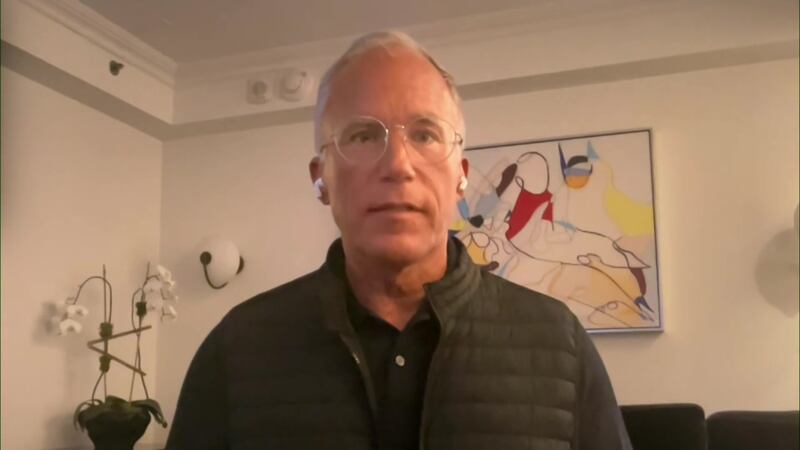
Read the full transcript below:
LINDSAY: Welcome back. Our next guest thinks Canadian stocks could face some headwinds this year, but there are some silver linings. To explain, we’re joined now by Brian Belski, CEO and chief investment officer at Humilis Investment Strategies. It’s good to have you join us. Thanks so much.
BRIAN: Hey, Lindsay. Good morning, Canada. Thanks for having us.
LINDSAY: I’m wondering, what are your expectations for the TSX for the rest of this year? It’s been an interesting ride so far, already in 2026.
BRIAN: You know, Lindsay, every day is interesting in investing. Prices change every day, and I think that’s where you have to have humility to know that sometimes you just don’t know everything. The markets in Canada were amazing last year. We were bullish on Canada relative to the U.S. for a long time. We think this year is going to be a little bit tougher, especially given the broadening out of the rally, which favours a more diversified index like the United States.
However, it doesn’t mean that Canada is going to be negative. We still think there’s a lot of fundamental prowess with respect to the cyclical areas of Canada, including the consumer discretionary space. We think a great contrarian play is going to be the communication services sector in Canada. We think the banks are going to be more mixed, and you really want to be in one or two banks, not all of them. Again, it doesn’t mean that Canada is going to be negative. It just means it’s going to be less positive than last year, and the diversified nature of the U.S. market kind of favours it.
LINDSAY: Okay, so banks potentially more mixed. In terms of other Canadian stocks that could face some headwinds, which ones do you think those would be?
BRIAN: Well, you know how to make friends and influence people. Gold has had a heck of a run. We’re not telling people to sell gold. We’re telling people to lighten up on their positions. In our research at our prior shop, we became very bullish on gold in mid-2022. People thought we were kind of crazy at the time. Then gold became a momentum play, especially following Liberation Day and people talking about the U.S. dollar going away and central banks around the world accumulating gold.
Our analysis — and this is analysis, not sentiment or opinion — shows that any time performance on a standard deviation basis goes four times above the average, you typically and historically have poor performance in the 12 months following for gold. I think investors in Canada have been too overweight gold, and it’s time to buy some banks and great consumer companies like Aritzia, Couche-Tard and Dollarama, which have done amazingly and we still think have a long way to go on the upside.
LINDSAY: Because of that analysis on gold, as you were saying, if that plays out, that’s probably not great news for the TSX, right? It seems so heavily weighted in materials stocks.
BRIAN: Well, here’s the great news. Financials are over 30 per cent of the index, and financials aren’t going away. I believe — and I’ve said this for 15 years or so — that Canadian banks are the most excellent stewards of capital in the world. They do an amazing job in terms of buybacks and building and growing dividends.
The issue we have with Canadian banks right now is that they did amazing last year because they over-reserved in 2024. Therefore, in 2025 they had excess cash, which they threw off in terms of earnings, dividends and buybacks. We think that excess cash is going to be less than it was last year. So you want to be much more selective in the banks, focusing on the best management teams, the best market share per area in Canada and the best diversified product lines. Not all of them, but just some of them.
At the end of the day, even if you buy two or three banks, you’re going to be overweight financials relative to materials. We still think energy, by the way, looks great in Canada relative to the U.S., especially the pipelines like Enbridge.
LINDSAY: Okay, that’s good to know. Energy and banks. If we’re talking about markets as a whole in North America, you mentioned this off the top — you do think there’s a broadening out?
BRIAN: We do. We think 10 years from now, Lindsay, you’re going to be kicking yourself that you didn’t own enough small-cap stocks. We have the very good fortune at Humilis of offering five separately managed accounts in U.S. portfolios. One of them is our SMID portfolio. You’re not supposed to have a favourite child, but that’s our favourite, principally because you can play themes and great earnings.
Here are the facts — not sentiment or emotion, but facts. Small-cap stocks in the United States are showing the best earnings growth, best cash flow and best value, especially relative to large caps. We think there are amazing themes and stories to play, and you saw a lot of that start to play out in January, not just because 10-year Treasuries went down, but because investors are noticing that the fundamental prowess of small-cap stocks is real and can continue.
LINDSAY: It’s interesting how more people are starting to focus on small-cap stocks and indices. Is there any particular index or sector in small caps that you’re watching?
BRIAN: We love the communication services sector in the United States — stocks like Reddit and Nexstar, even Warner Bros. and Paramount. Those companies, in terms of content, are going to continue to be great. We love consumer discretionary and staples plays. We’ve owned a company called Celsius for a number of years. We think there’s more volume to go there.
We also like apparel companies in mid-cap areas in the United States. We’ve owned On — On shoes — for some time. You probably see a lot of people running around in those. It’s a Swiss company, but they have amazing apparel.
Lastly, in terms of themes, we love to play longer-term ideas. We think Shake Shack is to Gen Z what Chipotle was to millennials. Shake Shack has a lot of fundamental growth ahead of it. We think it’s a name that’s been under-owned from an institutional perspective in North America, and we think there’s a great runway there.
LINDSAY: For investors who usually invest in mainstream indices and stocks, what’s your advice to someone who wants to get into small caps? Is there a strategy, or do you just invest?
BRIAN: It’s a great question. I get questions all the time like, “How much money should I start with?” Any kind of money — you have to start somewhere. We prefer stocks over broader passive indices. We love active ETFs and active mutual funds. We’re coming out with our own ETFs and mutual funds in Canada and the United States within the next couple of months.
But any kind of money — and just be fundamental. The last thing I’ll say is do not react to the news every day. Do not react to negative headlines on television. Just buy really good companies, stay with them, have confidence and buy companies you can reach out and touch and understand.
A lot of those great small- and mid-cap companies are right in Canada. If you pull out the banks, the big pipelines and the big gold companies, the Canadian indices are really a small- and mid-cap market. And one of the best consumer discretionary stocks, in our view, is in Canada — Aritzia. It’s a mid-cap name. We’ve owned it for years. We love that company and the management, and we think it’s going to continue to grow.
LINDSAY: Just before we let you go, it’s hard to talk about stocks without talking about the tech sector. What’s your outlook on tech as we head deeper into 2026?
BRIAN: In Canada, we own Shopify. That’s been our big one for a long time. We were early in that company. Shopify is not Biovail, it’s not Nortel, it’s not BlackBerry. This company has a diversified product line and is really a portal for small- and mid-cap companies in North America.
In the United States, we’re underweight the Magnificent Seven. We have been all of this year and all of last year. We’re very selective in the names we own there. We think that’s going to continue to work, especially considering some of the AI volatility that’s out there.
The main reason to own tech longer term is that these companies are now the new consumer staples in our world. We think the big ones — including Apple, Microsoft, Nvidia, Amazon and Google — are going to continue to do very well. Google is our favourite of those, and it has done a great job in terms of AI distribution relative to just OpenAI.
LINDSAY: We’ll leave it there. Thanks so much for your insight this morning.
BRIAN: Thanks so much for having us.
---
This BNN Bloomberg summary and transcript of the Feb. 12, 2026 interview with Brian Belski are published with the assistance of AI. Original research, interview questions and added context was created by BNN Bloomberg journalists. An editor also reviewed this material before it was published to ensure its accuracy and adherence with BNN Bloomberg editorial policies and standards.

