Software stocks are under pressure after weak guidance from Palo Alto Networks added to concerns that artificial intelligence could disrupt traditional software models. Investors are reassessing which companies will benefit from rising AI adoption and which may face structural pressure.
BNN Bloomberg spoke with Matthew Tuttle, CEO and chief investment officer at Tuttle Capital Management, who said cybersecurity and data infrastructure firms are positioned to benefit from AI growth, while workflow-based and outsourcing companies face displacement risk.
Key Takeaways
- The software sector is splitting into companies that benefit from rising AI usage and those whose core functions risk being automated or commoditized.
- Cybersecurity firms such as CrowdStrike and Palo Alto Networks are seen as beneficiaries of greater AI-driven complexity and security risk.
- Data and infrastructure platforms such as Snowflake are viewed as “tollbooth” businesses that gain importance as AI adoption expands.
- Workflow-based applications, including digital signature and project management tools, face pressure as AI agents absorb repeatable tasks.
- IT outsourcing and services providers could see demand erode as companies use AI to internalize functions previously handled by external vendors.
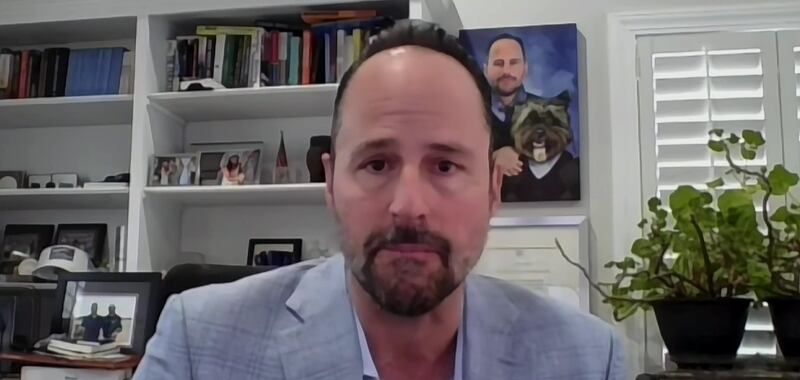
Read the full transcript below:
ANDREW: Shares in Palo Alto Networks came under pressure today, with its third-quarter forecast missing expectations. And, of course, the software sector in general has been hammered amid fears that artificial intelligence will radically change the business of software and services. Let’s get more from Matthew Tuttle, CEO and chief investment officer at Tuttle Capital Management. Matthew, thanks very much for joining us. Maybe we could put up a five-year chart for Palo Alto. At one stage, I think investors thought, well, they’re the industry leader in cybersecurity, the need is only growing — how could you go wrong?
MATTHEW: Yeah, and we’re big believers in cybersecurity. We like CrowdStrike a lot better than we like Palo Alto. So we run one of our ETFs — MEMY is our 20 top thematic ideas — and CrowdStrike is one of those names. You know, all of cyber has kind of gotten thrown out with the bathwater in the software selloff. But we really see cybersecurity as an area that’s going to get increased demand from AI. And certainly, you’re going to need it if quantum fulfills those promises. So we would definitely be buying CrowdStrike.
ANDREW: Sorry — Palo Alto and CrowdStrike?
MATTHEW: Well, CrowdStrike is our favourite. Oh yeah, I do like the cybersecurity area. So Palo Alto, certainly, I wouldn’t mind buying on weakness, but CrowdStrike is our favourite in this area.
ANDREW: It, too, is down. Why is that? Why have investors gone cooler on these cybersecurity giants?
MATTHEW: Yeah, and it’s really what’s happening across software. So last year was the AI rising tide that lifted all boats in technology. Then all of those names got extended. Now, all of a sudden, people are realizing there are companies that are probably going to get helped by AI, but then there are companies that are going to get crushed. And the initial reaction was sell everything in software. So that’s why cybersecurity — Palo Alto, CrowdStrike — all of those names sold off. We think this is an opportunity. We’d be buying some of those names, but then some we would definitely be avoiding.
ANDREW: Let’s get into those. DocuSign — you’re not keen on that one. It was a darling during the pandemic.
MATTHEW: DocuSign is a lifesaver for me today, but it’s one of those stocks that I think, once agentic AI fully comes online, it’s going to be very easy for them to integrate what DocuSign brings to the table into that workflow. So that would be a name that I would not want to own here.
ANDREW: Right. So you basically feel it can be automated by AI?
MATTHEW: Yeah. I mean, there are some companies that have sold off because of the AI fear that I think is warranted. DocuSign is definitely one of them.
ANDREW: What about monday.com, MNDY on Nasdaq? Again, you’re not too keen on that one.
MATTHEW: No. Anything that’s got some sort of workflow app to it that agentic AI could fairly easily incorporate — we would be avoiding those names. We do think those are names that are likely to get hurt as AI and agentic AI come more on board. So we would be avoiding those as well.
ANDREW: And then finally, EPAM — a stock I’m not familiar with. The symbol is EPAM. Can you remind us what they do and why you’re less keen on this one as well?
MATTHEW: Yeah. So anything IT services outsourcing, that’s something I definitely would avoid. So that includes EPAM. I see that every day — we do have an outsourced IT provider for our company. I’m increasingly using AI more and more for basically doing our IT work, and I can foresee — and hopefully they’re not listening — a time where we replace them with AI. So anything outsourced, anything IT outsourcing, I think AI and agentic AI can take that over.
ANDREW: Talk to us about Snowflake, SNOW. You feel that they’re less vulnerable. Why is that?
MATTHEW: I feel that they’re less vulnerable. So we kind of spread this out — what are the tollbooth companies, the companies that live somewhere along the chain of agentic AI, where you know how things are going to happen? Snowflake — it’s not a company that we own personally in client portfolios or in our ETFs. But I certainly would not be averse to buying the dip here. We think they are one of the AI tollbooth companies.
ANDREW: What about the giants such as Microsoft? I don’t know if that’s a stock you cover.
MATTHEW: Oh yeah. One of our ETFs is MAGO — it’s the Mag Seven. I think if you look at all of the themes, and we teach people this in thematic investing, one or more of those companies are the obvious winners in a lot of this. Microsoft is a behemoth. Anytime you can get Microsoft on a dip, I would be buying Microsoft.
ANDREW: Right. The stock’s down a lot this year. Would you be putting new money into it, then?
MATTHEW: I would be putting new money into Microsoft. And really, whenever people tell you the Mag Seven is dead and it’s going to be the other 493 companies in the S&P, that’s when I want to buy the Mag Seven.
ANDREW: Maximum pessimism. Thank you very much, Matthew. I really appreciate it.
MATTHEW: Thank you.
ANDREW: Matthew Tuttle, CEO and chief investment officer at Tuttle Capital Management.
---
This BNN Bloomberg summary and transcript of the Feb. 18, 2026 interview with Matthew Tuttle are published with the assistance of AI. Original research, interview questions and added context was created by BNN Bloomberg journalists. An editor also reviewed this material before it was published to ensure its accuracy and adherence with BNN Bloomberg editorial policies and standards.

