A wave of earnings beats from banks, retailers and energy producers is reinforcing signs of economic resilience, even as investors grow more cautious about consumer trends and artificial intelligence volatility.
BNN Bloomberg spoke with Brooke Thackray, research analyst at Global X Investments Canada, who said strength in capital markets, wealth management and energy production helped lift results, but warned that future gains could be more muted amid housing, unemployment and AI-related uncertainty.
Key Takeaways
- Scotiabank beat earnings expectations with strength in capital markets and wealth management, though revenue was slightly soft and consumer loan growth remained subdued.
- Canadian banks have outperformed for more than a year, but further gains may track broader indices rather than deliver another stretch of outsized returns.
- Home Depot topped forecasts with same-store sales up 0.4 per cent, signalling resilience, even as consumers express concern about potential job losses.
- Whitecap Resources exceeded production expectations at about 370,000 barrels of oil equivalent per day following its Veren acquisition, reinforcing confidence in integration efforts.
- U.S. earnings have largely beaten forecasts, but volatility tied to artificial intelligence investment, projections and policy risks is fuelling sharper market swings.
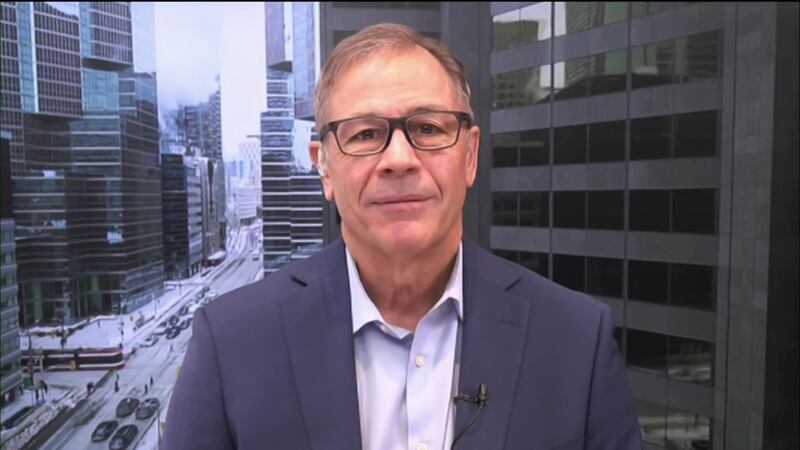
Read the full transcript below:
ANDREW: We’re tracking a whole bunch of earnings. Scotiabank beating expectations. Whitecap topping guidance. Raymond James raising the price target there. Let’s get more from Brooke Thackray, research analyst at Global X Investments Canada. Brooke, great to see you, and thanks for joining us. Give us your thoughts on Bank of Nova Scotia, please.
BROOKE: Well, they were decent earnings because they were right across the board with all divisions, really. The divisions that were carrying the big weight were capital markets and wealth management, so the consumer loans really weren’t particularly strong. And you can’t go against these earnings. I mean, they’re good, but the Canadian banks have actually done so well for so long, and these earnings were largely based upon a lot of cuts being made. They actually just slightly underperformed on their revenue. So I think the Canadian banks from here — and Bank of Nova Scotia has done so well, they’ve outperformed the market — but I think we’re probably not going to see that continued strong outperformance from this point.
ANDREW: Broadly speaking, you think the banks — they’ve done so well, as you say, over a year and a half — but you don’t see further gangbuster gains?
BROOKE: No, I don’t. I think unless we see some big, huge, amazing earnings coming out with stronger revenues — and there are still some concerns around the consumer and the housing market — if we start to see unemployment go up, that’s the underlying concern overall. The bank didn’t reflect that, but investors still see that as a little bit of a concern. So I think there are going to be muted gains at this point, maybe market performance rather than outperformance.
ANDREW: What about Home Depot? Is that a stock that attracts here right now?
BROOKE: Yeah, I’m a little bit surprised at the strength of this. Here we had Home Depot come out and beat expectations. Same-store sales were up and outperformed. So we saw same-store sales come in at 0.4 per cent growth, which is a positive. Their outlook for the economy is quite resilient. They’re saying the economy is still resilient. We’re not seeing any signs of deterioration. They did make a comment saying that consumers were concerned on a go-forward basis, perhaps about unemployment. So there seems to be a disconnect between what’s happening and the sentiment from consumers. But overall, Home Depot had solid earnings for sure.
ANDREW: Would you be a buyer, though, of Home Depot right now?
BROOKE: I think so. I think Home Depot can actually go from here. We don’t see a downturn with Home Depot, and it’s in a strong seasonal period as well right now. So I think Home Depot can actually do quite well from here.
ANDREW: Whitecap Resources has been a favourite among oil and gas investors. They’ve been an aggressive acquirer of other companies — just bought Veren not that long ago. Maybe we could look at a five-year chart. Would this be an oil and gas name that you would tend to buy?
BROOKE: Yes, I think this is a very good choice for oil and gas. The big question was, how would the merger with Veren go? It’s gone extremely well. If you take a look at the production of Whitecap Resources, it came out to 370,000 barrels of oil equivalent, which was 10,000 greater than expected. So we saw them beat on the expectation of production with the merger. The merger was completed last year, May 2025, so that’s actually gone really well. That was the question, and it’s been handled extremely well. I think this is a great company. It’s now the seventh-largest oil and gas company in Canada, and I think it’s well placed for the future.
ANDREW: What about Constellation Energy? It’s been a darling among investors who are betting on massive electricity consumption in the United States.
BROOKE: Yeah. They actually came out with very solid earnings as well. Raised their dividend, beat on revenue substantially. But if you take a look at the results so far this year, they’ve actually not done that well. The reason for that is the fear about price caps on energy or electricity, and that’s the big concern with AI and data centres — who’s going to pay for it, how much and when. The concern was that it was going to come back to the nuclear providers with price caps. I think these earnings are great, with revenues up so strong, but there’s still going to be an underlying concern about price caps. Until that gets worked out, I don’t think we’re going to see the sector run extremely well.
ANDREW: Thomson Reuters — there’s a story in The Globe today by James Bradshaw — is saying a lot of companies have invested in AI, but they haven’t earned the return they hoped. Thomson Reuters, of course, has been under severe pressure on fears about AI. Do you think that’s inevitable? Some people are going to blow it on their AI investments, at least initially?
BROOKE: Yeah. There’s so much money going in that it can’t all be done very efficiently to begin with. It’s going to be a lumpy process. We’re seeing this all over the place. Expectations in the market are changing dramatically on a daily basis as well. You just take a look at what happened yesterday, with Citrini Research coming out and releasing a fictitious report of what 2028 would look like. You saw American Express and other companies go down over seven per cent based upon that report. There’s just a lot that’s having to work itself out. This is not a smooth ride. In the beginning, when we took off the last few years, we saw a relatively smooth ride, but I think we’re going to see more of a bumpy run on a go-forward basis.
ANDREW: And I’m not sure if you heard, there’s a widely discussed Substack essay today predicting that AI’s influence on the economy could be damaging, in the sense of vast numbers of white-collar workers losing their jobs.
BROOKE: What was interesting about that is it’s a projection of what 2028 might look like, and it affected the stock market so much. For me, what it really says is that investors are starting to get a little jittery here, and we’re starting to see some big moves based on projections. It’s thematic research. They’re saying this is what we anticipate in the future, and yet it can move the market down so much. That’s really a testament to what’s happening with investors and the sentiment. They’re starting to get a little bit concerned about how this is going to play out.
ANDREW: When you say fictitious, you mean it’s based on speculation and projections.
BROOKE: Yeah. It’s what they think might look like in 2028. They’ve done a model and projections. It’s not what’s actually happened — it’s what they think is going to happen. So fictitious might be a little bit of a strong word.
ANDREW: Right. And of course, remember that old adage, “nobody knows nothing.” Brooke, thank you very much indeed. Brooke Thackray, research analyst at Global X Investments Canada.
---
This BNN Bloomberg summary and transcript of the Feb. 24, 2026 interview with Brooke Thackray are published with the assistance of AI. Original research, interview questions and added context was created by BNN Bloomberg journalists. An editor also reviewed this material before it was published to ensure its accuracy and adherence with BNN Bloomberg editorial policies and standards.

