The battle for Warner Bros. is intensifying as Netflix and Paramount vie for control of the storied studio, in a deal that could reshape the global media landscape. Beyond Hollywood, the outcome could have ripple effects for Canada’s production sector, streaming agreements and cultural policy.
BNN Bloomberg spoke with Douglas Barrett, adjunct professor in the arts, media and entertainment MBA program at the Schulich School of Business, about how studio consolidation, streaming economics and trade tensions could influence Canadian broadcasters, theatrical distributors and domestic content rules.
Key Takeaways
- Warner Bros. is a highly coveted asset because of its vast intellectual property library, including global franchises such as Harry Potter and Game of Thrones.
- Studio consolidation could create a dominant combined rights holder, reshaping bargaining power in streaming and global distribution.
- Canadian broadcaster Crave’s long-term HBO relationship could face uncertainty depending on whether HBO remains independent under new ownership.
- Netflix’s limited theatrical release strategy may pose challenges for cinema operators in both the U.S. and Canada.
- Canada’s Online Streaming Act and upcoming Canada-U.S. trade talks could determine how foreign streamers contribute to domestic content and cultural sovereignty.
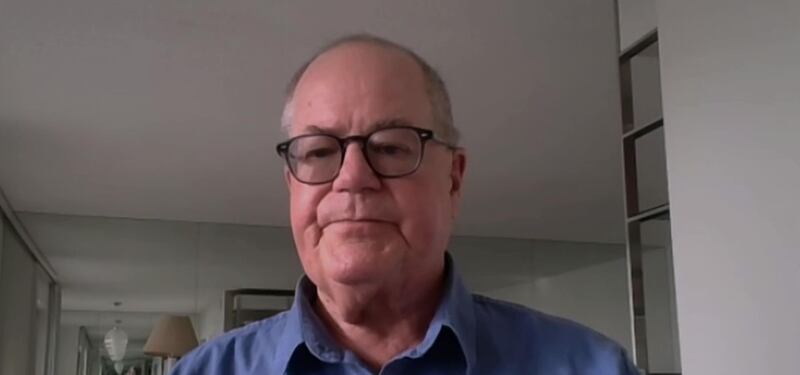
Read the full transcript below:
ROGER: The ongoing battle to acquire Warner Bros. continues to make headlines, focusing on whether Netflix or Paramount will end up with the deal. But what do these blockbuster deals mean for Canada’s film and television industry?
For more on this, we turn to Douglas Barrett, adjunct professor in the arts, media and entertainment MBA program at the Schulich School of Business. Professor, thanks very much for joining us today.
I just want to get your initial thoughts. Earnings came out today — Paramount topping out, it looks like; Warner, not so much. Does this give Paramount an edge at all, seeing those numbers today, or is it still a toss-up?
DOUGLAS: I think it’s a toss-up. There are more plot lines in this story than in a mid-afternoon soap opera. I don’t think the earnings today have much impact on where it’ll go.
Ted Sarandos of Netflix is apparently at the White House all day for meetings, and David Ellison, CEO of Skydance-Paramount, was at the State of the Union address. And Trump has said he wants to have Susan Rice, the former ambassador to the UN, fired from the Netflix board. So it’s all kind of the usual Washington porridge, and we’ll see what happens.
Obviously, in the end, the shareholders will make up their minds. But Warner Bros. itself remains committed to the Netflix deal — they’ve got a signed agreement with Netflix. So Paramount here is the interloper, and it keeps edging up its offer.
BRYDEN: Professor Barrett, the question I come at this from — as a sort of casual observer, but definitely not a media expert — is: Can you maybe parse apart why Warner Bros. is such a desirable asset?
Obviously there are benefits for Paramount and there are benefits for Netflix. Can you highlight why the IP is so valuable, or why the financial transaction just seems to be something these two companies can’t do without?
DOUGLAS: First of all, Hollywood has always run on the basis of these storied, giant studios. Obviously, the studios at the front end are making new programming, but what they’re sitting on is a pile of rights.
Warner Bros. might be either the largest rights holder in the world, or close to it. It owns franchises like Harry Potter and Game of Thrones. Paramount, for its part — also a storied Hollywood studio — is sitting on a pile of rights. It owns Star Trek, and so on.
And because of now a decade or so of original programming from Netflix, it’s sitting on a pile of rights as well. So what we’re really looking at is a fork in the road where two of the three giant piles of rights will aggregate and be pretty dominant by a significant margin.
ROGER: Let’s take a look from the Canadian perspective. Vancouver and Toronto argue over who’s “Hollywood North.” What kind of impact would any of these mergers — whichever way it goes — have on production up here and content up here?
DOUGLAS: Well, it’s hard to say. And there are some other things in the mix. Remember I said at the beginning there are more plot lines than you can shake a stick at.
But the first major issue for Canada will have to do with HBO and HBO Max, which is part of Bell Media’s Crave service.
ROGER: Our parent company.
DOUGLAS: That’s right — your parent company. Crave has done very well recently. It’s added a lot of subscribers. HBO is a very important part of its offering, highly promoted and so on.
Bell Media has a long-term relationship with HBO. There’s no immediate issue. But the question will be: If Netflix gets the prize, will it fold HBO into the Netflix offering? And will Crave — and Bell Media by extension — have a challenge when its agreement comes up for renewal?
Now, David Zaslav, who is the president of Warner Bros., says the plan is to keep HBO independent, and therefore it could still carry on with an ongoing relationship with Bell Media. But I think that’s the single most immediate threat.
The second threat is that Netflix has not played nicely in the sandbox with the theatrical release of a lot of the programs it invests in. The theatrical distribution industry in the United States is struggling. And if that practice continues, it would also impact the theatrical distribution business in Canada.
As to Canadian programs, that’s kind of in the arena of the CRTC now and the Federal Court of Appeal, and what’s going on with the Online Streaming Act. That act was an attempt to get the foreign streamers — principally Netflix, but others as well — to make a contribution to Canadian programming in the Canadian system.
It’s unclear to me whether this deal, either way it goes, will act on the outcome of that question. If Canada is successful in maintaining its policy plans, then Netflix — in whatever form it’s in — and/or the studios, and the Paramount Plus offering of the Paramount-Skydance folks, will have to play along.
But looming on the horizon are the Canada-U.S. free trade agreement discussions, which are supposed to start up this summer, and the threats from the president about cultural protection issues. So Canada’s cultural sovereignty is definitely on the line with those discussions. Whether this transaction would have a thumbs-up or thumbs-down impact is unclear. But obviously the Netflix folks and the Paramount-Skydance folks have the president’s ear and are working their way to make sure that foreign countries either are prevented from, or don’t set up, cultural protection strategies.
ROGER: All right, we have to wrap it up there, Professor. Thank you very much for joining us. We appreciate it.
DOUGLAS: My pleasure, and thank you for letting me speak this morning.
ROGER: Douglas Barrett is an adjunct professor in the arts, media and entertainment MBA program at the Schulich School of Business.
---
This BNN Bloomberg summary and transcript of the Feb. 26, 2026 interview with Douglas Barrett are published with the assistance of AI. Original research, interview questions and added context was created by BNN Bloomberg journalists. An editor also reviewed this material before it was published to ensure its accuracy and adherence with BNN Bloomberg editorial policies and standards.

