Markets opened lower as escalating tensions in the Middle East fuelled volatility and lifted oil prices, raising fresh questions about inflation and the path for interest rates in Canada and the United States.
BNN Bloomberg spoke with David Rosenberg, president and chief economist and strategist at Rosenberg Research & Associates, who said investors should resist reacting to geopolitical headlines and argued the Bank of Canada is closer to cutting rates as domestic growth stalls.
Key Takeaways
- Geopolitical events typically trigger an initial risk-off reaction, but history shows markets often stabilize within weeks, making such shocks unreliable guides for long-term investment decisions.
- Recent conflicts, including last year’s two-week Iran episode and the 2022 invasion of Ukraine, saw sharp early moves in oil and equities that later reversed.
- The sectors hit hardest by renewed tensions, such as airlines and travel, could offer rebound opportunities once uncertainty fades.
- The 10-year U.S. Treasury yield has declined in recent weeks, signalling growing demand for safety even before any formal shift in Federal Reserve policy.
- With Canadian GDP tracking near one per cent growth and inflation pressures easing outside of energy, the Bank of Canada faces mounting pressure to resume rate cuts.
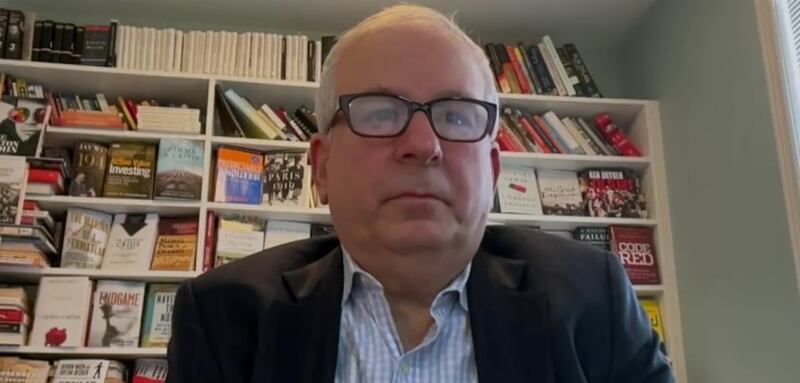
Read the full transcript below:
ROGER: Markets are starting the week in the red as geopolitical tensions ramp up with the latest escalation in the Middle East. The pickup in volatility has investors wondering what this means for long-term risk. All of this is putting even more attention on the Federal Reserve and the Bank of Canada as they weigh their next moves, with rate cuts back on the table, but also inflation a concern. For more on this, we’re joined by David Rosenberg, president and chief economist and strategist at Rosenberg Research & Associates. David, thanks very much for joining us.
DAVID: The pleasure is mine.
ROGER: You have to tread lightly at moments like this, don’t you?
DAVID: Well, I think that if you are a patient, long-term investor, there’s nothing happening here that should really alter your portfolios. I always say that it’s a fool’s errand to invest around geopolitics. You don’t even have to go back to what happened in June of last year and that two-week conflict with Iran. Go back to 2022 when Putin invaded Ukraine. This is the way the markets operate. They get jumpy, they overreact and you get this huge risk-off trade, usually at the onset of these geopolitical periods. The maximum move is usually at the very beginning.
Nobody should be altering their asset mix because of this. If you want to trade around this, go right ahead. If you want to turn bullish on the oil price because of concerns around the Strait of Hormuz and shutdowns of production facilities in the Gulf, to me this is all going to be short term in nature, if you define short term as the next two to four weeks. Personally, I’m not changing anything in my asset mix because of this.
ROGER: And so you think this could be resolved within the next month or not? Maybe “resolved” isn’t the right word, but that fears will ease within the next month?
DAVID: Look, there’s always tail risk. You can’t ignore that. But that would be my expectation. After being totally decimated last summer, Iran doesn’t even have control over its airwaves. That tells me this should be over. I know you have people saying we’re in some sort of multi-month or multi-year quagmire. There’s no doubt Iran can do damage through its ballistic missiles, but at some point its arsenal is going to wear out.
The question is going to be the resolve — not of the Israelis — but of President Trump to see this through. Could it be more than a month? Sure. The Ukraine war has now been several years. Everybody thought Vladimir Putin was going to walk all over Ukraine. But even though that has lasted several years, you have to ask yourself whether you would have moved all into cash or all into energy in the winter of 2022 because of what happened with Russia and Ukraine.
If that’s what you did, you would have missed out on a whole lot of other things going on. So it could last longer than a month, but so long as you’re confident in what the end game is going to be — and if the end game is regime change in Iran — then you have to think about what that looks like from a broader global stability standpoint. I’m not generally known to be a Pollyanna, but I’m putting my positive hat on this one.
ROGER: Are you looking anywhere for opportunities? We saw travel and airlines taking a hit today. Are you dabbling at all?
DAVID: No, I’m not dabbling. By nature, I’m not a day trader. If you are a day trader, then yes, that’s what you’d be doing. I think that coming out of this, the areas that get hit the hardest — as you said, airlines, travel and accommodation — will bounce back. They could bounce back from lower levels, but those would be your greatest opportunities.
Making bullish assessments about what oil is going to do is very short term in nature. Many people went bullish on energy in 2022 and it was a round trip in the oil price. Go back to June of last year, the first day of that conflict between Israel and Iran, and the oil price jumped seven per cent on day one. You have to separate what is transitory from what could be a tradable opportunity.
If you have liquidity on hand and you’re looking at the stocks getting pummeled the most, those will be the ones that snap back the most once the clouds part.
ROGER: What do the Bank of Canada and the Fed do with this? If oil prices drag on, that could put inflationary pressure on. Where do you see that unfolding?
DAVID: It cuts both ways. Energy gives you headline inflation, true, but it’s also a serious depressant on real incomes and that affects domestic demand. One hand washes the other.
As far as the Bank of Canada is concerned, I don’t know how you look at the GDP numbers that came out late last week and see anything other than an economy that’s at best flatlining. We’ll do well to have one per cent GDP growth in the first quarter. The Bank of Canada’s last estimate was 1.8 per cent. Inflationary pressure in the economy is clearly subsiding, energy aside.
I think the Bank of Canada’s next move is going to be to cut rates. I don’t think they should be sitting on the sidelines. Based on what’s happening with the output gap, excess capacity in the economy and the disinflationary momentum from the spread between aggregate demand and aggregate supply, I don’t know why they are staying on the sidelines.
People talk about the policy rate being at 2.25 per cent, but nobody borrows at the policy rate. Banks do in the interbank market. The average interest rate for the typical Canadian is closer to five per cent. Market rates — the rates that matter — haven’t come down nearly as much as the overnight rate.
As far as the Fed is concerned, it has been talking hawkishly. It convinced markets that the first rate cut in the U.S. is not coming until well into the second half of the year. This was before the weekend’s events. The Fed is probably on hold for now. I think it will cut rates too, but that is being pushed further out. The Bank of Canada is on thinner ice with its decision to stay on the sidelines.
ROGER: We’ve got to wrap it up there, David. Thank you, as always, for joining us.
DAVID: All the best.
ROGER: David Rosenberg, president and chief economist and strategist at Rosenberg Research & Associates.
---
This BNN Bloomberg summary and transcript of the March 2, 2026 interview with David Rosenberg are published with the assistance of AI. Original research, interview questions and added context was created by BNN Bloomberg journalists. An editor also reviewed this material before it was published to ensure its accuracy and adherence with BNN Bloomberg editorial policies and standards.

