ETF investors are rotating into energy, international value and dividend strategies as geopolitical tensions and mixed economic signals shape portfolio decisions. Bitcoin ETFs are also showing resilience despite a sharp drop in prices.
BNN Bloomberg spoke with Valerie Grimba, director of global ETF strategy at RBC Capital Markets, about post-Iran strike fund flows, rising interest in international equities and how investors are positioning in what her firm describes as a “stagflation lite” environment.
Key Takeaways
- ETF flows following the Iran strikes showed broad-based equity buying, with strong inflows into defence and aerospace funds.
- Fixed-income flows were split between ultra-short Treasuries as a safety trade and long-duration bonds as investors positioned for potential inflation risks.
- Canadian ETF demand in 2026 has been broad-based, with growing interest in international equities as investors rotate beyond the U.S.
- Energy ETFs were initially positioned as valuation plays but are now benefiting from commodity strength tied to geopolitical tensions.
- Canadian-listed bitcoin ETFs have seen net year-to-date inflows despite price weakness, signalling investor conviction in long-term allocations.
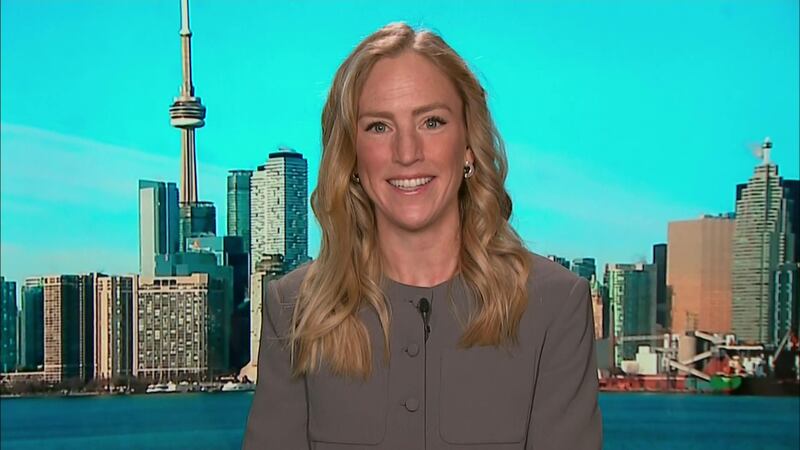
Read the full transcript below:
LINDSAY: It is time now for the ETF report. Canadian ETFs are proving popular among investors. For some ideas, let’s go to Valerie Grimba, director of global ETF strategy at RBC Capital Markets. It’s good to have you join us.
VALERIE: Thank you for having me.
LINDSAY: I do want to get to some Canadian ETFs. But first of all, after what we saw over the weekend and into the first couple of days with these strikes in Iran and Iran retaliating, what fund flows are you seeing after this all went down?
VALERIE: We had Monday to digest this news that happened over the weekend and saw a mixed bag in ETF fund flows. But I would say it was cautiously optimistic in the flows we saw, with broad-based equity buying. Of course, defence and aerospace ETFs saw strong fund flows yesterday. We also saw bifurcated activity in the fixed-income space. There was a lot of buying in ultra-short Treasuries, zero- to three-month duration. This is very much a safety trade. But we also saw a lot of inflows and buying activity on the long end of the curve. The ETF is called TLT. It had strong inflows. I think this is a bet on this being a potentially inflationary event and investors or traders trying to get ahead of that as well.
LINDSAY: Interesting. When it comes to Canadian ETFs that you see as being popular right now, which ones are you seeing the most?
VALERIE: The trends in Canada have really been broad-based so far in 2026. We’re seeing a lot of interest in international equities. This is part of the broadening rotation trade, people looking outside of the U.S. and looking for other avenues to find alpha in this mixed market with contrarian signals, headline risk and now geopolitical uncertainties as well.
LINDSAY: I know you flagged a couple of ETFs in particular, so we’ll go through those. When it comes to Canadian energy, the BMO SPDR Energy Select Sector Index ETF, what do you like about this one?
VALERIE: This holds the energy sector in the U.S. This was, to start, a valuation call. When we looked at the energy sector in the U.S. versus other sectors, we thought there was a value opportunity in the energy space, with positive momentum on the earnings side as well. Now we have this geopolitical strife and commodities rallying on the back of that. This will no doubt be a tailwind for the sector. But primarily, when we initiated the recommendation, it was a valuation play.
LINDSAY: We’re going to stay in the U.S. energy sector for a moment because the State Street Energy Select Sector SPDR ETF is another one of your picks. What do you like about this one?
VALERIE: It’s the exact same. It’s just the U.S.-listed version, and the BMO SPDR is the Canadian-listed version.
LINDSAY: Got it. We’ll move on to the next one then — the Morningstar International Value Index ETF. Can you go into more detail about this one?
VALERIE: We’ve seen a shift of interest into value factor ETFs. These ETFs are looking at valuation first and foremost before they go through the screening stock-selection process. As we think about AI jitters in the market and valuations on the “Magnificent Seven” or other software-related companies, there may be some concerns. If you pick an ETF that has a value tilt, you’re looking at a different pocket of the market. We think there are compelling reasons to consider that, given the current setup. There could be opportunities to see re-ratings, valuation improvements and ultimately alpha generation in international value stocks.
LINDSAY: Lastly, for a high dividend, you’ve got the Fidelity International High Dividend ETF.
VALERIE: Again, we’re keeping an international tilt to these recommendations, broadening that exposure. We like quality dividends. In an environment where we think rates are going to be on hold for the foreseeable future, we need to look for other ways to diversify income and search out yield. Adding a quality international high-dividend index could be an interesting way to seek additional income in the current setup.
LINDSAY: When you talk about central banks broadly holding rates steady, you say your economics team is flagging a “stagflation lite” environment. What do you mean by that?
VALERIE: I don’t want to speak out of turn because this is our economics department, but they mean sticky inflation, moderating growth and push-and-pull dynamics. They also talk about a K-shaped economy going forward. That’s really the higher end of that K carrying the economy — higher net worth consumers — and mixed signals at play going forward.
LINDSAY: You’ve also been watching some bitcoin ETFs. You say they’ve been remarkably resilient so far this year. Why is that?
VALERIE: They’ve been resilient in the holdings and in the lack of outflows. There’s been a big negative price move in bitcoin, but bitcoin ETF holders have been remarkably resilient in not selling and keeping this allocation within the ETF sleeve. That tells us people are using the bitcoin ETF to express that allocation, and they haven’t panicked in the face of this dramatic move to the downside.
LINDSAY: Is that specific to Canadian bitcoin ETFs?
VALERIE: It’s both. We’ve seen it in Canada — I think we’ve seen net inflows into bitcoin ETFs year to date — and in the U.S., they’ve been pretty flat. Neither adding nor subtracting. They’re holding steady at current levels.
LINDSAY: We’ll leave it there. Thanks so much for joining us.
VALERIE: Thanks for having me.
LINDSAY: That’s Valerie Grimba, director of global ETF strategy at RBC Capital Markets.
---
This BNN Bloomberg summary and transcript of the March 3, 2026 interview with Valerie Grimba are published with the assistance of AI. Original research, interview questions and added context was created by BNN Bloomberg journalists. An editor also reviewed this material before it was published to ensure its accuracy and adherence with BNN Bloomberg editorial policies and standards.

