Investors are navigating heightened volatility as stocks react to escalating tensions involving Iran while also digesting corporate earnings and signs of stress in South Korea’s equity market.
BNN Bloomberg spoke with Gavin Graham, chief investment officer at Spire Wealth Management, about the impact of geopolitical risks on stocks, the sharp selloff in South Korea tied to leverage, Capital Power’s latest results and why large Canadian energy producers remain attractive to investors.
Key Takeaways
- Global markets sold off as investors priced in the risk of a prolonged conflict involving Iran that could threaten oil supplies and energy shipping routes.
- Historically, geopolitical crises have tended to cause short-term volatility rather than lasting economic damage to global markets.
- Capital Power continues expanding electricity capacity and benefiting from rising power demand tied to data centres and AI infrastructure.
- Concerns about leverage in equity markets were highlighted by a sharp selloff in South Korea’s Kospi index following heavy retail speculation.
- Large Canadian energy producers with long-life oilsands assets remain attractive due to low production costs, strong cash flow and shareholder returns.
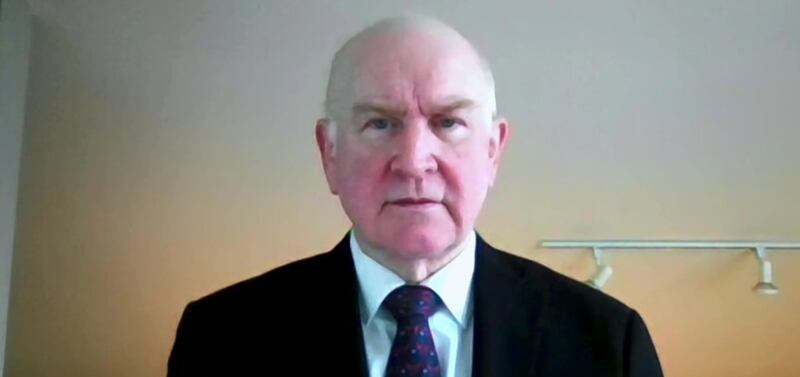
Read the full transcript below:
ANDREW: There’s plenty to unpack today as investors try to make sense of the markets. We’ve got the Middle East conflict and earnings from some Canadian companies, including Capital Power, the electricity generator. Let’s bring in Gavin Graham, chief investment officer at Spire Wealth Management. Gavin, thanks very much indeed for joining us.
GAVIN: Thanks for having me, Andrew.
ANDREW: Start off with your thoughts on Iran. I mean, we’ve seen wars in the past. The stock market drops briefly but often, nearly always, resumes its upward course.
GAVIN: That’s true. And I think all the studies that have come out since the Iran conflict effectively say that it’s usually over, as far as the effect on the markets is concerned, within a few weeks unless it actually turns into something much more serious. After all, here we are, Andrew, four years plus since the invasion of Ukraine, and the markets, after some initial uncertainty about things like gas supplies for Europe, have effectively — I won’t say ignored it — but it’s part of the background.
And here with Iran, it looks as though we will see supplies of oil coming on, even if the Strait of Hormuz remains interdicted. You do have lots of oil at sea, as I think David Rosenberg was pointing out. And obviously things like liquefied natural gas — the U.S. or Australia can increase production if Qatar can’t get its products out.
So it does look as though we’ve had that spike in oil, but as with Ukraine, it may well be that we will see that come back in time once it’s clearer as to what the final outcome is.
ANDREW: Have you had time to — there’s so much going on — but have you had time to pay any attention to South Korea? Apparently panic spread through Seoul’s financial district yesterday, and we’ve seen that market dropping almost 18 per cent in two days. And part of it is just leverage bets. There was a national mania turning the stock market into South Korea’s obsession, and it had pushed their Kospi index higher.
GAVIN: Absolutely. And leverage is never a good thing, Andy, as you know. It’s wonderful when the market’s going up, but when it goes the other way, it’s very, very painful. You might actually make that point about other markets, including North America, where we’ve had those one-day options, which effectively you’re just betting on whether the market is going to be higher at the end of the day, which is a complete coin flip.
So Korea, you had both, as you say, a sort of gambling mania and a market that had done exceptionally well. I think it was one of the best-performing, if not the best-performing, emerging markets. So it’s unsurprising that it’s come to a screeching halt.
But leverage is never a good thing, and you want to be very careful if you see things like — very old-fashioned but the margin balance — people borrowing to buy stock going up on a daily basis.
ANDREW: There’s a derisive name for these small speculators. They call them ants, apparently, and there were 14 million of them. And interestingly, people were unable to sell their stocks online, so they all rushed down to the brokerage office downtown and tried to do it the old-fashioned way.
GAVIN: Do they still have brokerage offices that are open? I mean, that’s the amazing thing. You try walking into an office and finding a real person.
But again, you know, it’s liquidity. It’s very, very important, and when you don’t have it, it’s always at the worst time. You want to sell and you find that you can’t, which is what’s been happening in the private credit market as well, actually, with various funds being gated because they are in assets that may not be the most liquid.
And then when people want to start getting their money out — and more people than usual — they find they can’t.
ANDREW: Yeah, this weakness in private equity as well in the United States, as you say, casting a shadow over that aspect of the market. Give us some thoughts, if you would, on Capital Power, the power generator.
GAVIN: Well, it’s a stock that’s done really well. It’s actually had a bit of a pullback in the last year because it was seen as an AI play. Here was the way to actually get exposure to the demand for power increasing.
And in fact, I think Capital Power, when it came out with its results this morning, said there’s a new data centre contract in Alberta. As it is, you’re still up 24 per cent, although down somewhat from the highs towards the end of last year.
It’s added 2.2 gigawatts of capacity in the U.S. It’s added an extra 10 years to its Michigan power contract. So all in all, Capital Power is very well positioned to benefit from the increase in demand for electricity.
It raised the dividend again, which I think is about 15 years in a row. All in all, it’s a stock that’s pretty attractive and pays you a decent dividend as well.
ANDREW: You reckon that big energy companies, diversified energy companies, should be part of just about everybody’s portfolio. And for example, you suggest Suncor or Canadian Natural?
GAVIN: Absolutely. Again, what’s happened in Iran has reinforced the attractions of long-life assets in a politically stable country with a relatively business-friendly administration.
As it was, Suncor and CNQ were both making loads of money last year, and there you are. You’re up 47 per cent. Suncor — CNQ is up about the same amount again because they’re able to produce oil at around, I think it’s mid-$20 U.S. a barrel.
So even with oil under $60 a barrel, very, very profitable. Now with oil obviously over $80, they’re making lots of money.
But they’ve also been buying back stock, raising the dividend. They haven’t been making dilutive acquisitions. So quite frankly, everybody — we’re going to be using conventional oil and gas for quite a long while, and having long-life assets in a politically stable country looks more and more attractive.
ANDREW: Thanks Gavin. It’s great talking to you, and thanks very much indeed.
GAVIN: Thank you, Andrew.
ANDREW: Gavin Graham, chief investment officer at Spire Wealth Management.
---
This BNN Bloomberg summary and transcript of the March 4, 2026 interview with Gavin Graham are published with the assistance of AI. Original research, interview questions and added context was created by BNN Bloomberg journalists. An editor also reviewed this material before it was published to ensure its accuracy and adherence with BNN Bloomberg editorial policies and standards.

