Oil prices have surged roughly 20 per cent this week as the war in Iran disrupts energy supply routes and heightens global economic uncertainty. The move higher in crude has added pressure to financial markets already grappling with weaker economic data.
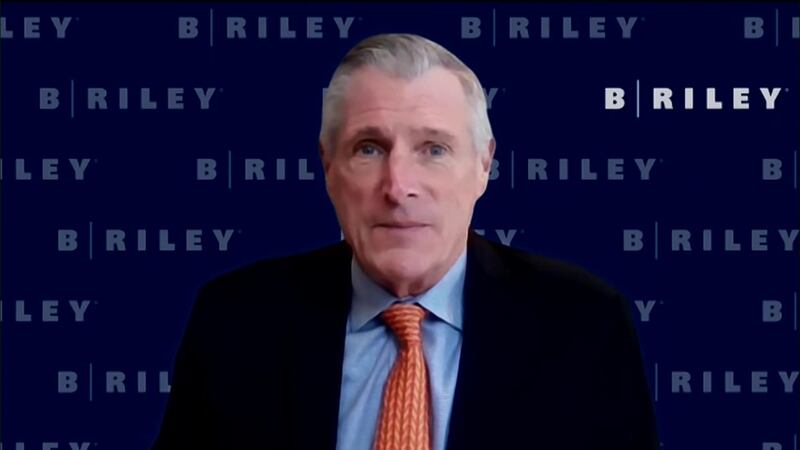
BNN Bloomberg spoke with Art Hogan, chief market strategist at B Riley Wealth, about the sharp rise in oil prices, market volatility and how the latest U.S. labour market data could complicate the Federal Reserve’s next move.
Key Takeaways
- Oil prices surged roughly 20 per cent this week as the conflict in Iran disrupted supply routes through the Strait of Hormuz, a critical chokepoint for global oil shipments.
- About 20 per cent of global oil supply normally moves through the strait, and insurance restrictions have halted most tanker traffic.
- The surge in energy prices is driven by supply disruption rather than stronger demand, raising concerns about inflation and reduced consumer spending.
- A weaker-than-expected U.S. jobs report showed the economy lost 92,000 jobs in February and the unemployment rate rose to 4.4 per cent.
- With inflation pressures rising and the labour market weakening, the Federal Reserve may delay interest rate cuts while it evaluates incoming data.
Read the full transcript below:
ROGER: Well, oil prices have surged by about 20 per cent this week, the biggest jump since 2022 due to the war in the Middle East. Here to talk about this and today’s markets is Art Hogan, chief market strategist at B Riley Wealth. Art, thanks as always for joining us.
ART: Thanks so much for having me, Roger.
ROGER: It has been a bit of a roller-coaster for oil prices. They shot up — no real surprise — and they kind of stabilized for a second. Then they were stabilizing again yesterday, and now they’re back at it.
ART: Yeah, I would tell you the market’s reaction, especially in the commodities markets, really is day to day. It’s dependent on two things: the duration of this conflict and the destruction of supply.
Clearly, when this started, I think markets anticipated this might last days to a couple of weeks. Right now the White House is talking about a longer duration, and we’re hearing about more destruction of supply.
In the region where a great deal of supply comes from, we’re already hearing that Qatar, which produces about 20 to 25 per cent of the world’s LNG, is down for at least two weeks and probably a month. That is obviously putting pressure on hydrocarbons.
But clearly getting any product through the Strait of Hormuz still seems to be impossible right now. The administration has tried to do a couple of things, but that’s going to take a few days before anything happens.
About 20 per cent of the global oil supply comes through the Strait of Hormuz, and it’s really shut down. There’s virtually no traffic going through there. That’s not easily replaced from other parts of the global supply chain.
That’s why we’re seeing this spike in energy prices. The problem with a spike in energy prices is it’s coming from supply destruction, not from an increase in demand.
There would be an economic benefit if we had surging global GDP growth demanding more energy products and pushing prices higher. But this has negative implications. It increases inflation and takes away consumer discretionary spending.
So this has not been a pretty picture this week — a massive move in energy prices in a very short period of time.
ROGER: Now if this does look to drag on, would companies be willing to take the chance to try and get oil through that strait, or are they just going to lock it down and not move?
ART: It’s interesting. Companies — meaning the shippers — don’t really have a choice, because they have to do what their insurance companies tell them to do.
If your insurance company says you are not covered if you go through the Strait of Hormuz, you drop anchor and wait until you are covered.
One of the steps the administration talked about is backstopping insurance companies to allow flow through the strait. Clearly that hasn’t happened yet, but that’s one way to try to address this.
Another way would be for the Navy to protect ships as they travel through the strait. It’s only about 21 miles wide, so both of those things could happen — they just haven’t happened yet.
Without any new supply coming into markets there, it’s very difficult to see energy prices not continuing to go up.
ROGER: And is there anywhere else in the world that could pick up the slack this quickly?
ART: Unfortunately not. There’s not a lot of excess supply coming from other oil-producing countries around the world.
Russia can pick up a little bit of this, and what they’re not shipping to India they will likely ship to China. Most Iranian production was going to China, so that’s the biggest loser in this process.
The good news is North America is more or less energy independent, but that doesn’t help the global market and certainly doesn’t help overall pricing for both WTI and Brent.
There’s not a lot of spare capacity that can be brought online quickly. The administration mentioned Venezuela, but that’s really a rounding error compared with global supply.
Clearly we need the product that normally comes through that strait, and it’s not coming through right now.
ROGER: And the other big news today, of course, the jobs report — 92,000 jobs lost in February. They weren’t expecting that, were they?
ART: No. It was interesting for two reasons.
The estimate was for something positive, maybe 60,000 to 70,000 jobs. So that was a big miss.
We also had an ADP report earlier in the week that surprised to the upside, so expectations were actually higher heading into the release.
If you look at the numbers on a three-month average basis, we’re creating about 6,000 jobs a month. On a six-month average basis, we’re losing about 1,000 jobs a month.
Compare that with a year ago when we were creating roughly 150,000 jobs a month.
The problem is we don’t know exactly how many jobs the current economy needs to create each month, given slower immigration and an aging workforce. What we do know is it’s not what we’re producing right now.
Unemployment moved up to 4.4 per cent from 4.3 per cent. That doesn’t sound alarming, but the direction is concerning.
ROGER: What does all this mean for inflation and the Fed? There’s talk now about a possible rate hike.
ART: The Fed has two mandates: full employment and stable inflation.
Right now those two things are moving in opposite directions.
We have a weak labour market, which would argue for cutting rates. But inflation pressures are picking up, and higher energy prices won’t help.
We’ve also seen inflationary signals from producer prices and prices paid in the ISM manufacturing survey.
So the Fed’s two mandates are effectively in conflict right now. That’s why the consensus is they’ll likely keep rates where they are at least until June to see how things develop.
My view is the next move is probably a cut, but it’s not likely anytime soon. It may take until the fall for a lot of this to work its way through the system.
ROGER: There’s a lot to unpack before then in the next couple of weeks. Until we get some clarity, what do you think markets will do? Are we going to see more of this red?
ART: Right now markets are using energy prices as the barometer for risk.
If you come in any morning and see the price per barrel of oil going up, markets are probably going to come down. We’ve seen this correlation before during periods of geopolitical turmoil.
At the same time, we’re creating some incredibly low multiples, especially in technology, which was under pressure even before this conflict began.
At some point supply will begin flowing through the Strait of Hormuz again, energy prices will start coming down, and markets will likely rebound.
We’re just not there yet. But it wouldn’t take much of a turning point in energy prices to see investors start buying again.
Technology is probably the least affected by high energy prices of all 11 sectors in the S&P 500.
ROGER: All right, we have to wrap it up there. Art, thanks as always for joining us. Have a great weekend.
ART: Thank you.
ROGER: Art Hogan is chief market strategist at B Riley Wealth.
---
This BNN Bloomberg summary and transcript of the March 6, 2026 interview with Art Hogan are published with the assistance of AI. Original research, interview questions and added context was created by BNN Bloomberg journalists. An editor also reviewed this material before it was published to ensure its accuracy and adherence with BNN Bloomberg editorial policies and standards.

