Oil prices surged above US$100 a barrel for the first time since 2022 as the Middle East conflict rattles energy markets and fuels fears of supply disruptions.
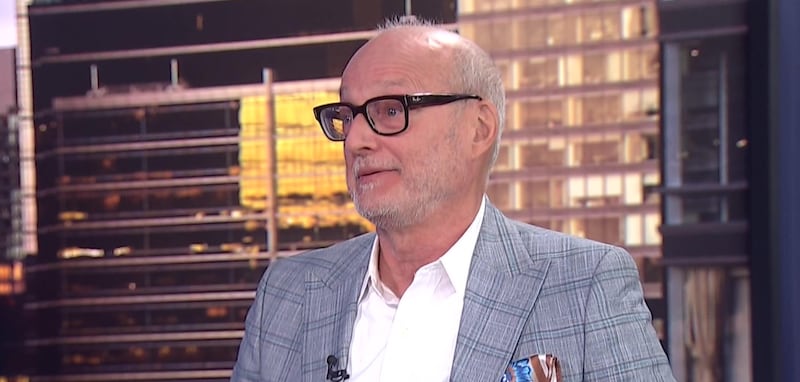
BNN Bloomberg spoke with Jim Thorne, chief market strategist at Wellington-Altus Private Wealth, about why he believes the oil and gold rally could fade and why investors may want to look for opportunities in equities during the volatility.
Key Takeaways
- Oil’s surge above US$100 a barrel reflects a short-term fear trade rather than a lasting supply shock, according to Thorne.
- Extreme backwardation in oil and volatility markets suggests near-term panic may fade and volatility could decline.
- Israeli equities have risen about seven per cent relative to the S&P 500 since the conflict began, signalling resilience in the region closest to the fighting.
- If geopolitical risks ease and oil supply flows normalize, investors may rotate out of defensive assets such as gold and energy.
- Thorne says investors should consider adding risk assets during volatility, including banks, AI leaders and capital-markets-linked stocks.
Read the full transcript below:
ANDREW: Right. We just saw oil top US$100 a barrel for the first time since 2022. Let’s get more from Jim Thorne, chief market strategist at Wellington-Altus Private Wealth. Jim, good morning. How are you? What’s your main observation on oil at this stage?
JIM: Oil is a sell. Gold is a sell. Stocks are a buy. You sell parabolic moves. As we saw earlier, the chart is parabolic. Oil is in extreme backwardation. Isn’t it interesting that Kharg Island, the key Iranian export island, has not been touched? The U.S. secretary of energy was on TV this weekend saying the Strait of Hormuz will be cleared up in a matter of days.
ANDREW: Let me interrupt you. Backwardation is where short-term prices have soared relative to long-term prices.
JIM: At an extreme, yes.
ANDREW: But you’re saying a year out, oil hasn’t really moved?
JIM: Right. And the same thing with the VIX, or the volatility index. When you have the near-term contract or the spot contract way above where it is out three months, typically that means volatility is going to decline. And when volatility declines, risk assets start to appreciate. So I would suggest — and what I’ve been talking about — is you should be fading this rally in energy and in gold. You should be thinking about your shopping list and taking advantage of the volatility. I would expect to see some clarity in the near term.
ANDREW: I kind of cut you off there. Sorry. You said the Americans are insisting they can clear the Strait of Hormuz?
JIM: The secretary of energy was on TV this weekend basically saying, give us a couple of days and that’s going to be done. So it’s a matter of insurance and clear passage. The U.S. military will take care of that. Then we get the flow coming back in.
Andy, what I think is very interesting — and what the market is telling you — is that the world is awash with oil right now. That’s why the G7 is talking about it. But I don’t think we really need it. This is a fear trade. It’s the view that this is going to escalate further. I don’t think it’s going to escalate further.
I don’t think the president is into regime change. I think he basically wants the Iranians to stop sponsoring terrorism and stop attacking Israel. We’ll see with this new regime or this new leader what will happen. But President Trump is not a neocon. I think cooler heads are going to prevail, and the market is going to look very different in the next couple of weeks.
ANDREW: It’s interesting you say that. In Tel Aviv, stocks have not been selling off.
JIM: No. I always say we’re here clutching our pearls. As of Friday, Tel Aviv was up seven per cent relative to the S&P 500. Maybe Tel Aviv doesn’t have all the algos freaking out on the headlines.
ANDREW: One thing, of course, is the Iranians could keep up a gadfly approach — small patrol boats sneaking out and sparking fear among shipping owners. That could drag on for a while.
JIM: Sure. And the Iranians, if they were really serious about creating economic damage, they could blow up Kharg Island. That’s the whole thing. This massive export island in the middle of the Strait of Hormuz — nobody’s touching it, Andy.
ANDREW: Whose island is it, sorry?
JIM: It’s Iran’s island, and that’s where a lot of the oil shipments originate. It’s the main port where cargoes are loaded for the rest of the world. Nobody’s touching it. If we wanted mutually assured destruction and you and I were gaming it out, we would blow that island up in a New York minute.
ANDREW: It’s very different from 1973-74, when Arab countries united to deliberately cut oil supplies.
JIM: Exactly. But that’s how we’re framing it. It’s not the Iraq war in 2002 and 2003. President Trump is not President Bush. They’re not going in for regime change. Yet we throw that on top and everybody freaks out — US$150 oil.
At US$100 oil, if you told me there was a major war in the Middle East, I’d say I thought it was supposed to be US$200 or US$300. The same thing with gold. Gold is sitting around US$5,000. If we’re in a major geopolitical crisis and everyone is buying it for geopolitical risk, why isn’t it at US$6,000 or US$7,000?
The smart money is fading this rally, Andy. They’re picking off stocks that are on sale.
ANDREW: You have some stock ideas for us. Royal Bank of Canada — people should take a look at that?
JIM: Yes. If Tiff Macklem is unwilling to cut rates, and if you look at last quarter’s earnings, there was a 17 per cent increase in personal banking. That was caused by individuals renewing their mortgages. Banks are going to be renewing about two-thirds of their mortgages this year. Royal Bank is a fee-income juggernaut. It has pulled back to a nice support level. I would be picking at Royal Bank here.
ANDREW: Nvidia — your interest in that one?
JIM: AI is a major theme. The U.S. is going to become an AI leader. People are not talking about how the U.S. military is using AI in the Middle East. This is a leader, and you want to buy leaders when they’re on sale and being irrationally sold.
ANDREW: And Goldman Sachs — you think it’s going to do OK as well.
JIM: Goldman Sachs is right back to the 200-day exponential moving average, which is upward sloping. If we’re in a structural bull market, you want to buy capital markets exposure. Goldman is a great way to play capital markets.
ANDREW: A friend of mine is very tech-savvy. He was building a website and ended up using Anthropic’s Claude to do it. He said things that would have taken days took about an hour. Software and data names like Thomson Reuters collapsed earlier but have bounced back a bit. Do you think Thomson Reuters is a buy right now?
JIM: I like that, and a company like Oracle. What you want are companies with data or intellectual property. I love Thomson Reuters for its legal library. Yes, there will be bumps along the road, but the baby has been thrown out with the bathwater.
Look, there has been a counter-trend rally in software and bitcoin — companies that had been thrown out. Meanwhile, investors piled into companies like Walmart and Costco. The fear trade has gone too far. That’s where the bubble is. Risk is perverse. When the cannons are going off and you’re in a war, you want to sell safety and buy risk.
ANDREW: Jim, thank you very much.
JIM: Thanks, Andy.
ANDREW: Jim Thorne is chief market strategist at Wellington-Altus Private Wealth.
---
This BNN Bloomberg summary and transcript of the March 9, 2026 interview with Jim Thorne are published with the assistance of AI. Original research, interview questions and added context was created by BNN Bloomberg journalists. An editor also reviewed this material before it was published to ensure its accuracy and adherence with BNN Bloomberg editorial policies and standards.

