Canada’s ETF industry continues to expand rapidly, with assets under management surpassing $775 billion as sales outpace mutual funds and investor adoption grows.
BNN Bloomberg spoke with Eli Yufest, executive director of the Canadian ETF Association, about growth in the ETF sector, rising participation among younger investors and policy proposals aimed at strengthening Canada’s investment ecosystem.
Key Takeaways
- Canadian-listed ETF assets under management surpassed $775 billion in the first quarter of 2026 following record inflows early in the year.
- ETF sales have been outpacing mutual funds for several years, highlighting a continued shift in how Canadians invest.
- About 22 per cent of Canadians now own an ETF, with adoption highest among younger investors.
- Canadians also hold roughly $250 billion in U.S.-listed ETFs, reflecting cross-border investing driven in part by regulatory and tax differences.
- The industry is advocating for policy changes, including TFSA reforms and regulatory coordination, to help keep ETF capital and innovation in Canada.
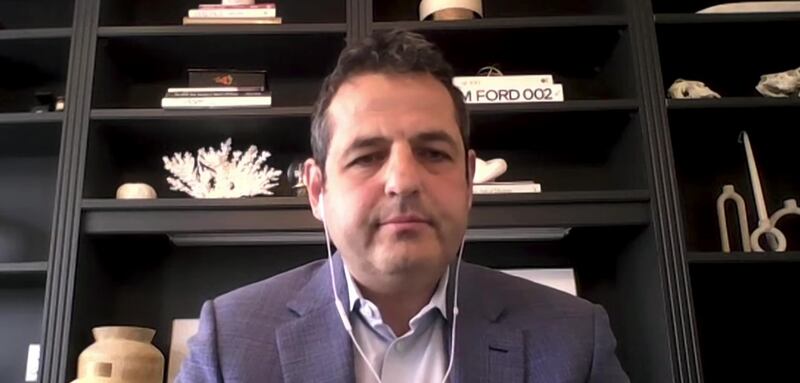
Read the full transcript below:
ANDREW: Time for the ETF Report. ETF sales in Canada have been outpacing mutual funds, and in the first quarter this year total assets under management have passed $775 billion. That’s ETF assets, with ownership skewing toward younger investors. Let’s get more from Eli Yufest, executive director of the Canadian ETF Association. Thanks very much indeed for joining us.
ELI: Thank you for having me this morning.
ANDREW: That’s a lot of money, isn’t it? More than three-quarters of a trillion dollars in ETFs now.
ELI: Indeed it is. And just to give a bit of context around that quantum of money, in 2026 we actually saw record inflows in January and February. So the wind is at the Canadian ETF industry’s back — we’re seeing record inflows. And to your point, $775 billion in ETF assets under management in Canada.
ANDREW: And you reckon your association represents members that account for about 96 per cent of ETF assets in Canada, correct?
ELI: Our association, the Canadian ETF Association, represents all aspects of the ecosystem — everything from the issuers, capital markets and exchanges to custodians, and even the lawyers and auditors that support all of those functions. In terms of membership, we represent about 96 per cent of ETF assets under management here in Canada.
ANDREW: But a lot of money. This is fascinating. So the Canadian ETF market, as we’ve said, something like $775 billion — massive. But Canadians own an additional quarter of a trillion, about $250 billion, in U.S.-listed ETFs.
ELI: Correct. Incremental to the $775 billion invested here in Canada, Canadians also have about $250 billion invested in U.S.-listed ETFs. There are a number of reasons why they’re doing that, and this is really a large part of what the association is trying to address. There are tax, structural and regulatory issues that drive that flow to the U.S. Money, like water, finds the path of least resistance. So we’re seeing Canadians choose to invest in American-listed ETFs because, frankly, they are oftentimes better off doing so from a tax and regulatory perspective.
ANDREW: Wow, that’s interesting. What would the tax advantage be? Can you give us one example of a tax advantage of going with a U.S.-listed ETF?
ELI: Sure. I’ll take a quick step back. Last summer, during the pre-budget consultation period, the association submitted a number of ideas to try to level the playing field with the United States. The simplest example is that in Canada, management fees are charged sales tax — HST. To my knowledge, we’re the only jurisdiction in the world to charge sales taxes on management fees.
I often cite the example when I’m talking to regulators or government. If you’re standing at a street corner looking to fill your car with gas, and one gas station on one corner has gas for $1.50 a litre and across the street it’s $1.51, where do you choose to fill up? Inevitably, nine times out of 10 the answer is the place that’s one cent cheaper. HST, or sales taxes on management fees, is just one example of the tax burdens that the Canadian industry faces that American issuers and fund managers do not.
ANDREW: You also say members of the industry are frustrated with dealing with multiple securities regulators in Canada?
ELI: Exactly. That was another submission we made during the pre-budget consultation. If you think about it, we have 13 regulators, each with their own fees, taxes and regulations that our fund managers have to comply with. If you juxtapose that with the U.S., there’s really only the SEC that fund managers have to deal with.
So we’re in a regulatory situation here in Canada where we have 13 regulators, all coming up with their own rules, fees and regulations that fund managers must comply with. Inevitably, those costs often get passed on to investors, which increases the likelihood that Canadians will continue to invest in American ETFs.
ANDREW: Interestingly, the mutual fund industry — well, of course — they themselves have plunged into ETFs. They’ve seen the writing on the wall. But they must have noticed that younger people skew toward ETFs.
ELI: They do. At a macro level across Canada, about 22 per cent — roughly one in five Canadians — now own an ETF. That number skews higher among younger Canadians. About one in four younger Canadians owns an ETF. If you look at older Canadians, those aged 55 and over, they skew much more toward mutual funds.
ANDREW: And where Canadians aged 55 and over are buying ETFs, it tends to be through an advisor?
ELI: Exactly. A majority of Canadians aged 55 and over will buy through an advisor, while younger Canadians are more do-it-yourself investors. They’re choosing to purchase through discount brokerage channels and taking a self-directed approach.
ANDREW: One suggestion you have for keeping these assets with Canadian providers is starting some kind of new Maple Investment TFSA. That would only let you buy Canadian-listed securities.
ELI: Exactly. We’re proposing to the federal government to do one of three things with the current TFSA regime. We love the concept of the TFSA, but we know about 60 per cent of Canadians hold cash in their TFSA. When they hold cash, it doesn’t benefit them and it doesn’t benefit the economy.
The name Tax-Free Savings Account suggests to many Canadians that it’s a high-interest savings account, which of course isn’t the case. The first suggestion is simply adding the word “investment” to the name to encourage Canadians to invest the funds.
The second proposal is to allow a higher contribution limit if Canadians invest in a Canadian-listed ETF. For example, if the allowance this year is about $7,000, increase it to $10,000 or $12,000 if the investment is in a Canadian-listed ETF.
Third, we’re asking the federal government to match a portion of those incremental contributions, similar to the way they match contributions in an RESP — about 20 per cent up to $500 a year. The association has been modelling what that would look like from a cost-benefit perspective for the economy and what it would cost the government in revenue. We’ll be sharing that with the government in the coming weeks to try to get that program off the ground.
ANDREW: Sorry, when you say match contributions, do you mean as they do with an RESP, a Registered Education Savings Plan?
ELI: Exactly.
ANDREW: Right — not an RRSP.
ELI: Sorry, yes — RESP.
ANDREW: That’s an interesting idea. Thank you very much, Eli, for joining us.
ELI: Thank you for having me.
ANDREW: Eli Yufest, executive director of the Canadian ETF Association.
---
This BNN Bloomberg summary and transcript of the March 10, 2026 interview with Eli Yufest are published with the assistance of AI. Original research, interview questions and added context was created by BNN Bloomberg journalists. An editor also reviewed this material before it was published to ensure its accuracy and adherence with BNN Bloomberg editorial policies and standards.

