Oil prices retreated after U.S. President Donald Trump signalled the war involving Iran could end soon, but risks to supply moving through the Strait of Hormuz could still drive prices sharply higher.
BNN Bloomberg spoke with Vikas Dwivedi, global energy strategist at Macquarie Group, about how prolonged disruption to shipping through the key Middle East chokepoint could trigger a significant global crude shortage.
Key Takeaways
- Limited tanker traffic through the Strait of Hormuz could still create a major supply deficit despite recent declines in oil prices.
- A disruption lasting several weeks could remove roughly eight to 10 million barrels per day from global markets after mitigation efforts.
- Markets appear to be assuming the conflict will end quickly and shipping will soon return to normal.
- Strategic reserves could help stabilize supply, but governments have so far held back from releasing them.
- Persistent disruptions could increase interest in crude supply from the Americas, including Canada, Venezuela, Mexico and Brazil.
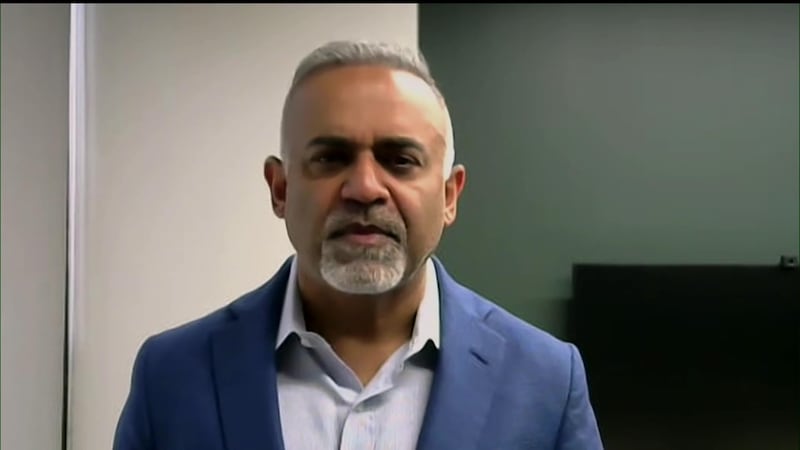
Read the full transcript below:
ROGER: Oil prices are in retreat after U.S. President Donald Trump said the war involving Iran could end soon. But our next guest thinks oil prices could still head toward US$150.
Here to break down his outlook on global oil supply is Vikas Dwivedi, global energy strategist at Macquarie Group. Vikas, thanks very much for joining us.
VIKAS: Yeah, thanks for having me.
ROGER: US$150 or even higher — what situation would lead to that?
VIKAS: Yeah, the main situation is what’s already underway, right? We’re seeing very limited flow through the Strait of Hormuz. There are some trickles with Iranian vessels and now maybe some Chinese-chartered ships that may come through. But largely it’s not flowing, and the magnitude is so big that we’re having trouble understanding why the market is not giving that more credit.
And it obviously did, right? But it was very brief, to the US$120 level. And look, we get it. Some of this is the possibility of SPR releases coming up, the potential for Jones Act waivers and other things to try to mitigate the situation — rerouting oil into the west side of Saudi Arabia. That’s already occurring.
So there are things underway to limit the deficit that’s being created, but the deficit is still large. To sum it up, I think the market is assuming this conflict is almost done — a ceasefire is around the corner, kinetic activity stops, and transit through the Strait of Hormuz can go back to normal very quickly. That has to be the assumption for the price action of the last couple of days.
ROGER: Yeah. I mean, literally every time you look, it’s dropped again today. It’s down to US$84. Is this a case of both sides realizing they need to get that oil moving through?
VIKAS: Yeah, I think that’s a big part of it. Iran has probably just been getting its vessels through. But there’s more to it. There are agricultural products, sulphur, fertilizer-type products moving through there.
So I think there’s recognition on both sides that this can’t stay as it is for two months or something like that. It’s got to get wrapped up — maybe in days, but definitely in weeks.
ROGER: And what about the G7? Are you surprised they haven’t tapped their reserves yet? I know they had another meeting today and we haven’t heard the outcome, but are you surprised they didn’t say yesterday, let’s open the tap a little bit?
VIKAS: Yeah, I’m a little surprised. This is exactly the type of precaution those reserves are for. Unless they have insight that the situation is about to be resolved — and you’d need insight from both sides for that — then why not use them?
You need insight from the U.S. and Israel and from Iran. Otherwise it’s too one-sided. But that’s what the reserves are there for. Why not say we’ll pre-emptively get more oil on the water for a while? It might mean too much supply temporarily, but that’s better than getting caught short if escalation ramps up again.
ROGER: Let’s look at a couple of scenarios. If this conflict is settled, what happens with oil? Does it fall back to US$55 or US$60, or stay elevated for a while?
VIKAS: I think the latter comes first. The market will want to see a few weeks — maybe a couple of months — of normal operations in Hormuz. And importantly, no attacks in the region.
You don’t need much. If a few ships are randomly hit, it can put a big chill on the entire flow. So the market will need to see those things not happening before it gets comfortable.
Then the move back toward the mid-US$50 range begins. We think by the second half of the year that could be in play again.
ROGER: And if this conflict continues, you think US$150 isn’t unrealistic — maybe even higher. Do countries start looking for alternative sources like Venezuela or Canada?
VIKAS: Yeah, absolutely. Anything that results in escalation — or even just staying in the current situation for too long — could push prices much higher. Even a couple of weeks of this could do it.
We still think US$150 is very doable because the magnitude of the deficit is so large. You’re talking about eight to 10 million barrels a day after mitigation efforts.
Even if prices don’t reach US$150, this situation is already shifting focus to other supply regions. For U.S. purposes especially, Canada and Venezuela are attractive because they’re in the hemisphere and logistics are easier.
The U.S. doesn’t buy a lot of Middle East crude, but globally people will look at it and say we can’t predict what Iran will do, but we have more supply certainty from other markets. Canada, Venezuela, Mexico and Brazil all fall into that group.
ROGER: What about alternative energy sources like nuclear? Could this accelerate development there?
VIKAS: It might give some early momentum. People may become a little more enthusiastic about those options, but they’ll run into the reality of costs and regulations.
Those are the same factors that slowed nuclear development in the past. So this event alone may not create enough momentum to push through all those barriers.
That said, nuclear should probably happen anyway. If climate change is a real concern, nuclear is an excellent solution. But it has its own challenges, and I’m not sure this event alone creates enough momentum to overcome them.
ROGER: We’ll have to wrap it up there. Vikas, thanks very much for joining us.
VIKAS: Thank you for having me.
ROGER: Vikas Dwivedi, global energy strategist at Macquarie Group.
---
This BNN Bloomberg summary and transcript of the March 10, 2026 interview with Vikas Dwivedi are published with the assistance of AI. Original research, interview questions and added context was created by BNN Bloomberg journalists. An editor also reviewed this material before it was published to ensure its accuracy and adherence with BNN Bloomberg editorial policies and standards.

