The Ontario Securities Commission is exploring ways to expand retail investor access to private markets, including private equity funds — a move supporters say could broaden investment opportunities.
BNN Bloomberg spoke with Rachel Wasserman, founder of Wasserman Business Law and a fellow at Social Capital Partners and the Canadian Anti-Monopoly Project, who argues the proposal could expose retail investors to greater risks and may arrive as institutional investors scale back their exposure to private assets.
Key Takeaways
- The Ontario Securities Commission is studying ways to allow smaller retail investors to access private market investments, including private equity funds.
- Critics say private markets lack the transparency, liquidity and regulatory protections that retail investors benefit from in public markets.
- Mark-to-model valuation practices in private equity can create conflicts of interest and make it harder for investors to know the true value of holdings.
- Institutional investors such as pension funds have recently shown signs of reducing exposure to private equity amid valuation concerns.
- Expanding retail access could increase the risk of liquidity mismatches and gated funds if investors attempt to withdraw money from illiquid asset
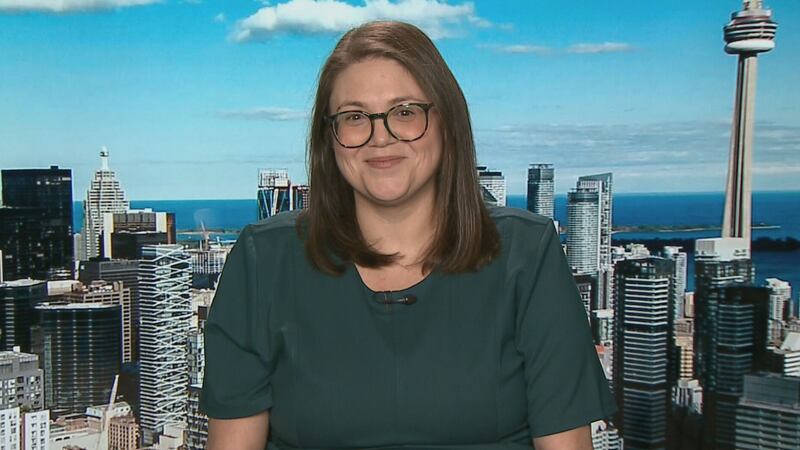
Read the full transcript below:
ANDREW: A current focus for the Ontario Securities Commission is to open up private equity markets to smaller retail investors. The regulator argues the move will benefit both retail investors and capital markets alike.
Our guest has concerns. Let’s hear more from Rachel Wasserman, founder of Wasserman Business Law and a fellow at Social Capital Partners and the Canadian Anti-Monopoly Project. Rachel, thank you very much for joining us.
RACHEL: Thanks for having me.
ANDREW: There’s a move afoot in the United States along these lines. But can you tell us what Ontario is talking about?
RACHEL: Ontario is looking at opening something like a mutual fund-style product for private equity. The concern has been that our public markets are declining and that we have fewer investment opportunities for retail investors.
The OSC thinks it’s a good opportunity to open private markets to retail investors. While there are merits to private markets, I really don’t think this is the best opportunity for retail investors. We have to look at why now. Why is this happening?
In my opinion, private markets are really overvalued. Private markets have served a purpose, and retail investors require more protection than accredited investors like pension plans. To equate the two is problematic.
ANDREW: It’s interesting. There have been signs of cooling enthusiasm among big, sophisticated investors, such as pension funds, for private equity.
RACHEL: Absolutely. Coincidentally, when my op-ed came out in The Globe and Mail, the Ontario Teachers’ Pension Plan took a loss on its private equity portfolio — I think it was about a $10-billion write-down.
That’s not to say there’s no merit in private markets. But we have to look at why this is happening now and what the trends will be in the future. We can’t look at the past as determinative of the future. I worry retail investors are being brought to the party at the wrong time.
ANDREW: Because “behind closed doors” is really a characteristic of private equity. It’s not a transparent market. For one thing, you don’t really know what your investments are worth from day to day. It depends on a valuation produced by an accounting firm.
RACHEL: That’s exactly it. Mark-to-market versus mark-to-model are very different, and there can be conflicts of interest in mark-to-model that don’t exist with public disclosure.
When you sell an asset on the public market, you have buyers and sellers and a clear price. At the end of the day you can sell — the question is just at what price. In the private market, liquidity is a much bigger issue.
Mark-to-model valuations are based on the assumptions of the private equity fund manager and the valuator, who frankly may have a conflict of interest. It’s the same kind of conflict that underpinned Enron, Sarbanes-Oxley reforms and the 2008 global financial crisis — the valuator wants to keep the client happy as a repeat customer.
ANDREW: Remind us what kind of vehicle Ontario is considering.
RACHEL: It’s a mutual fund-style product. I’ll be honest — I’m not an expert in all the nuances of the product. But it would be led by a large private equity investor that could run the fund on behalf of retail investors and do the due diligence.
But even some of those types of investors have said they don’t want to do this. So it doesn’t make sense to me why this is being pushed so hard.
ANDREW: And of course the classic problem with private equity is that the assets are illiquid. These funds hold stakes in companies that can’t just be sold overnight. If there’s a run on the fund, redemptions may have to be suspended and investors could have their money locked up.
RACHEL: Exactly. And look at what’s happening right now — more than 40 per cent of Canadian real estate funds are gated.
I don’t understand how we can be discussing opening this to retail investors at the same time as the smartest money in the world is scaling back. If you understand how private markets work, they always rely on new money coming in. Traditionally that has come from sophisticated pension funds.
But those investors are scaling back. The market needs new capital, and it seems a little too convenient that retail investors are now being tapped.
ANDREW: Big players like Blackstone in the United States have also been hit by a surge in withdrawals from flagship private credit funds. And we’ve seen funds in Canada — including credit and real estate funds — restricting redemptions.
You do say private equity can sometimes play a positive role economically.
RACHEL: Absolutely. Private equity has a role to play, and we shouldn’t demonize an entire industry.
That said, there’s also a lot of problematic activity. Part of my concern — which relates to the work I do with the Canadian Anti-Monopoly Project and Social Capital Partners — is the extractive nature of some private equity strategies. Leveraged buyouts and subscription lines can consume the cash flow of a business rather than relying on long-term equity growth.
When we look at the broader economy and see businesses not investing enough for growth, part of the reason is this model. We can’t just keep extracting value indefinitely. Eventually we run out of things to extract.
ANDREW: Rachel, thank you very much. Fascinating topic. People can also read Rachel’s op-ed, which she wrote with Ed Waitzer, former chair of the Ontario Securities Commission, in The Globe and Mail.
---
This BNN Bloomberg summary and transcript of the March 13, 2026 interview with Rachel Wasserman are published with the assistance of AI. Original research, interview questions and added context was created by BNN Bloomberg journalists. An editor also reviewed this material before it was published to ensure its accuracy and adherence with BNN Bloomberg editorial policies and standards.

