Escalating attacks in the Persian Gulf and rising oil prices are adding uncertainty for investors as policymakers prepare for key interest-rate decisions this week.
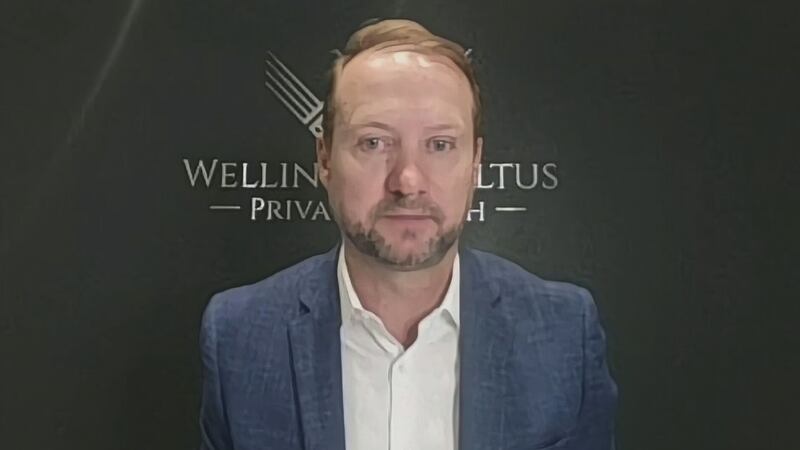
BNN Bloomberg spoke with Cole Kachur, senior investment advisor and portfolio manager at Wellington-Altus Private Wealth, about how oil volatility, shifting rate expectations and geopolitical tensions are shaping the investment landscape.
Key Takeaways
- Escalating attacks around the Persian Gulf have intensified geopolitical risk and contributed to renewed volatility in global energy markets.
- Higher oil prices could add to inflation pressures, complicating the Federal Reserve’s path on interest rates.
- Markets are pricing in fewer U.S. rate cuts this year as inflation risks re-emerge alongside geopolitical uncertainty.
- Central banks may adopt a wait-and-see approach while policymakers assess how the oil shock affects growth and consumer spending.
- Companies investing heavily in artificial intelligence are increasingly cutting costs elsewhere, including jobs, to fund large data centre and technology spending.
Read the full transcript below:
LINDSAY: Iran is denying President Donald Trump’s claims that ceasefire talks are underway, even as new attacks emerge off the Persian Gulf. Markets are now shifting focus to this week’s Federal Reserve decision and how policymakers plan to navigate the economic impact of the oil shock.
Joining us now is Cole Kachur, senior investment advisor and portfolio manager at Wellington-Altus Private Wealth. It’s good to have you join us. Good morning.
COLE: Good morning. Thanks for having me on.
LINDSAY: We’re seeing a bit of a rebound in the stock market this morning, oil prices sliding ever so slightly. Do you expect that to continue, or is this just some of the volatility we’re expecting to see now?
COLE: Yeah, I think this is just volatility. Last week, a number of indexes had bad weeks. This week it might be a little bit different. I think until there’s a little bit more clarity on a number of things, including the conflict or war in the Middle East, some of the stuff going on inside the Federal Reserve and just with the Trump government, there are no easy days.
There’s always something in the news cycle that adds to the volatility. So I think that’s just kind of the world we’re going to live in here until we get something that really drives the market forward, whether that be the ending of this conflict or a clear path to interest-rate decreases.
I think we’re just going to be one step forward, one step back, and hopefully we grind higher. But the start of the year has been really much ado about nothing so far.
LINDSAY: Yeah, it’s been an interesting year so far, that’s for sure. Gold has been falling over the last couple of weeks. I’m wondering, what’s the correlation between gold and oil? How do they typically interact? Are you surprised to see gold falling?
COLE: Well, if you believe that gold should be a safe-haven asset, then you would think that it would actually perk up right now. But I think what we’ve seen is that a lot of these correlations that at one time maybe seemed to exist — whether it’s between stocks and bonds, bonds and gold, gold and the equity market or gold and oil — they’re not really sticking to what they would have done traditionally.
In the instance of gold, it’s been more so that it’s just traded up so significantly over the last year that anything that spikes that much can have a pullback really at any time. Whether that pullback is in the short or medium term depends on your view on what gold is going to do going forward.
Given everything going on in the world, you would think that it would lead to the gold price climbing, but that hasn’t really happened. There seems to be a little bit of a divide in some of these things that would naturally be tied together.
LINDSAY: Are you still holding gold within your portfolio right now? Do you think that’s a good place for investors to be?
COLE: I’m not a big gold bug. I know people on this show and a lot of investors out there who have been more involved in the gold trade. While I would love to say that I bought it low and sold it high, that wouldn’t be honest.
Unfortunately, with the gold trade, it’s not something where I typically would have it inside my portfolios. But I do know within Wellington-Altus that there are a number of advisors who have owned gold and have done very well with it.
Every advisor, every person who manages money, will have their own take on things. For me, I’ve generally stayed out of the gold investment realm. But as it relates to a well-diversified portfolio, there’s really no reason that you can’t own gold.
For ourselves, we use other alternatives and different investments to kind of take the place of that. But if you’re going to own it, you own it during the good times and maybe that’s why you rebalance. You want to trim when things are higher and hopefully, if there is a pullback, you’re a little bit underexposed to it.
LINDSAY: Let’s talk about the rate decisions coming up this week from both the Bank of Canada and the Federal Reserve, happening on Wednesday. Are there any key signals, like wording or themes, you’re watching for before these announcements? And what are you advising investors to do ahead of something like this?
COLE: Specifically in the U.S. right now, it’s very tough, frankly, with Powell most likely being on the way out, but then Kevin Warsh not necessarily being ready to be sworn in yet. It’s a really questionable time for what’s going to happen with interest rates.
Right now, the market has really started to price in that there are going to be a lot fewer cuts than maybe were hoped earlier in the year. That could change quickly. Job stats seem to be starting to decrease, but on the other side, inflation — with the price of oil — is starting to bump up again.
So it’s a really tricky spot, specifically within the U.S. market. Here in Canada, I think the bulk of rate cuts have probably happened over the last year. I would expect them to hold for the time being, again with the potential price spike coming from gas and oil prices.
Generally, when there’s a shock event, policymakers like to take a little bit of time to see what the impact is going to be on purchasing and consumer spending, and then they’ll adjust from there. With this war having just started a few weeks ago, I think it’s probably too early to act decisively one way or another.
So I am interested in the language that is going to accompany the actual rate decision, but I would expect that for now they’re going to be along the lines of a wait-and-see approach while this conflict plays out, and further decisions will be made at the next meeting, which may be in June.
LINDSAY: Just before we wrap up here, I did want to get your thoughts on another story we’re following closely today. That’s Meta. The stock price up today by more than two per cent. Obviously they’ve signed a major infrastructure agreement, but there are also reports that they’re planning to lay off at least 20 per cent of the company’s staff.
So I wanted to get your thoughts on what’s going on with Meta and how those layoffs could affect the company.
COLE: I think a lot of these companies, whether it be Meta or Amazon or Block, are starting to realize that with their AI spending they need to fund it from somewhere. A lot of that funding seems to be coming from tightening up on hiring or releasing employees who had worked with these companies.
These companies need to be cognizant of the spending. With a lot of the earnings from these companies, the earnings were great, but where the market got scared was the amount of money they’re going to be spending on data centres and the AI buildout. Some of that spending needs to be reined in from other places.
Whether AI is making these companies more efficient and they don’t need these workers anymore, or it’s just a simple cost-cutting measure, that’s probably dependent on each company. But it’s a little bit worrisome in that what’s good for the stock market or a specific stock is sometimes not good for the rest of the economy.
Those are high-paying jobs that are likely being lost, and that hurts. I think we’ll continue to see this, and with some of the job weakness already, it is something we’re most likely going to continue to see for the next number of years. That’s a big worry for some economists, as it should be.
LINDSAY: Cole Kachur, we’ll leave it there. Senior investment advisor and portfolio manager at Wellington-Altus Private Wealth. Appreciate you joining us. Thanks so much.
---
This BNN Bloomberg summary and transcript of the March 16, 2026 interview with Cole Kachur are published with the assistance of AI. Original research, interview questions and added context was created by BNN Bloomberg journalists. An editor also reviewed this material before it was published to ensure its accuracy and adherence with BNN Bloomberg editorial policies and standards.

