Markets are rebounding as oil prices stabilize above recent highs, but elevated crude continues to pose risks for inflation and economic growth. The persistence of high energy costs is adding uncertainty to the broader economic outlook.
BNN Bloomberg spoke with Melissa Brown, managing director of investment decision research at SimCorp, who says central banks are facing a difficult balancing act as they weigh inflation pressures against signs of economic softening.
Key Takeaways
- Oil prices above $100 per barrel are likely to push inflation higher through increased transportation and consumer costs.
- Even stable oil prices at elevated levels can take time to feed into broader economic data, prolonging inflation pressures.
- Central banks face a renewed stagflation risk, complicating decisions between rate cuts and potential hikes.
- Investor sentiment remains negative globally, with a shift toward lower-risk assets despite short-term equity rebounds.
- Trading activity has diverged, with U.S. volumes falling while Canada and other global markets remain near recent highs.
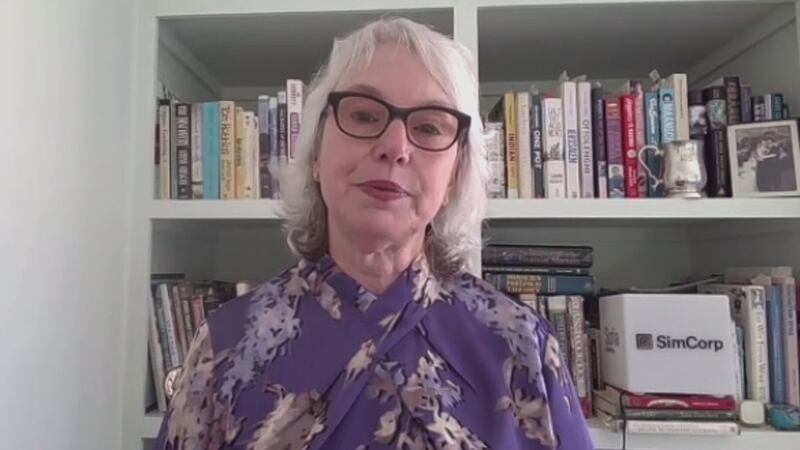
Read the full transcript below:
ROGER: Well, markets are up today as the rally in oil eases, although prices are still rising after hitting record highs. Our next guest says the potential direction of oil prices presents a conundrum for central banks, which must choose between fighting inflation or a weakening economy. Joining us now is Melissa Brown, managing director of investment decision research at SimCorp. Melissa, thanks very much for joining us.
MELISSA: Sure.
ROGER: Oil is back up again today, but not as much — it’s a little calmer. Is that a good sign? How should we interpret this?
MELISSA: I think oil prices are high in general. Over $100 a barrel is still pretty elevated. On balance, that’s negative. Higher oil prices are going to translate into higher costs for transportation and goods, and ultimately for consumers. The longer they stay high, the greater the impact on inflation.
ROGER: If prices were to hover around here, is that manageable? Obviously, most people would like to see oil come down, except for those who own it. Is this level manageable?
MELISSA: In general, stable prices are better than very volatile ones, which is what we’ve seen. But I still think the current level is high. Even if prices don’t rise further, it takes time for higher oil prices to work their way through the economy. Staying at this level will eventually show up in inflation data.
ROGER: We’re already seeing it. I filled up at the pump yesterday — premium was $2.05 a litre. I haven’t seen that since, what, 2022?
MELISSA: I remember the gas lines in the 1970s — that probably gives away my age. Everything is relative, but as people fill up and realize they may need to cut back elsewhere, that’s where it starts to affect the broader economy. Even if the impact were limited to the pump, it would still be a problem, but it goes well beyond that.
ROGER: How does this compare to the oil shock of 1973, which is often seen as the benchmark?
MELISSA: I don’t know the exact price comparisons, but conditions were much worse then, with people lining up for gas and restrictions like alternate-day fueling. That had ripple effects — if you were waiting in line for gas, you weren’t working. We’re nowhere near that level now, but it’s an extreme scenario that isn’t impossible.
ROGER: Markets have been rallying over the past couple of days, even as oil remains elevated. Why are investors reacting this way?
MELISSA: Investor behaviour has been conditioned to “buy the dip.” We saw a pullback, and investors stepped in. But sentiment remains fairly negative globally. That means investors are favouring lower-volatility, perceived safer stocks rather than taking on more risk.
It’s also notable that trading volume has dropped significantly in the U.S., suggesting investors are more cautious there. In contrast, volume in Canada — as well as in Europe, Japan and Australia — has remained relatively strong, close to a 12-month high.
ROGER: In Canada, we’re also seeing weaker job numbers and a softer housing market. Where does that leave the Bank of Canada and the Fed?
MELISSA: It leaves them in a difficult position. They have dual mandates — controlling inflation and supporting economic growth — and those goals are increasingly in conflict. That likely means they hold steady for now. The Fed, in particular, is very data-driven and will want clearer evidence before making a move.
What’s interesting is that the idea of rate hikes has re-entered the conversation. That possibility was essentially zero a month ago, but it’s now back on the table.
ROGER: There’s been talk of two potential moves this year for both the Bank of Canada and the Fed.
MELISSA: It’s still a relatively low-probability scenario, but no longer zero. If inflation begins to rise again — especially tied to oil prices — central banks may be forced to act.
ROGER: We’ll leave it there. Melissa, thanks very much for joining us.
MELISSA: Thank you.
ROGER: Melissa Brown, managing director of investment decision research at SimCorp.
---
This BNN Bloomberg summary and transcript of the March 17, 2026 interview with Melissa Brown are published with the assistance of AI. Original research, interview questions and added context was created by BNN Bloomberg journalists. An editor also reviewed this material before it was published to ensure its accuracy and adherence with BNN Bloomberg editorial policies and standards.

