Stocks are advancing as investors look past near-term concerns around the Iran conflict, even as energy prices remain a key risk for the global economy.
BNN Bloomberg spoke with David Dietze, chief investment strategist at Dietze Wealth Management Group, about why markets are holding up, where risks remain and how investors should position portfolios.
Key Takeaways
- Markets are showing resilience, with the S&P 500 down only modestly despite geopolitical tensions and elevated oil prices.
- Strong consumer spending, particularly among higher-income households, is helping support economic activity.
- Prolonged high energy prices remain a key risk, with potential to drive inflation and limit central bank rate cuts.
- Volatility is expected to persist as uncertainty around the Iran conflict and Strait of Hormuz continues.
- Investors may need to be cautious on long-dated growth themes, with timelines and execution risks still unclear.
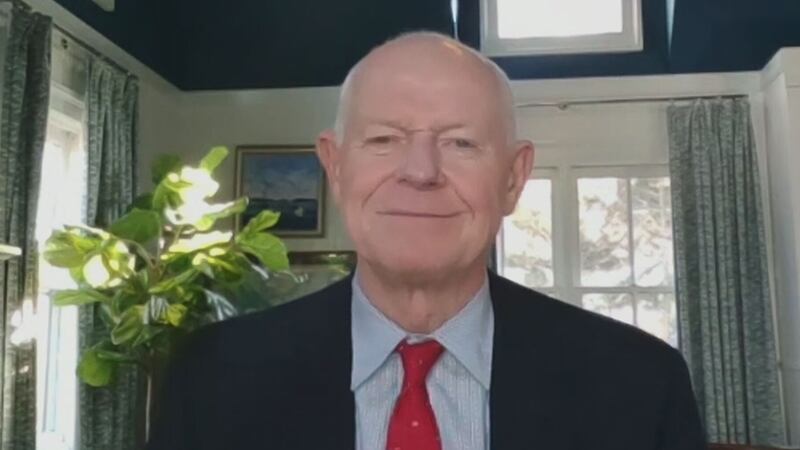
Read the full transcript below:
LINDSAY: As we just saw, stocks are advancing as investors appear to be setting aside some concerns about the war in Iran, while oil prices seem to be moderating. Let’s get perspective now from David Dietze, chief investment strategist at Dietze Wealth Management Group. It’s good to have you with us. Thanks for joining us.
DAVID: Thank you. It’s a pleasure to be with you this morning.
LINDSAY: What are your thoughts on what we’re seeing so far this morning in terms of market direction?
DAVID: It seems to me that markets are taking some comfort from the fact that key players in the economy are suggesting they’re not overly worried about the Iran situation, despite the standoff over the Strait of Hormuz and the broader geopolitical risk.
We heard, for example, from Delta. You would think an airline would be among the most impacted by this crisis — concerns about terrorism, higher oil prices pushing up ticket costs — but Delta says it has seen eight of the 10 best days in its history over the past couple of weeks and is raising its forecast.
That is giving confidence to Wall Street and investors that, while this is a horrific situation, the average American consumer — which underpins the U.S. economy — is continuing to spend and not materially changing behaviour.
LINDSAY: So do you think we’re seeing resilience, or should we expect more volatility?
DAVID: We are definitely seeing resilience. Despite everything going on, the S&P 500 is only down about four to five per cent from its highs.
One reason is that, in some ways, the United States benefits from higher energy prices as a net energy exporter. There are transfers within the economy, but overall that provides some support.
That said, volatility will persist. There is no clear end to the conflict, and efforts to secure the Strait of Hormuz are moving slowly. Investors should remain mindful of headline risk and continued volatility.
LINDSAY: As long as the conflict continues and oil prices trend higher, how does that filter through to different sectors of the economy?
DAVID: One of the key themes in recent years is that the top 20 per cent of consumers in the United States are driving much of the spending. They have benefited from strong housing and equity markets.
Lower-income households, however, are being squeezed. Higher fuel costs represent a larger share of their spending, as do rising food prices, which are also impacted by transportation costs. Diesel prices have nearly doubled since the start of the year.
At the same time, higher-income consumers retain significant purchasing power, which is helping support companies like Delta.
LINDSAY: Let’s turn to another development — Nvidia announcing partnerships with Uber and Lyft. Do you think investors should be buying into these companies now?
DAVID: I would be cautious. The rollout of autonomous vehicles is not expected until 2027, 2028 or even 2030.
We saw with electric vehicles that initial enthusiasm can fade as execution challenges emerge, subsidies change and demand shifts. There are also regulatory and safety concerns around autonomous driving.
While Uber remains a leader in ride-hailing and could benefit if autonomous adoption is delayed, I would not increase exposure to either company based solely on this announcement.
LINDSAY: We’re also watching central bank decisions this week, including the Federal Reserve. What do you expect?
DAVID: I expect little change from the Fed. There are many moving parts, making it difficult to determine the underlying trend.
Inflation has shown signs of stabilizing, but higher energy and food prices could create renewed pressure. The key question is whether that is temporary or more persistent.
At this point, markets are pricing in only one rate cut this year. Developments in energy are making it harder for central banks to ease policy as much as previously expected.
LINDSAY: Before we go, you have a couple of stock picks — starting with Molson Coors. What do you like there?
DAVID: It has strong global brands and exposure across key markets, including Canada, the United States and South America. The stock is trading at about seven times earnings and offers a dividend yield of roughly 4.6 per cent.
The company has also announced plans to buy back about $4 billion worth of stock, which is significant relative to its market capitalization. Combined with dividends, that suggests a potential double-digit return for investors.
There are headwinds, including tariffs and shifting consumer preferences, but the company is investing in alternatives and cost reductions.
LINDSAY: And briefly, Campbell’s?
DAVID: It’s a similar story. Strong brands, a solid dividend and efforts underway to stabilize performance and reduce costs.
If those efforts fall short, there is potential for activist involvement or strategic interest, which could unlock value for investors.
LINDSAY: We’ll leave it there. David Dietze, chief investment strategist at Dietze Wealth Management Group. Thanks for your time.
---
This BNN Bloomberg summary and transcript of the March 17, 2026 interview with David Dietze are published with the assistance of AI. Original research, interview questions and added context was created by BNN Bloomberg journalists. An editor also reviewed this material before it was published to ensure its accuracy and adherence with BNN Bloomberg editorial policies and standards.

