The Bank of Canada held its benchmark interest rate at 2.25 per cent, as policymakers navigate rising uncertainty tied to inflation, growth and global developments.
BNN Bloomberg spoke with Jason Daw, Head of North American Rates Strategy at RBC Capital Markets, who said the central bank is likely to remain on hold as it assesses the impact of oil prices and broader economic crosscurrents.
Key Takeaways
- The Bank of Canada held its benchmark interest rate at 2.25 per cent, in line with market expectations.
- Elevated uncertainty driven by oil prices and geopolitical risks is reinforcing a cautious policy stance.
- Inflation pressures may rise due to energy shocks, complicating the central bank’s path forward.
- Economic data shows mixed signals, with resilient growth but weaker labour market trends.
- Future rate moves remain uncertain, though risks may tilt more toward hikes than cuts.
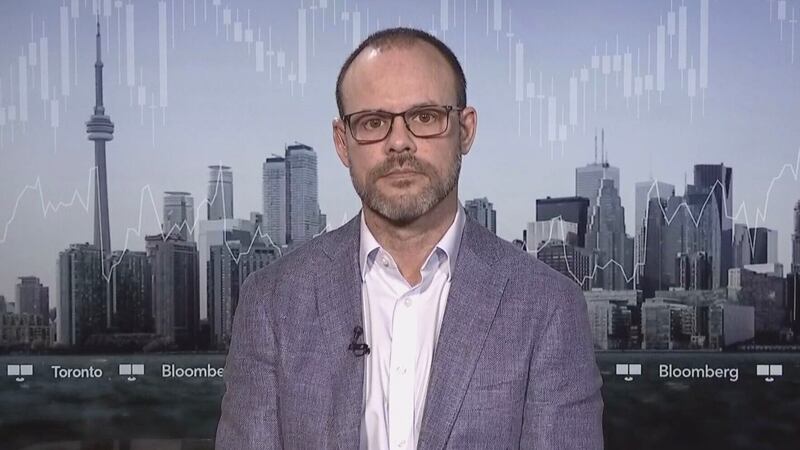
Read the full transcript below:
LINDSAY: And as I just mentioned, the Bank of Canada is set to announce its latest interest rate decision any moment now, in about a minute’s time. Joining us live to break down what this means for the economy is Jason Daw, head of North American rates strategy at RBC Capital Markets. It’s good to have you join us. Thanks so much.
JASON: Hi, good morning. Thank you for having me on.
LINDSAY: Yeah. So we’re just waiting for these numbers to come out — oh, it looks as though they are out, and it looks as though rates are being held steady at 2.25 per cent. I was going to ask what you expected. Is this what you expected?
JASON: Yeah, it was largely expected by consensus. It was expected by the markets that there would be no change. A lot of it is going to depend on what the Bank of Canada says as far as the outlook going forward. There have been a lot of crosscurrents hitting the economy, both on the inflation and growth side. So the level of uncertainty is quite high, and that does argue for them to be on hold at this point.
LINDSAY: I’m just going to look for more details in a moment, but in terms of keeping this rate steady at 2.25 per cent — as you mentioned, there are so many factors fueling these decisions. The last time we heard from Tiff Macklem announcing a rate decision, he was focused heavily on CUSMA and the upcoming renegotiation with the U.S. So much has happened geopolitically since then. What do you think are some of the main focus points for the Bank of Canada now?
JASON: Yeah, the outlook was cloudy before the last couple of weeks, and it’s become even cloudier with what’s happening with oil prices. The economy has been facing a number of structural changes — whether that’s population, trade relationships with the U.S., and now another supply shock from oil. That further complicates the outlook because there are different forces acting on both growth and inflation. All of this continues to argue for them being on hold for some time as they digest the information. As the Bank of Canada said in January, uncertainty is high, and now it’s even higher.
LINDSAY: Yeah, we’ve also seen signs of slower consumer spending here at home and rising mortgage pressure. How much is that weighing on the Bank of Canada’s decision?
JASON: Overall, the economy over the past 12 months has actually been surprisingly resilient. Consumer growth was close to two per cent last year, and so was final domestic demand. There was a lot of erratic data on trade and inventories, but the economy was generally resilient. More recently, the labour market hasn’t looked all that strong, but over a six- to nine-month period, job growth has been close to zero — and population growth has also been close to zero. So that is largely consistent. Inflation has come down on core measures. So the path to rate cuts, if growth weakens, is wider, but overall the outlook still points to a long period of holding rates.
LINDSAY: Yeah, and I’m just looking at this statement now from the Bank of Canada talking about growth and GDP numbers that came in weaker than expected. The statement also references the war in the Middle East, saying that prior to the war, the global economy was on pace to grow at around three per cent. So clearly what’s happening there is influencing decisions. Do you expect Tiff Macklem could hint at rate cuts later this year?
JASON: No, I think there’s a more likely chance that they actually raise rates next. They could cut if inflation is contained and growth is weak. What we know from the oil shock is that inflation will be higher on headline CPI. Whether there are second-round effects that filter into core inflation and the labour market will take time, and they’ll need to see evidence before deciding what to do. So the inflation side is clearly higher. The growth outlook is more complicated — it could be neutral, slightly positive or slightly negative. But again, this argues for a long period on hold. There is a chance of a cut and a chance of a hike, but we think a hike is more likely than a cut.
LINDSAY: Okay, and looking at other factors here at home, like housing — always a major factor in Canada. You don’t expect lower rates later this year, but how much will the housing market influence decisions?
JASON: It’s definitely one factor they look at, but it’s not the only factor. There are a lot of issues in housing related to population and other dynamics. The housing market has been weak for a couple of years. It could soften a bit more, and prices could adjust lower, but the upside is limited. The Bank of Canada recognizes that cutting rates just to support housing is probably not the right decision.
LINDSAY: We’re also watching the Federal Reserve, with its rate decision coming later this afternoon. What are your expectations there, and how much does that influence the Bank of Canada?
JASON: The Fed is widely expected to be on hold. Powell will likely use “wait and see” language in the press conference. They had more of a bias to cut rates previously, but oil complicates that. So they’ll take a similar approach to the Bank of Canada — waiting to see how things evolve. What the Fed does does not have a big impact on the Bank of Canada. Historically, the Bank has been willing to act independently based on domestic fundamentals and its inflation mandate.
LINDSAY: It’s always interesting to see where the focus is. As you mentioned, a lot of attention is now on oil prices. Previously, there was also focus on Jerome Powell’s term as Fed chair and succession questions. Do you think that comes up today?
JASON: I think those questions have largely been answered. The focus will be more on what’s happening in the Middle East, oil prices, and how that affects the Fed’s outlook.
LINDSAY: Okay, we’ll leave it there. Jason Daw, head of North American rates strategy at RBC Capital Markets. Appreciate your time and insight. Thanks so much.
---
This BNN Bloomberg summary and transcript of the March 18, 2026 interview with Jason Daw are published with the assistance of AI. Original research, interview questions and added context was created by BNN Bloomberg journalists. An editor also reviewed this material before it was published to ensure its accuracy and adherence with BNN Bloomberg editorial policies and standards.

