The expected SpaceX IPO is drawing global investor attention to the fast-growing space economy, but it may also shine a light on smaller, overlooked players in the sector.
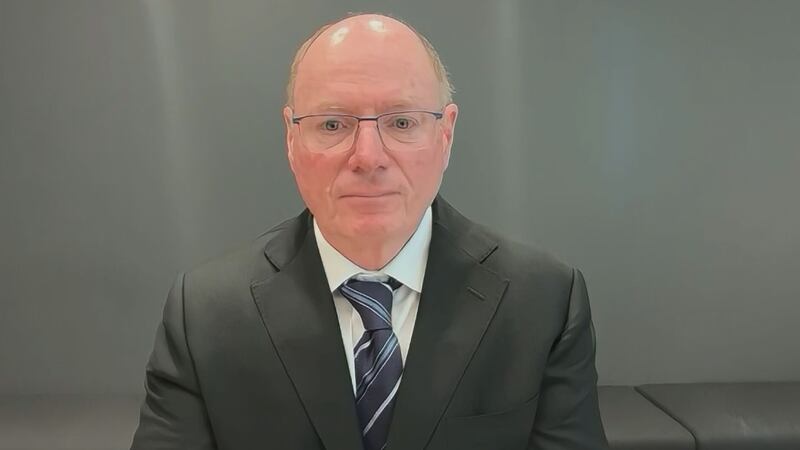
BNN Bloomberg spoke with David McFadgen, managing director, institutional equity research at ATB Cormark Capital Markets, about why he sees significant upside in Telesat as valuation gaps, global demand and sector catalysts build.
Key Takeaways
- The SpaceX IPO is expected to attract investor attention to the broader space sector, potentially benefiting smaller satellite companies.
- Low Earth orbit satellite networks are emerging as a key growth driver due to faster speeds and expanding global demand.
- Geopolitical shifts are increasing demand for non-U.S. satellite providers and sovereign communications infrastructure.
- Satellite companies are targeting different markets, with enterprise and government demand offering distinct growth opportunities.
- Debt restructuring clarity remains a key catalyst, with resolution expected to improve investor confidence.
Read the full transcript below:
LINDSAY: While the upcoming SpaceX IPO has been making headlines over the past few months, our next guest says there’s a Canadian satellite company that hasn’t been getting much attention but has significant opportunity ahead. He says he’s been covering companies for 20 years and has never seen this much upside. Here with his perspective on Telesat is David McFadgen, managing director, institutional equity research at ATB Cormark Capital Markets. Great to have you with us.
DAVID: Thanks for having me.
LINDSAY: Looking forward to hearing your thoughts on Telesat. How does its valuation compare to a company like SpaceX?
DAVID: SpaceX is rumoured to be valued — we don’t know exactly because it hasn’t started marketing the deal yet — but what’s been reported is more than $1.5 trillion US. That would be well over 100 times revenue. Telesat wouldn’t be anywhere close to that, which highlights a significant valuation gap. As investors focus on the SpaceX IPO, they’ll likely look for similar companies, and Telesat could attract attention because of that discrepancy.
LINDSAY: You say you’ve never seen a company with this much upside. What stands out to you?
DAVID: If you look at SpaceX as a guide, it went from zero to about $15 billion US in revenue in roughly five years, driven by Starlink and its launch business. It reached more than $10 billion in revenue faster than companies like Amazon, Google and Facebook. The market is global, and demand for space-based communication is growing rapidly. Starlink has validated the low Earth orbit model, which is taking share from geostationary satellites. Geopolitics is also a factor — some countries want alternatives to U.S.-based providers. Once Telesat is operational, there will effectively be three players offering broadband from space: SpaceX, Amazon and Telesat, with Telesat as the only non-U.S. option.
LINDSAY: And that’s referring specifically to low Earth orbit satellites?
DAVID: Exactly. There will be three LEO constellations offering broadband once Telesat is operational.
LINDSAY: We saw Prime Minister Mark Carney highlight Telesat’s Lightspeed services during a trip to Australia. Do you see opportunities internationally?
DAVID: Absolutely. Most of Telesat’s market will likely be outside Canada. It could secure defence-related business at home, but globally there’s strong demand. For example, countries like Taiwan have interest in satellite internet as a backup to undersea cables. Telesat could be attractive because it’s not a U.S. provider. Deals like that could be meaningful for growth.
LINDSAY: Telesat does carry a significant amount of debt. Can you explain the situation and why you’re not overly concerned?
DAVID: It’s a complex structure. There’s debt tied to the geostationary satellite business, and it appears to have limited recourse beyond those assets. That debt has traded at distressed levels and is now higher. The company is negotiating with bondholders as maturities approach. We expect a resolution, and once there’s clarity, it should make the stock more investable for many portfolio managers.
LINDSAY: How does competition with SpaceX and Amazon really play out?
DAVID: They’re targeting different markets. Starlink and Amazon are more consumer-focused, while Telesat is business-to-business — serving defence, government, aviation, maritime and telecom clients. Telesat is also aiming to offer enterprise-grade service with service level agreements and potentially faster speeds. There’s room in the market for all three players.
LINDSAY: You mentioned the upside potential. How significant could it be?
DAVID: If Telesat meets its own forecasts, the stock could be multiples of where it is today.
LINDSAY: Are you seeing growing global interest in its services?
DAVID: Yes. The company indicated it expects to materially grow its backlog this year, which suggests strong demand even before the network is fully operational.
LINDSAY: We’ll leave it there. David McFadgen, managing director, institutional equity research at ATB Cormark Capital Markets. Thanks for your time.
DAVID: Thank you.
---
This BNN Bloomberg summary and transcript of the March 19, 2026 interview with David McFadgen are published with the assistance of AI. Original research, interview questions and added context was created by BNN Bloomberg journalists. An editor also reviewed this material before it was published to ensure its accuracy and adherence with BNN Bloomberg editorial policies and standards.

