Oil prices fell and equities rose after the U.S. delayed potential strikes on Iranian energy infrastructure, easing immediate geopolitical tensions.
BNN Bloomberg spoke with Jay Bala, CEO and senior portfolio manager at AIP Asset Management, about how global instability could strengthen Canada’s role as a reliable energy supplier and shape investment strategy.
Key Takeaways
- Canada’s energy independence and political stability position it as a reliable alternative supplier as global buyers seek to diversify away from the Middle East.
- Ongoing geopolitical tensions could drive longer-term demand for Canadian energy, particularly from Asia.
- Oil volatility may lift headline inflation but is unlikely to significantly alter central bank policy, which focuses on core inflation.
- Interest rates are expected to remain relatively stable in the near term as policymakers assess economic conditions.
- Investors are favouring event-driven strategies, including convertible debt and alternative income, while remaining cautious on rate-sensitive sectors like real estate.
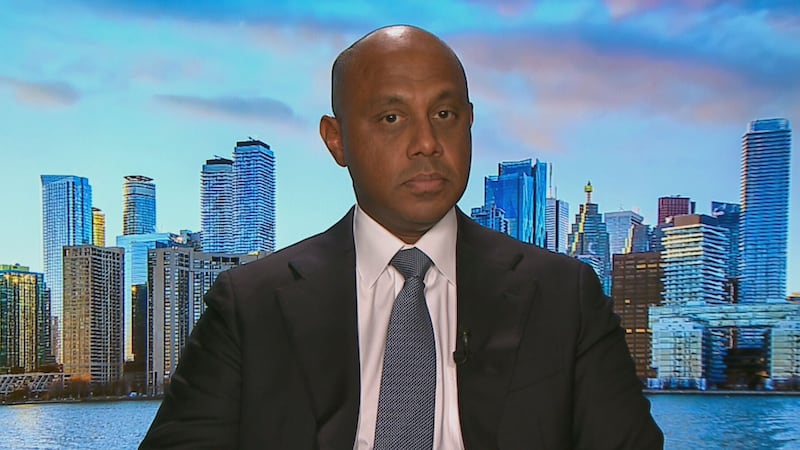
Read the full transcript below:
ROGER: All right, oil is falling and stocks are rising after the U.S. president announced he is postponing strikes on Iranian energy infrastructure. However, Donald Trump also cautioned the delay is dependent on the success of ongoing meetings and discussions. Here to tell us what that means for Canada is Jay Bala, CEO and senior portfolio manager at AIP Asset Management. Jay, thanks very much for joining us.
JAY: Hey, no problem. Thanks for having me on.
ROGER: The markets are happy today with what we’re seeing. Where does this leave us right now?
JAY: Sure. I mean, look, overall, I think you’re seeing a relief rally. So I think a lot of people are back on the idea that it’s a risk-on environment again. In particular, we’ve always stated this — the reality is the world’s problems, in many ways, are not Canadian problems. Compared to even the last oil shock we had in the ’70s, Canada, and North America in particular, are in a very different place in terms of energy and infrastructure. As a continent, we are now energy independent. We do not need the world’s oil or gas. Between Canada and the U.S., we’re largely self-sufficient.
So I think people need to understand that as a reality. You’ve got the short-term rally, but investors should also look at the longer-term impacts, which is there is value to having stability. For everyone who said Canadian oil was dirtier or more expensive, the reality is it’s premium priced because Canada gives you stability. It gives you that safety cushion.
If Canada ships a tanker full of LNG, that tanker is going to get to its destination without anyone worrying that a missile is going to hit it or that there’s going to be some kind of attack. It’s going to land. It’s going to be just-in-time inventory and give you exactly what you need when you need it. There’s value to that.
ROGER: But do you think there’s enough impetus right now to make it attractive for investors, given concerns about emissions and cost?
JAY: Yeah, absolutely. I think this crisis has cemented that proof because this could be the start of longer-term instability in the Middle East. It’s not like you can attack a country and then expect nothing will happen in the next five to 10 years.
Irrespective of how the war in Iran ends, I think Iran is going to be more defensive. They’ll spend more on defence and on maintaining the regime, which is not a catalyst for stability. If anything, it adds more uncertainty.
So if you’re looking at markets, particularly in Asia — like Japan and Korea — that were heavily impacted by the oil shock, they’re going to look to diversify their energy sources.
ROGER: Is there any other country in a similar position to Canada, maybe better set up with infrastructure? Because that’s always been Canada’s challenge — how to get resources to market.
JAY: It’s interesting. In terms of energy reserves, the other competitors would be Russia or Venezuela. But the reality is they are politically unstable. Russia has geopolitical issues and an ongoing war in Ukraine. Venezuela has seen political change, and its stability remains uncertain.
So I think it is in the world’s best interest to encourage the Canadian government to build out infrastructure and provide that stability.
ROGER: Oil is down almost 10 per cent right now, and stocks are up. How do you see this impacting inflation, rates and markets over the longer term?
JAY: It’s a good question. Oil will affect headline inflation and could make it more difficult for central banks to cut rates. But over the longer term, central banks focus on core inflation, not headline inflation, and oil isn’t directly factored into core measures.
So it won’t have as much impact on monetary policy as people think. It will affect consumers, but it likely won’t significantly change central bank decisions.
ROGER: So where do you see rates going?
JAY: I think rates will stay relatively flat for the next few quarters as central banks assess where the economy settles.
ROGER: And within the current environment, where are you looking and what are you avoiding?
JAY: We’re focused on event-driven strategies. This is an event-driven market, and those strategies tend to perform well in this kind of environment.
We’re looking at convertible debt, alternative income and energy. Areas we’re more cautious on include real estate, particularly given gating issues in private real estate funds, which have raised some concerns.
ROGER: And with alternative income and convertible debt, what stands out to you?
JAY: Convertible debt offers downside protection while still providing yield — you’re getting paid to wait. At the same time, if equities rally, you can participate in that upside.
ROGER: And on the energy side — is it more than just the current price move that’s attracting you?
JAY: Yes. Longer term, I think there will need to be a policy shift in Canada to strengthen our role as a reliable energy supplier. That includes building infrastructure and potentially developing strategic energy reserves so we can be a value-add to both ourselves and our allies.
ROGER: And just briefly on Dollarama — what drew your attention there?
JAY: We don’t typically focus on individual stocks. We focus more on broader strategies. In this case, it reflects a scenario where, in a prolonged conflict, consumers may gravitate toward value-oriented retailers.
ROGER: All right, we’ll leave it there. Jay, thanks as always for joining us.
JAY: Thanks so much.
ROGER: Jay Bala, CEO and senior portfolio manager at AIP Asset Management.
---
This BNN Bloomberg summary and transcript of the March 23, 2026 interview with Jay Bala are published with the assistance of AI. Original research, interview questions and added context was created by BNN Bloomberg journalists. An editor also reviewed this material before it was published to ensure its accuracy and adherence with BNN Bloomberg editorial policies and standards.

