Gold is extending its decline as easing tensions in the Iran conflict weigh on safe-haven demand, while falling oil prices help lift equities and improve investor sentiment.
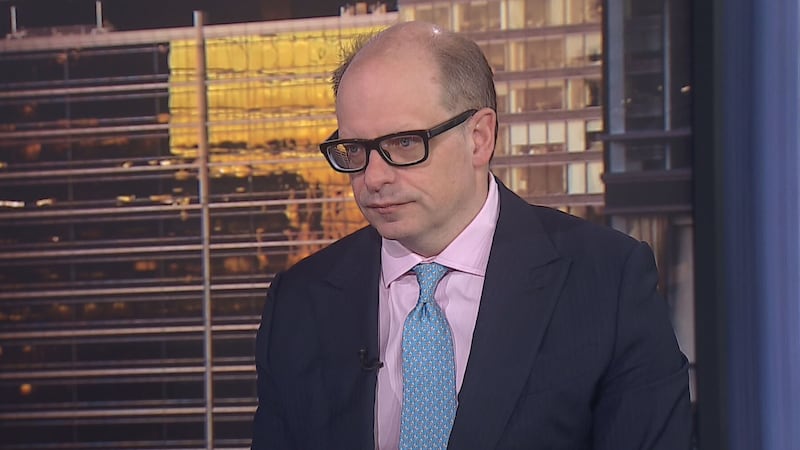
BNN Bloomberg spoke with Geoff Barratt, general partner at Barratt Capital Holdings, who says gold’s recent surge has been driven by central bank buying and speculation, and highlights ongoing volatility tied to geopolitical uncertainty and interest rate pressures.
Key Takeaways
- Gold appears overbought, with recent gains driven by central bank demand and speculative buying rather than traditional inflation dynamics.
- The historical relationship between gold and real interest rates has broken down, suggesting current pricing may be unsustainable.
- Easing tensions in Iran are lowering oil prices and supporting a rebound in equities, improving overall risk sentiment.
- Recent volatility reflects pressure on the U.S. economy from higher oil prices, rising interest rates and declining equity markets.
- Any near-term economic or earnings impact from the conflict is likely to be temporary if geopolitical conditions stabilize.
Read the full transcript below:
MERELLA: Gold resumed its slide but pared some losses on hopes of de-escalation in the war. My next guest believes gold is overbought. For more on market movers, let’s bring in Geoff Barratt, general partner at Barratt Capital Holdings. Thanks for joining us today.
GEOFF: Thanks, Merella.
MERELLA: What do you think is driving gold’s continued decline, and where do you see it settling?
GEOFF: Look, gold’s fundamental bid has come from concerns that U.S. sovereign bonds are in a tough spot and may be overvalued. What a lot of central banks have done, particularly China’s, is shift from Treasuries into gold.
I worked in Hong Kong for a couple of years, and what struck me was how oversubscribed IPOs could be — hundreds of times — versus maybe seven times for a strong U.S. IPO. There’s a strong herd mentality. As China’s central bank buys gold, retail investors follow.
Historically, gold traded inversely to U.S. 10-year real interest rates, and that relationship held until a couple of years ago, when it broke down. I think that was driven by central bank buying and Chinese speculation.
China can move markets, but it often ends badly. Gold is supposed to be an inflation hedge tied to real rates. Inflation has been coming down, so gold shouldn’t be rising in that environment. It looks temporary. If the U.S. can improve its fiscal situation — which is a big ask — then confidence in U.S. bonds could return.
MERELLA: I like that you said “improve it a little,” because fixing it entirely is a big ask.
GEOFF: The debt itself may not fall, but GDP can grow. If earnings and inflation rise out of a weak environment, the denominator increases and debt-to-GDP declines.
MERELLA: Let’s talk about what’s been moving markets over the past three weeks — the conflict in Iran. Do you see that continuing to drive volatility?
GEOFF: It’s been a tough few weeks. Markets looked oversold on Friday, and now we’re seeing a bit of a rebound.
The U.S. economy faces three key vulnerabilities. First, higher oil prices hurt consumers, especially lower-income households. Second, interest rates — affordability is already a challenge for younger homebuyers. Third is the wealth effect. Consumption has been driven by gains in retirement portfolios, particularly among older investors.
Over the past three weeks, oil rose from about $60 to $100, the U.S. 10-year yield moved higher, and equities declined — the S&P 500 was down about five per cent year to date as of Friday, with many individual stocks down more.
That creates pressure on policymakers. There’s a risk of broader economic impact, so there is incentive to resolve the situation quickly.
MERELLA: When does that pressure really build?
GEOFF: People tend to look at their investment statements monthly. That matters psychologically. It’s hard to let this drag on. Iran knows that, which is why there’s tension around the Strait of Hormuz.
There seems to be pressure for a deal, but there’s a lot of uncertainty. It’s not always clear who is speaking for Iran or how credible the signals are.
MERELLA: Or who’s actually acting.
GEOFF: Exactly. We may never get clarity. Some hope for a model like Venezuela, where economic engagement resumes, but whether that’s realistic is another question.
MERELLA: Let’s turn to a couple of stocks. Aritzia is performing well. What’s driving that?
GEOFF: It’s a strong business. They’ve tapped into fashion trends with younger consumers. They’ve expanded into the U.S., which is a much larger market than Canada, and that creates long-term growth potential similar to what we saw with Lululemon.
That said, if the U.S. consumer weakens, retail will be hit. Rising oil prices and interest rates have raised concerns about consumption. Today’s rally reflects optimism that the conflict will be short-lived, but there’s still uncertainty.
MERELLA: Let’s talk about your stock pick, Honeywell, which is in the middle of a breakup. Where do you see the opportunity?
GEOFF: My background is in special situations trading, and spin-offs have historically created value. We’ve seen that with companies like GE and Kellogg.
Spin-offs improve capital allocation, align management incentives and allow businesses to be valued appropriately. Honeywell is a high-quality, stable business, but it’s undervalued because it operates across multiple segments.
It trades at about 18 times EBITDA, while comparable aerospace and automation businesses trade at significantly higher multiples. If it splits, its individual units could be re-rated closer to peers.
MERELLA: Where do you see the stock going?
GEOFF: I think it could double within a year.
Strategically, the structure also creates optionality. Some units could be sold, while others benefit from sector tailwinds. Aerospace is seeing recovery in flight activity, and automation could benefit from lower interest rates and stronger housing activity.
There’s potential for M&A, improved valuation and strong underlying fundamentals. It’s a compelling setup.
MERELLA: We’ll leave it there. Geoff, thanks for your time.
GEOFF: Thank you.
MERELLA: Geoff Barratt, general partner at Barratt Capital Holdings.
---
This BNN Bloomberg summary and transcript of the March 23, 2026 interview with Geoff Barratt are published with the assistance of AI. Original research, interview questions and added context was created by BNN Bloomberg journalists. An editor also reviewed this material before it was published to ensure its accuracy and adherence with BNN Bloomberg editorial policies and standards.

