Markets remain unsettled as geopolitical tensions and structural risks continue to weigh on sentiment, keeping investors cautious despite policy developments.
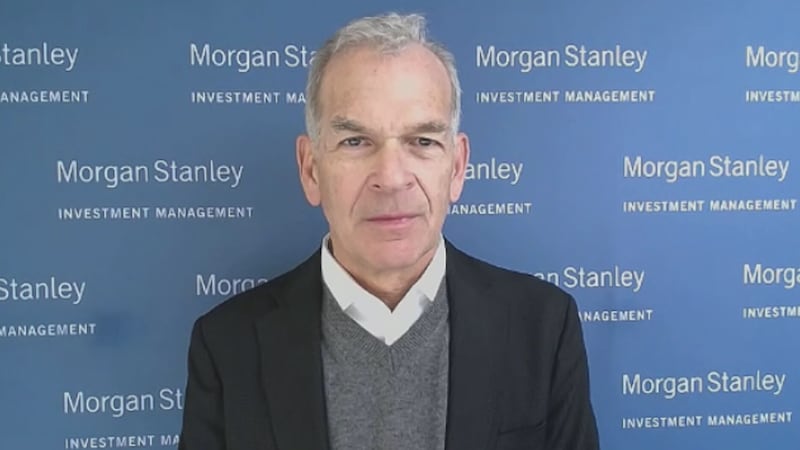
BNN Bloomberg spoke with Andrew Slimmon, head of the Applied Equity Advisors Team at Morgan Stanley Investment Management, about how artificial intelligence disruption, the Iran conflict and private credit concerns are influencing positioning.
Key Takeaways
- Investors are reacting to three main risks: AI disruption, the Iran conflict and private credit liquidity concerns.
- Early-stage AI fears are focused on potential losers, though long-term gains are expected to boost profitability across most industries.
- Private credit stress is driven by liquidity mismatches rather than widespread credit deterioration, but still poses tail risk.
- Energy stocks tend to peak early during oil price spikes, making them less attractive after initial gains.
- Investors may find better opportunities in sectors positioned to rebound once macro uncertainty begins to ease.
Read the full transcript below:
LINDSAY: Markets remain on edge despite the Trump administration’s move to extend its Strait of Hormuz deadline. Uncertainty around the conflict in Iran and several other risks is keeping investors cautious.
So, here to break it down is Andrew Slimmon, head of the Applied Equity Advisors Team at Morgan Stanley Investment Management. Great to have you join us today. Good morning.
ANDREW: Good morning to you. Thanks for having me.
LINDSAY: The war in Iran is clearly still weighing on markets today, but you’ve said there are other issues investors should be thinking about as well. What are those?
ANDREW: Even before the war started, we had concerns about AI disruption — what I like to call the AI “Pac-Man” eating away at different industries. That’s very consistent with the early stages of new technological innovation.
The market worries first about who the losers are and doesn’t focus on the winners. That has weighed on various industries, especially software.
Then we also have a lingering private credit issue. You put those three issues together, and it doesn’t surprise me the market is now down about eight per cent.
Layer that with the fact we started the year with a lot of optimism — classic late-cycle behaviour — and when sentiment shifts, you get a kind of washout. That’s what happened last year, and I think that’s what’s happening this year.
LINDSAY: I want to talk more about your concerns around the pace of the AI rollout. What exactly is worrying you, and is that a bigger concern than what we’re seeing in the Middle East and with oil prices?
ANDREW: The point of AI rollout is there will be losers, but most companies will benefit.
If you look back at the S&P 500 from 1995 to the dot-com peak, the index doubled. Early on, the focus was on which industries would lose — newspapers, publishers, books — but ultimately the internet enhanced profitability across most companies.
That’s why the S&P performed so well, and I think the same applies today.
What gives me confidence is that analysts have not yet raised estimates broadly, even though profitability is improving across industries. The focus remains on losers, but that’s typical in the early stages of a technological shift.
So I’m more confident in the long-term benefits of artificial intelligence than the disruption, but this is just where we are in the cycle.
LINDSAY: We have seen some sectors hit hard by AI concerns — software earlier this year, and cybersecurity stocks more recently. For investors unsure what to do with their tech holdings, what’s your advice?
ANDREW: I would be very careful. I wouldn’t step in and buy software companies just because they’re down a lot.
There will likely be efforts by many companies to replace software packages with artificial intelligence.
I would rather focus on the winners, which could include some tech companies, but also other industries that are being pulled down for unrelated reasons, including the war in Iran.
LINDSAY: You’ve also flagged anxiety around private credit liquidity. How are you thinking about that risk?
ANDREW: I think there’s a bigger tail risk in private credit than in AI disruption or the Iran war.
Most bear markets are caused by excessive leverage, and there is some leverage in private credit.
That said, I don’t think this is a major issue yet, because leverage at the lending level is not that high. The bigger issue is a mismatch: investors expect liquidity, but the underlying loans are less liquid.
So it’s more of a liquidity problem than a credit problem — for now. But if it were to become a credit problem, then leverage would matter more.
I suspect this issue will fade for a while, but it could resurface when redemption pressures return.
LINDSAY: Let’s talk about oil and energy stocks. With everything happening right now, is this a good time for investors to add exposure?
ANDREW: No. Historically, energy stocks spike early when oil prices jump, but they tend to peak quickly.
Oil prices may come down from current levels, though likely not all the way back to where they were.
I don’t think it makes sense to chase energy stocks right now. And similarly, I don’t think it’s time to move defensively either.
LINDSAY: We’ll leave it there. Andrew Slimmon, managing director and senior portfolio manager at Morgan Stanley Investment Management. Appreciate your time today. Thanks so much.
---
This BNN Bloomberg summary and transcript of the March 27, 2026 interview with Andrew Slimmon are published with the assistance of AI. Original research, interview questions and added context was created by BNN Bloomberg journalists. An editor also reviewed this material before it was published to ensure its accuracy and adherence with BNN Bloomberg editorial policies and standards.

