Ontario’s 2026 budget outlines a significantly higher deficit as the province increases spending while introducing tax cuts aimed at supporting businesses, housing and economic growth.
BNN Bloomberg spoke with Peter Bethlenfalvy, Ontario’s Finance Minister, about the drivers behind the deficit, including a softer global economy, population growth and policy decisions to stimulate investment and affordability.
Key Takeaways
- Ontario’s deficit is projected at $13.8 billion, driven by economic softness, population growth and tax cuts.
- The province is introducing a 30 per cent small business tax cut affecting about 375,000 businesses.
- A temporary HST removal on new homes aims to boost affordability and construction activity.
- Health-care spending includes expanded home care and $3.4 billion to improve access to family doctors.
- A new $4-billion investment fund will target sectors like nuclear, AI and critical minerals to drive long-term growth.
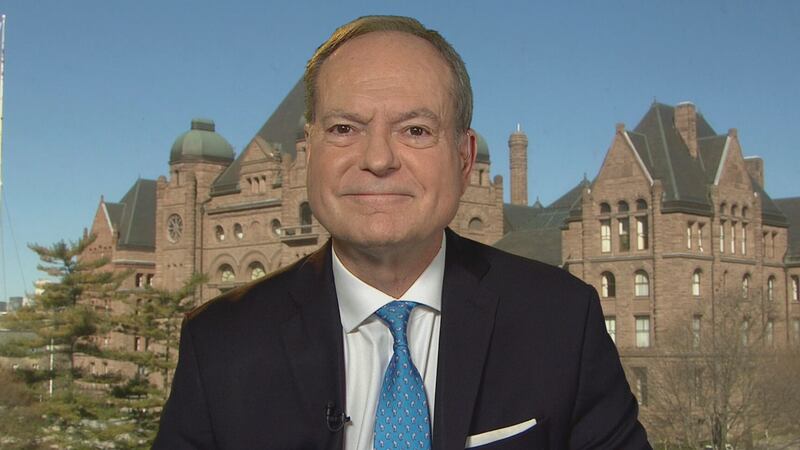
Read the full transcript below:
LINDSAY: Okay, let’s bring in Peter Bethlenfalvy, Ontario’s finance minister, for more on this latest budget. Minister, it’s good to have you join us this morning. Thanks so much.
PETER: Good morning.
LINDSAY: So the deficit is up to $13.8 billion for the next fiscal year. We heard a little bit about that from Siobhan in the report we just aired. What are the main factors driving it higher?
PETER: Well, I think there are three things. We’re definitely in a softer economy. That’s due to global trade turmoil and now global conflict, so clearly, around the world, it’s a softer economy.
The second component is population growth. Ontario’s population has grown by two million people in the last eight years. That’s a good thing, but the majority of expenditures fall on the province to fund supports for those people — health care, education and social services — so that’s impacting our costs.
Thirdly, we’ve chosen to cut taxes for people and businesses, putting more money back in their pockets. Just yesterday, we announced a small business tax cut — about 375,000 businesses will benefit from a 30 per cent reduction. That will help create jobs and grow the economy.
So those are some of the factors. It’s the world we’re living in and some of the choices we’re making here in Ontario to protect people and businesses.
LINDSAY: Difficult choices, I’m sure. Are you comfortable with the size of this deficit?
PETER: No, I would like to balance sooner. Deficits are temporary and should be temporary. But relative to other provinces and jurisdictions, we have among the lowest deficits relative to the size of our economy.
Don’t just listen to me — credit rating agencies have upgraded our rating over the past couple of years. And in relative terms, B.C. had about a $13-billion deficit as well, but we’re three times larger.
So I think we’re being prudent fiscal managers while also investing in infrastructure and supporting businesses and the economy with tax cuts.
LINDSAY: Let’s talk about the small business tax cut. It’s estimated at about $5,000 per business. Is that enough, especially considering last year’s $9-billion tax deferral program had relatively low uptake?
PETER: If you look back, about $2 billion in tax deferrals were taken up, which helped with liquidity. Another $2 billion came through WSIB rebates. That’s meaningful support for businesses across Ontario.
This is a significant tax cut, supported by the Canadian Federation of Independent Business and others. It will spur economic activity.
We also announced the HST rebate — 13 per cent on new homes. That will boost housing activity, support affordability and create about 21,000 construction jobs, while adding roughly $2.7 billion to the economy, according to economists.
So we have a plan that is fiscally responsible, invests in infrastructure and social programs, and boosts economic growth.
LINDSAY: There’s also more than $100 billion going into health care. What improvements can people expect to see?
PETER: We’re focusing on areas like home care. Most people want to age at home, so we’re transforming the system to deliver care — nurses, personal support workers, doctors — directly to people’s homes.
We’re also investing in primary care. We announced $3.4 billion to expand access to family doctors. Ontario leads the country, but there’s more to do.
These investments improve quality of life and support economic outcomes as well.
LINDSAY: What about hospitals and ERs specifically?
PETER: We’re making record investments in hospitals. Funding is up about 55 per cent since 2018, including an additional $1.1 billion announced yesterday.
My message to hospitals is to continue innovating — use technology to reduce paperwork and administration so more resources go to frontline care for patients.
LINDSAY: Removing the HST on new homes will cost $1.4 billion and is expected to generate about 8,000 new housing starts. Is that justified?
PETER: Stakeholders across the sector are calling it a game changer — from builders to policy experts. It’s a major boost to the economy and construction jobs.
The housing sector has been hit by the slowdown, so this is a significant stimulus while also improving affordability for families.
LINDSAY: The budget also includes a $4-billion Protect Ontario Account Investment Fund, managed privately. How will you ensure it aligns with public priorities?
PETER: The goal is to leverage private sector capital alongside public funds to invest in companies that create jobs in Ontario.
We’re looking at sectors like AI, defence, energy, nuclear, critical minerals, life sciences and advanced manufacturing.
It will follow a similar model to the Building Ontario Fund — arm’s length, with governance structures in place — to attract investment and support long-term economic growth.
LINDSAY: Are there specific priorities within that fund?
PETER: Yes, areas like nuclear energy and critical minerals. Nuclear projects alone could create tens of thousands of jobs, including in Pickering.
Ontario has a strong advantage in critical minerals as well — the resources, expertise and workforce are already here. These are high-paying jobs and key to future economic growth.
LINDSAY: We’ll leave it there. Peter Bethlenfalvy, Ontario’s finance minister. Thanks for your time.
---
This BNN Bloomberg summary and transcript of the March 27, 2026 interview with Peter Bethlenfalvy are published with the assistance of AI. Original research, interview questions and added context was created by BNN Bloomberg journalists. An editor also reviewed this material before it was published to ensure its accuracy and adherence with BNN Bloomberg editorial policies and standards.

