Stocks have dropped to a seven-month low as escalating tensions in Iran push energy prices higher, fuelling inflation concerns and raising questions about interest rate cuts.
BNN Bloomberg spoke with David Dietze, chief investment strategist at Dietze Wealth Management Group, about key risks tied to commodities, investor positioning and opportunities emerging from the selloff.
Key Takeaways
- Rising oil prices are fuelling inflation concerns and could delay central bank rate cuts, tightening financial conditions.
- Supply disruptions risk extending beyond energy to broader shortages, including in key importing regions facing constraints.
- Weakening confidence and higher borrowing costs increase the likelihood of slower economic growth or recession.
- Equity valuations have improved after recent declines, with markets historically rebounding after geopolitical shocks.
- Long-term investors may find opportunities in oversold sectors and dividend-paying stocks despite near-term volatility.
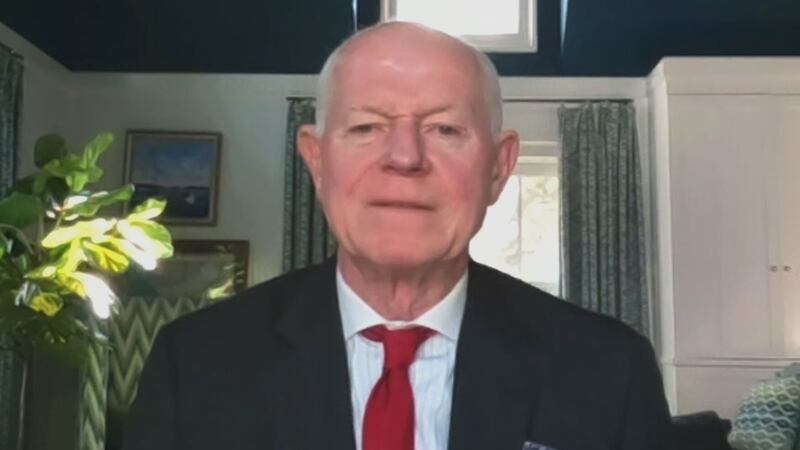
Read the full transcript below:
ANDREW: These fears about the ongoing war between the U.S., Israel and Iran are hanging over the market. And of course, if oil continues to go up, that feeds inflation, and there could be reluctance on the part of the Fed to cut borrowing costs. Let’s get more from David Dietze, chief investment strategist at Dietze Wealth Management Group. David, great to see you. Thank you very much indeed for joining us. What are you paying most attention to? There’s so much going on.
DAVID: Well, certainly what’s going on in Iran is forcing all of Wall Street investors to become geopolitical experts, which is not what they went to school for. It reminds me a little bit of the COVID-19 situation, where we were forced to all become epidemiologists. So really, what’s going to be driving the market, certainly near term, is the development — the negotiations or escalation or de-escalation — in the Middle East, particularly between the United States and Iran. And we just don’t know how that’s going to shake out. If it goes on longer, of course, oil prices are going to stay higher. And of course, if there’s destruction of their oil and energy production facilities, then even after the strait perhaps opens up, there’s going to be a longer-term shortage. We’re seeing the higher prices here. Other countries, for example in Asia, are actually seeing outright shortages, where there’s lines and a lack of supply. So it’s a very serious situation, in addition to, of course, the humanitarian situation. Having said that, what does an investor do here? I think it all depends on your time horizon, Andrew.
ANDREW: I mean, if you need money within a year, caution is advised. Generally, I think strategists say don’t have too much money in stocks if you’re going to need the money in a year’s time.
DAVID: Yeah, I think that’s right, although I can show you a lot of geopolitical situations where the market was actually higher in a lot less time than that — three months. Remember, we are at a seven-month low here in the markets. We have seen stocks come down for about five weeks in a row. The Nasdaq 100 is down about 13 per cent, so we’ve already had much improved valuations. I believe now the forward price-to-earnings ratio on the S&P 500 is slightly under 20, which puts it below its five-year average — admittedly not below its 10-year average. So I think you’re getting closer to a situation where perhaps you could see some returns sooner than a year. But of course, it’s always better to be conservative and expect that your time horizon has got to be longer.
ANDREW: You have some stock ideas for us. UnitedHealth — it had a wretched year last year. Maybe you could put up a five-year chart. Health insurers generally suffered. Just remind us what has been weighing on UnitedHealth, and why do you see upside?
DAVID: Yeah, so it’s just a massive number of negatives, as you point out quite rightly. It’s been shared by all the members in the sector. I think your key drivers here are costs for payouts for patient care have risen much faster than premiums, so that’s reduced cash flow. In addition to that, there have been new regulations proposed that would further increase payouts by the government for many of these insurers to pay for care that’s ultimately funded by the government. That’s been weighing on the whole sector. We don’t think that ultimately the proposed 90 basis point increase reflects inflation or reflects reality, and so I think that’s just not going to work. But right now, that’s discounted into the price. On top of that, of course, you’ve had a change at the top in terms of the CEO. You had the tragedy about a year and a half ago with one of their executives, and of course very bad publicity. Having said that, this is the big kahuna in one of the most important sectors in the U.S. economy. As we all get older, health-care needs are just soaring. And UnitedHealthcare is number one. So ultimately they are the price setter. They have no choice but to gradually increase those premiums and be very careful about the businesses they remain in, pulling back from some businesses. And indeed, they’ve completely extricated themselves from one state where the economics became unfavourable. So we do think that UnitedHealthcare, now trading at a five-year low in terms of valuation, with a dividend of about 3.4 per cent and about half of its all-time high, is likely to provide over the next five years double-digit returns to investors who can stomach the near-term risk here.
ANDREW: Conagra, a huge player in food — Slim Jims one of its offerings. You see upside here as well. These packaged food companies have suffered.
DAVID: Yeah, absolutely so. Again, we have a whole industry that’s down in the dumps — so-called consumer staples. People worry about people eating less due to GLP-1 drugs, people eating healthier due to all sorts of factors. In terms of alcohol consumption, that also is down. Nevertheless, these consumer staples have very steady businesses. And if we do get slow growth here, people tend to come back to these things, which have solid dividends, solid business plans, less risky needs. Conagra has the highest dividend yield now in the S&P 500 at just over nine per cent.
ANDREW: Wow.
DAVID: But our work suggests that indeed that dividend is adequately covered, and we think that through skillful management of their business, they can continue to grow earnings and continue to cover that dividend. Meanwhile, you have a stock that’s down about 30 per cent recently. I think their 52-week high was 26 — now they’re around 15. We think you can get nice double-digit returns going forward. And particularly, this should be in your portfolio if you’re worried about economic growth going forward because of what’s happening in the Middle East.
ANDREW: A nine per cent dividend yield — that’s pretty lofty. David, we better leave it there. You gave us some fascinating ideas. Great hearing from you.
DAVID: Thank you, Andrew.
ANDREW: David Dietze, chief investment strategist at Dietze Wealth Management Group.
---
This BNN Bloomberg summary and transcript of the March 30, 2026 interview with David Dietze are published with the assistance of AI. Original research, interview questions and added context was created by BNN Bloomberg journalists. An editor also reviewed this material before it was published to ensure its accuracy and adherence with BNN Bloomberg editorial policies and standards.

