Markets may face continued pressure as historical cycle patterns and oil shocks point to a weaker near-term outlook.
BNN Bloomberg spoke with Sid Mokhtari, chief market technician at CIBC Capital Markets, who said current conditions reflect a late-cycle phase, with opportunities emerging in select sectors despite broader weakness.
Key Takeaways
- The second year of the U.S. presidential cycle historically delivers weaker returns, often coinciding with late-stage bull market dynamics.
- Markets are undergoing a reset phase after strong gains, with further downside possible before a sustained recovery.
- Oil shock-driven corrections tend to be prolonged, suggesting current weakness could persist.
- Energy, utilities and telecoms are showing relative strength, while financials and consumer discretionary lag.
- Investors may need to focus on relative opportunities and remain cautious until broader indicators reset.
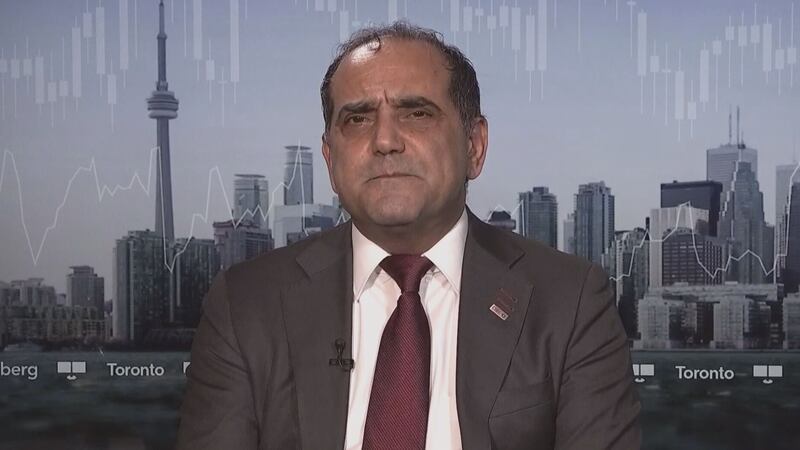
Read the full transcript below:
ROGER: Okay, the S&P 500 is up slightly this morning after the benchmark slumped to an August low at the end of last week. U.S. President Donald Trump says the U.S. is in talks with a new and more reasonable regime in Iran. Looking at historical trends in the data, our next guest says the second year of the presidential cycle tends to be the weakest year for markets. Joining us now is Sid Mokhtari, chief market technician at CIBC Capital Markets. Sid, thanks, as always, for joining us.
SID: Thanks for having me, Roger.
ROGER: All right, let’s talk about that. Year two in the presidential cycle, which we’re in now, being the weakest one — what points to that?
SID: Sure thing, Roger. When we came into the year, we made the case that we may be faced with two colliding cycles. One is year two of the U.S. presidential cycle, which has very poor hit rates by historical measures — about 52 per cent. Average returns are about one to two per cent, so it’s not the best set of results historically.
We also looked at year four of a bull cycle. In other words, 2022 was the low of this market from a cycle perspective, and now, four years later in 2026, we put those together and looked at average returns and price patterns. We made the case that the first half is historically the weakest part of the year, the second half is better, and the fourth quarter is historically much stronger in year four of a bull cycle.
So I still think we have some challenges to deal with, albeit the market appears oversold by some measures. It’s best to be treading carefully.
ROGER: It sounds like we could almost see those concepts butting heads a little bit this year.
SID: I think that’s a very reasonable argument. We had three successive high double-digit returns for the S&P 500, as well as strong returns in Canada and globally. So this market is mean reverting — negatively, by giving some of those gains back.
But we still think this is a longer-term secular bull market, and this is more of a reset cycle that should provide buying opportunities. I don’t think we’re there yet, but near term, there could be oversold bounces.
There are pockets in the market tied to late-cycle patterns. Energy is the obvious one. We’re seeing MLPs, renewables and parts of utilities acting quite well. There is money flow, strong momentum and trends in those sectors.
So there are areas investors should tactically focus on, particularly those tied to commodity and late-cycle dynamics.
ROGER: And are there sectors that lag or dip more than others?
SID: Yes. We’ve already seen consumer discretionary and financials in the U.S. fall into our weakest ranking. In Canada, financials are also slipping in rankings.
If we’re right that this is a late-cycle environment, both discretionary and financials should remain in a penalty box from both an alpha and absolute return perspective.
Other parts of the market tied to late-cycle dynamics — commodities, energy and utilities — should perform better. Telcos are also improving in our models.
Our quantitative factors are showing low volatility, dividend yield, and value and quality factors rising in rankings. So we need to be more systematic and more active this year.
ROGER: And of course, alongside all this, we’ve got the oil shock. How does this compare to past oil shocks?
SID: When we looked at historical oil shocks, we found that corrections tend to be drawn out and elongated. So we do think this correction still has time ahead of it.
We’re still in a detrending phase. We see more downside for the S&P 500. The TSX hasn’t resolved what’s known as an outside month, or bearish engulfing pattern, from the past month.
So rally attempts are likely to face challenges before lower levels are validated. We see the TSX potentially closer to 30,000 or lower. For the S&P 500, we’re looking at around 6,000 on the downside.
We think investors should focus more on relative strength rather than aggressive absolute gains. Based on past oil shocks, this correction likely has more time to play out.
ROGER: And what might change that? If we do drop to 30,000 on the TSX, what could shift the outlook?
SID: If we see a sharp recovery in financials, consumer stocks and industrials — which have been lagging — that could change things.
If yield curve dynamics shift meaningfully, that could also support financials. But we don’t think that’s the base case right now.
Everything we’re seeing suggests more challenges ahead. We need further resetting in indicators and market breadth before a sustained recovery can take hold.
That said, anything is possible — we just don’t see the data supporting that yet.
ROGER: Okay, we have to wrap it up there. Sid, thanks as always for joining us.
SID: Thanks, Roger.
ROGER: Sid Mokhtari, chief market technician at CIBC Capital Markets.
---
This BNN Bloomberg summary and transcript of the March 30, 2026 interview with Sid Mokhtari are published with the assistance of AI. Original research, interview questions and added context was created by BNN Bloomberg journalists. An editor also reviewed this material before it was published to ensure its accuracy and adherence with BNN Bloomberg editorial policies and standards.

