Ottawa and Ontario’s $8.8-billion infrastructure plan aims to encourage municipalities to reduce development charges, a move intended to lower building costs and support new housing construction.
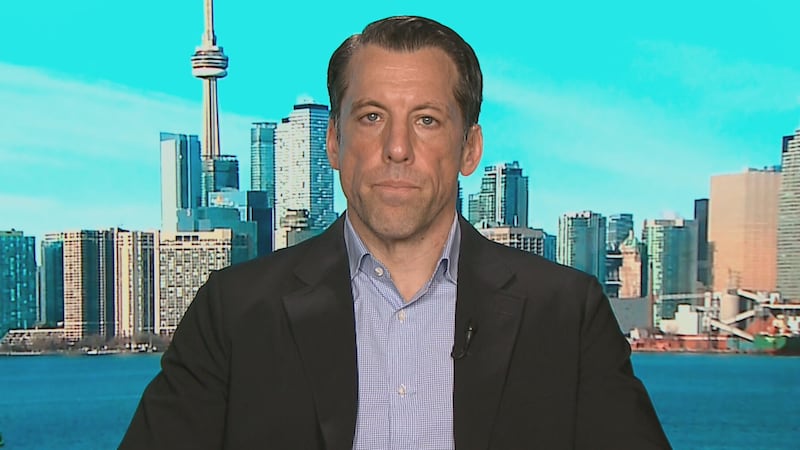
BNN Bloomberg spoke with Adrian Rocca, CEO and founder at Fitzrovia, who said the changes improve project economics but may not fully offset weaker rents and broader cost pressures facing developers.
Key Takeaways
- Development charges account for roughly six to seven per cent of total building costs, while total government-related fees can reach about 30 per cent.
- A 50 per cent reduction in development charges lowers overall project costs by about three per cent, improving returns but not fully restoring profitability.
- Rental market weakness, including a roughly 21 per cent drop in effective rents in Toronto, continues to weigh on project viability.
- Recent supply surges are expected to reverse sharply, with new rental completions projected to decline significantly over the next few years.
- Without sustained cost reductions and new incentives, developers warn housing shortages could worsen again within 18 months.
Read the full transcript below:
ANDREW: The federal government and Ontario say they’re investing almost $9 billion in infrastructure over the next decade as part of an initiative to encourage municipalities to cut real estate development charges, which are blamed for pushing up the cost of new housing. Our guest says this is one of the first policy moves that fixes the math for developers to start getting more homes built. We’re joined by Adrian Rocca, CEO and founder at Fitzrovia. Adrian, thanks very much indeed. It is almost $9 billion, but it’s over 10 years. You think this will help anyway?
ADRIAN: It’s definitely a step in the right direction. We’ve been advocating with all three levels of government that we have to fix the math equation to get more development kickstarted. Depending on what data you look at, new starts are down 50 to 70 per cent, and a lot of that was driven by the math simply not working. So it’s definitely a step in the right direction. We would love to see a full waiver of development charges, but a half waiver is certainly an improvement.
ANDREW: Just remind us what these development charges are, please.
ADRIAN: Development charges are basically a statutory charge that every developer has to pay. If you look at the total fee load — municipal fees, government fees, levies — it’s about 30 per cent of your total development costs. A portion of that would be development charges, and then you have parkland charges and community benefit charges and things like that. So it was meaningful. If you actually look at the 50 per cent waiver, it’s about three per cent of your total development costs that now gets pulled out of your total math equation. That’s a benefit. It’s about 300 basis points on your development IRR, so that is meaningful. Now rents in Toronto are down — net effective rents are down 21 per cent. Face rates are about 11 to 12 per cent, and then concessions get us up to about 21 per cent. So it doesn’t get us all the way there, but it’s certainly an improvement.
ANDREW: Give us — sorry, give us that math again. Development charges are typically how much of your cost base? And I think you said this is going to be a 50 per cent cut. Can you walk us through it again, please?
ADRIAN: If you look at just the development charge component, it’s about six to seven per cent, depending on what cities or jurisdictions you’re looking at in Ontario.
ANDREW: Six to seven per cent of the cost of building a unit, correct?
ADRIAN: That’s right. So it would be an implied discount. If three per cent gets pulled out of your total development cost budget, that basically translates into about 300 basis points, or three per cent, of your development IRR.
ANDREW: It doesn’t sound like a huge impact. I thought the development charge impact on new homes was much bigger than six or seven per cent.
ADRIAN: No, it’s about six or seven per cent of your total development costs. The number that gets quoted pretty widely is your total fee load related to government charges. But those government charges also include parkland — which used to be about 10 per cent of your total assessed land value — and community benefit charges as well. So collectively, including property tax and other items, that’s about 30 per cent. About seven per cent of that would be development charges. That will vary depending on the city, but call it six or seven per cent.
ANDREW: That’s interesting. So it’s really only a portion of these various fees and costs that governments load on that are being reduced here.
ADRIAN: That’s right. There was also a policy change a couple of years ago where development charges were deferred. So they’re stretched over six years in equal installments once you complete the building. There is still a significant benefit, but some of that benefit was offset by the deferral introduced a couple of years ago.
ANDREW: What are these other costs that governments load on? Are they all municipal, or are some provincial, for example?
ADRIAN: A lot of it would be municipal levies. They used to have what’s called the Section 37 regime, which then got changed into what’s called a community benefit charge. This would go toward schools, libraries and other local infrastructure. Another component would be a parkland charge. If you can’t provide an on-site park, there’s a cash-in-lieu component that needs to be paid to the city so it can fund parks. Those would be two of the larger costs, and they are unaffected by this announcement.
ANDREW: You build rental housing — that’s your focus in Toronto. This decline — you said there was a 20 per cent decline in effective rents — that’s going to hurt your economics.
ADRIAN: It does. There has been a significant amount of supply delivered to the market. At the tail end of COVID-19, you saw about two times the long-term average of starts get kickstarted when interest rates were at an all-time low. If you look at Toronto right now, in the next 12 months there are about 30,000 rental units forecast to be delivered. That compares to a long-term average of about 15,000 to 17,000 units. However, beyond 12 months, that drops to about 17,000 units in year two, then about 7,500 units in year three, and about 3,500 units in year four. There’s nothing that will structurally change those numbers. We know we’re going to have a housing crisis purely due to a lack of supply 18 months from now.
ANDREW: Thank you very much, Adrian. Always great hearing from you. Adrian Rocca, CEO and founder at Fitzrovia.
---
This BNN Bloomberg summary and transcript of the March 31, 2026 interview with Adrian Rocca are published with the assistance of AI. Original research, interview questions and added context was created by BNN Bloomberg journalists. An editor also reviewed this material before it was published to ensure its accuracy and adherence with BNN Bloomberg editorial policies and standards.

