Stocks are moving higher and oil prices are easing after U.S. President Donald Trump signalled a possible end to the U.S. military campaign against Iran, offering near-term relief to investors.
BNN Bloomberg spoke with Ryan Bushell, chief executive officer and portfolio manager at Newhaven Asset Management, who says the conflict is driving deeper structural shifts in global energy, particularly in liquefied natural gas, with long-term implications for supply and pricing.
Key Takeaways
- Markets have remained relatively calm despite escalating conflict, suggesting investors are still expecting a quick resolution that may not materialize.
- Damage to Qatar’s LNG export capacity is creating a significant shock to global natural gas supply with long-term consequences.
- Canada is positioned to benefit from increased LNG demand due to cost advantages, geography and supply reliability.
- Energy infrastructure assets once seen as stranded are now gaining strategic importance amid tighter global supply conditions.
- Elevated valuations in technology — particularly tied to AI infrastructure — face risks from physical constraints like energy supply and grid capacity.
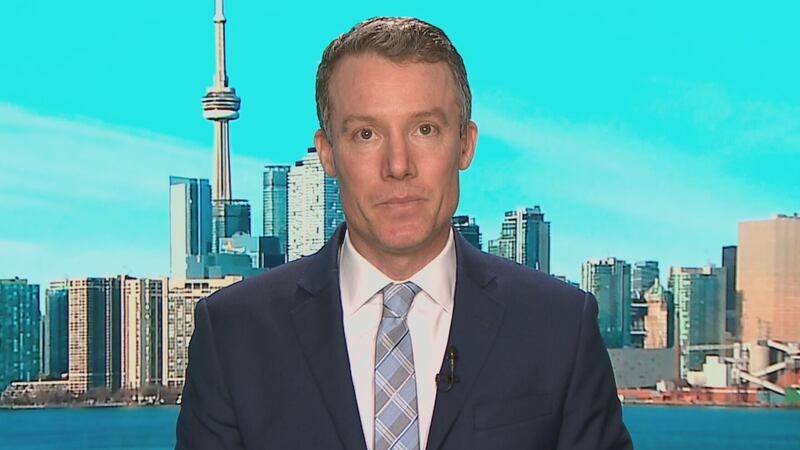
Read the full transcript below:
ANDREW: U.S. President Donald Trump is signalling he is willing to end the U.S. military campaign against Iran. Our guest says the implications and effects of this war are only beginning to be felt and go far beyond just the price of oil. We’re joined by Ryan Bushell, chief executive officer and portfolio manager at Newhaven Asset Management. Ryan, always great to see you. Thanks for joining us.
RYAN: Thanks, Andy. Good to see you as well.
ANDREW: I know it’s impossible to answer in the sense that no one knows where this military situation is going to go, but how are you playing things right now?
RYAN: Well, we were well prepared for this in advance. We always try to build the portfolio to be resilient through all types of environments. I was looking back — it was 2024 when we first outlined our thesis on energy, and especially natural gas demand. That’s only been heightened by this conflict.
So when you look at the damage to the Qatar LNG export facilities, it’s material. Longer term, what makes us excited — or at least optimistic — in Canada is our ability to bring on additional LNG export capacity that should now have a bit of a scarcity premium.
We have low-cost gas, a shorter shipping route to Asia, a lower ambient temperature, which requires less and cleaner energy to cool the gas, and now we have supply certainty — or at least better supply certainty than what will be questioned for decades as a result of this conflict.
ANDREW: With the surge in energy prices, have you made any significant changes to your portfolio?
RYAN: No, we’re happy with how we’re positioned. We are looking — and maybe crossing our fingers — for a little more weakness in some of those sectors that have been more richly valued, like consumer, industrial and health care, where we don’t have large positions in the portfolio.
So that’s what we’re watching. Nothing done yet, but we’re still very happy to hold those energy infrastructure companies. Because, as I mentioned, if you’re looking at TC Energy, Pembina, Enbridge, AltaGas — those assets, which were viewed as stranded coming out of the 2021 energy decline related to the pandemic, are now what we think are premium assets globally.
ANDREW: Yeah, this does put a spotlight on Canada as an energy source.
RYAN: Yeah, and it’s an opportunity for us. We had one opportunity before, and arguably the opportunity we squandered about a decade ago is costing us now.
We could be exporting five to seven Bcf a day of gas at $18 an Mcf. We’re missing out on that opportunity today, and that’s tied to a political climate where this was called uneconomic by our leaders at the time.
That’s unfortunate. But when one window closes, another opens. There’s work being done right now on LNG Canada Phase 2. I would expect a final investment decision to be forthcoming.
We need more global ports of supply — secure ports of supply — and I think we now hopefully have the political will to get something done.
ANDREW: The tech industry does like these complex deals. You sign a big contract to buy chips, and then the company invests in you. We’ve got Nvidia now buying into Marvell Technology.
RYAN: I challenge anyone to read that press release and understand all the acronyms and terminology. I won’t claim to be an expert on compute, but looking at the history of technological advancements, it’s the hardware producers that lead early, but it’s the applications and software that capture most of the profits.
Nvidia is still about $5.5 trillion in Canadian-dollar terms. I use Canadian dollars because that’s nearly a trillion dollars higher than the entire TSX. I don’t see that as sustainable.
They’re selling chips at a rapid rate because demand for compute is, in theory, unbounded. But what is bounding it — and even more so with this Middle East conflict — is energy.
I would not be surprised to see that a significant portion of Nvidia chips purchased to date have not been deployed and may not be deployed in this environment, given construction backlogs and what it takes to connect data centres to the grid. There’s a huge physical constraint on growth here, and I think the war only heightens that.
They can do all the deals they want. They have the cash and the equity currency, but the stock has been flat since last summer — about nine months — and it looks like it’s breaking down. I would be very wary of this company over the next 12 to 36 months.
ANDREW: You think some of these Nvidia chips could just sit unused?
RYAN: I think it’s highly likely. If you talk to anyone in the utility business about connecting data centres to the grid, the backlogs are years long.
So demand has been pulled forward. There’s a scarcity element — people are locking in chips because they’re scarce. There’s an arms race in tech, but physical deployment timelines are measured in years, even if you can secure a grid connection.
So I think we’re overbought on chips, and it wouldn’t be surprising to see demand ease in two or three years.
At the same time, the world is reassessing priorities — what it costs to increase oil, aluminum and natural gas production — versus building more data centres. This is a different world post-Iran conflict in terms of capital allocation.
ANDREW: Ryan, thank you very much.
RYAN: Thanks, Andy.
ANDREW: Ryan Bushell, chief executive officer and portfolio manager at Newhaven Asset Management.
---
This BNN Bloomberg summary and transcript of the March 31, 2026 interview with Ryan Bushell are published with the assistance of AI. Original research, interview questions and added context was created by BNN Bloomberg journalists. An editor also reviewed this material before it was published to ensure its accuracy and adherence with BNN Bloomberg editorial policies and standards.

