Nike’s turnaround is proving slower than expected, with ongoing challenges in product innovation and competition weighing on its outlook. In contrast, Groupe Dynamite is delivering strong growth, driven by solid sales momentum and an improving outlook.
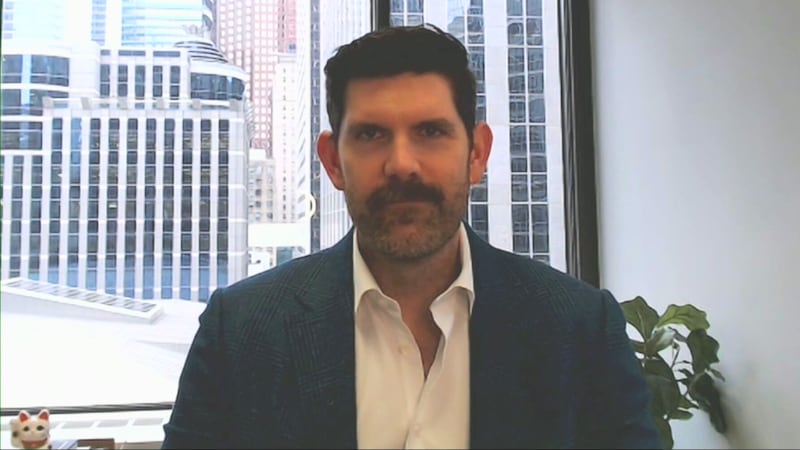
BNN Bloomberg spoke with Jamie Murray, president of the Murray Wealth Group, about the diverging performance of the two retailers, how investors should navigate market volatility, and where he is finding opportunities.
Key Takeaways
- Nike continues to face pressure from weak product innovation, inventory issues and increased competition after shifting away from wholesale channels.
- The company’s turnaround is expected to take longer than anticipated, with investors reassessing its growth outlook.
- Groupe Dynamite delivered strong results and guidance, supported by high same-store sales and momentum in its business model.
- The company’s growth outlook remains strong, though expectations are elevated and execution will be key to sustaining performance.
- Ongoing volatility is reinforcing a long-term investment approach, with opportunities emerging in energy-related industries and select growth stock
Read the full transcript below:
LINDSAY: Let’s start with some perspective on the earnings results from Nike and Groupe Dynamite. Joining me now is Jamie Murray, president of the Murray Wealth Group. It’s great to have you. Thanks for joining us. Good morning.
JAMIE: Yeah, thank you for having me on.
LINDSAY: We’ll start with Nike. Probably not the results that the company wanted to see. Were you expecting these kinds of results from Nike and the kind of gloomy outlook for the year ahead?
JAMIE: Yeah, I mean, certainly the results were disappointing, missing, I think, a lot of analysts’ numbers, especially on the top line, on the revenue side and on the inventory side, which those have been the problems plaguing Nike for the last three or four years. So we’re not necessarily surprised to see that continue. We used to be Nike shareholders, once upon a time, going back to the 2020, 2021 days, when they were moving all in on digital and, you know, the merchandise was flying off the shelves. But we realized they overextended, over-pivoted towards the direct-to-consumer model. They gave up a lot of shelf space on wholesale, and that allowed new competitors to move in. And now their merchandise is a little bit stale. They haven’t really had any new product innovation that’s really got consumers excited. And so I think Nike — and why the stock is down — is investors realizing this turnaround is going to be a longer process than expected.
LINDSAY: So obviously Nike has its own problems that are kind of company-specific. You don’t think that this is a bigger story, like a broader story in terms of the retail sector as a whole, and maybe a story of what economies around the world are looking like?
JAMIE: I mean, I think that plays a part into it, but certainly we’re seeing — and I know we’ll talk about Groupe Dynamite — but there are retailers who are thriving in this market, and it always comes down to having the right product, the right price point, and delivering something that consumers want. But we are seeing, obviously, like the Lululemons of the world as well, struggling with a slower apparel and athletic market. Whether that’s just new competition, consumer fatigue, the health of the consumer in general — these are all factors at play — but I think Nike’s issues, while those are a part, they run deeper than that.
LINDSAY: Okay, yeah, let’s talk about Groupe Dynamite then. As you said, a totally different story for this company, posting some pretty strong results. Revenue more than doubled compared with a year earlier, rose 45 per cent, strong revenue growth and outlook for the year ahead. What are your thoughts on what we saw from Dynamite?
JAMIE: Yeah, really impressive quarter from Dynamite. This is a company that just IPOed about 18 months ago, I think it was, and so there’s still a little bit in that “show me, prove me” phase, where they have a new business model. It’s a little bit more of a fast-design, quick-turnaround model, high inventory turns. And I mean, it seems like it’s working. The comp sales are great. The outlook for 2026 was great. It looks like it was above estimates, mostly due to higher same-store sales. So they’re doing everything right. They’ve got a great multiple now — it trades at, I think, 30 times P/E — so a lot of this growth is priced in. And it’s going to be up to them to keep delivering quarters like this. But we certainly think this is going to move the stock higher today.
LINDSAY: Moving it higher today. But as you mentioned, the company has cautioned for the year ahead — multiple risks, including tariffs, a decrease in customers, and failing to open some new planned stores. Does any of that concern you as we move further into 2026?
JAMIE: So, I mean, these are all risks that a lot of retailers face. Certainly, I think Dynamite is just highlighting what could happen that would not allow them to meet these guidance numbers that they’re laying out for the Street today. And so certainly any of those things are possible. It’s possible the war in Iran expands or grows, and that could be another factor. So a lot of these risks, I think, are just ongoing business risks, and not necessarily specific to Dynamite or ones that they’re saying they expect to happen. But definitely these are all things we track. And it’s great now with a lot of data sources — and why I think a lot of investors were really bullish on this quarter for Dynamite — as we can see, almost not quite in real time, but with a short lag, how credit card sales are trending in, say, the United States or in Europe, even in Canada. There are broader credit card data sets, so we do get a good sense of how these risks are playing out through the quarter.
LINDSAY: Okay, so we’re going to move on and take a broader look at the markets now before we hone in on some — I know you have some stock picks, and we’ll get to those. But just what we’re seeing today in terms of the roller coaster with the markets, it seems as though a lot more trading in the green today. What are your thoughts on the volatility right now? Is there anywhere you think investors should be looking that’s maybe a little more stable?
JAMIE: Yeah, I mean, it’s definitely tough to trade in this volatility. We’re long-term investors. We buy and hold stocks for years, and so we expect that we’re going to go through periods like this. And we just like to hold companies that we think are going to come out of these global, geopolitical or COVID — or whatever it is — these global crisis events stronger on the other side. And that’s really how we deal with them. We just want to own something that we know is going to be okay when this is all over, or whatever the outcome is. So what’s going to happen today in the market — it looks like it’s going to be a strong start — but the war is continuing. It’s not over until it’s over. We’ll see what President Trump says tonight in his address to the nation. It’s about one year ago on Liberation Day when he had a similar address and sunk the markets 10 per cent over three days. But he could say something that continues the rally. So we’re just, again, positioned in long-term holds and playing the market like that.
LINDSAY: Okay, so let’s get to your stock picks. You brought one that you would buy and one that you would sell. We’ll start with the buy. Flowserve is a company you like. Why do you like Flowserve?
JAMIE: Yeah, so Flowserve is a recent addition to our global equity growth portfolio. One of the spots we’re seeing some opportunities is companies that are adjacent to the oil and energy sector that have seen their share prices get hit on this war in Iran. So we fully expect, like Flowserve — they make pumps and valves, pretty basic industrial products that go into LNG plants, nuclear facilities — and so we fully expect that whatever the outcome of this Middle East scenario is, we’re going to see more LNG built globally, whether that’s in Canada and the U.S., potentially some more in Africa or even Australia. So we’re going to see a big build cycle that we think is going to come from this as well. Nuclear is another pillar to the story, where we’ve already seen lots of momentum in the nuclear sector. So Flowserve is just a great way to play a broad-based pivot to those two forms of energy as we come out of this crisis.
LINDSAY: And just lastly, one to sell is Starbucks. Why is that?
JAMIE: Yeah, so Starbucks — this was a holding of ours for the last few years, and one that we actually did sell, mostly due to some concerns that we’re seeing. Starbucks, being consumer discretionary, like we’re talking with Nike, it is a tough market, with consumers a little stretched. And seeing gas prices hit decade highs really doesn’t help the story. When you’re thinking, “Hey, should I stop in for that $6 latte?” but your bill at the pump just went up $30, these are some of the first things to get cut. So Starbucks is a company that we have held for this turnaround that the new CEO is putting in place. It’s taking a little bit longer than we expected. The investments they’re having to make in their labour force are a little bit bigger than we expected. And now, seeing the stock trade at a 30-times multiple, given some of the perceived slowdowns we’re going to see in the consumer sector, we decided to exit Starbucks.
LINDSAY: Okay, we’re going to have to leave it there. Jamie Murray, president of the Murray Wealth Group, joining us this morning. Thanks so much for your time. I appreciate it.
JAMIE: Yeah, thank you.
---
This BNN Bloomberg summary and transcript of the April 1, 2026 interview with Jamie Murray are published with the assistance of AI. Original research, interview questions and added context was created by BNN Bloomberg journalists. An editor also reviewed this material before it was published to ensure its accuracy and adherence with BNN Bloomberg editorial policies and standards.

