Rising oil prices and uncertainty tied to the Iran conflict are creating volatility for investors, with near-term risks tied to inflation and growth expectations.
BNN Bloomberg spoke with Andrey Omelchak, founder, CEO and CIO at LionGuard Capital Management, about sector opportunities, risks and how investors should position through the uncertainty.
Key Takeaways
- Near-term downside risks are elevated as oil spikes fuel inflation concerns and geopolitical uncertainty limits visibility.
- Defence and domestic infrastructure tied to sovereign investment trends are emerging as key long-term growth areas.
- Markets appear to be pricing in a relatively short conflict, though escalation risks remain a key variable.
- AI is creating winners and losers, with non-essential and easily replaceable services facing disruption risks.
- Bird Construction stands to benefit from infrastructure spending, while staffing firms face pressure from AI adoption.
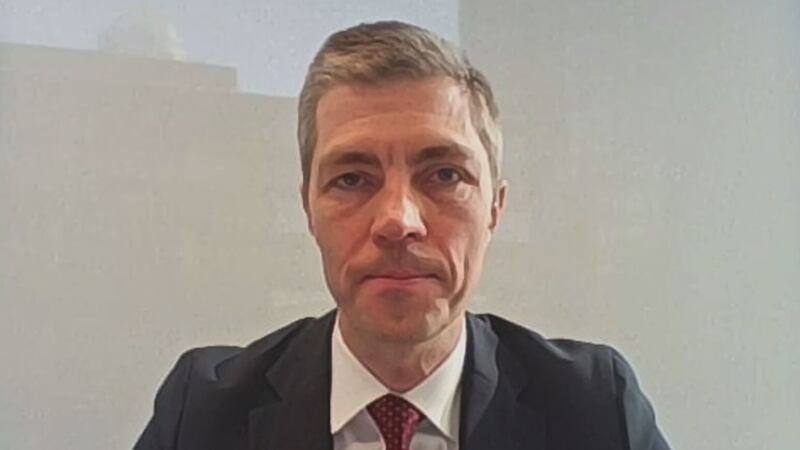
Read the full transcript below:
ROGER: Rising oil prices and uncertainty over the end of the Iran war are making near-term market direction challenging for investors. Let’s find out if there could be some upside over the long term. Joining me now is Andrey Omelchak, founder, CEO and CIO at LionGuard Capital Management. Andrey, thank you very much for joining us today.
ANDREY: Thank you, Roger. Great to be here.
ROGER: Okay, so I’ll ask the question — how would you characterize market risk right now? And when I say right now, I mean at this minute, because in four minutes, at the end of this interview, it may have changed.
ANDREY: That’s right. Well, things are changing fast. There’s a lot of news flow from tweets. There was President Trump’s speech yesterday, which did not provide much confidence to the market at all. Clearly, oil prices are up more than 10 per cent this morning. The market is down this morning as well. So there is clearly renewed fear of escalation, and that the duration of the conflict might last longer. That’s what the market is pricing right now. There’s not much visibility as to how things are going to unfold. And the big question remains whether or not the United States is going to go after the islands that are critical to Iran’s oil supply. That’s the biggest question on my side. So clearly, the market reaction is warranted, given what’s happening right now.
ROGER: And with oil, we’ve seen it jump 11 to 12 per cent today on that speech yesterday. Is this that moment? Because people talked about maybe hitting $150 a barrel. Is this that moment where they’re looking and going, this may take longer than we thought, and oil prices are now really going to react to it?
ANDREY: Well, it’s very possible that we get an oil spike in the short term to the neighbourhood, in my opinion, of $150 to $170, but that would happen only if there is a real escalation from this point on. Should that happen, I think that would mean the U.S. is going after some of their island facilities, and then it would be a question of Iran’s response. Now, longer term, that would lead to quite a bit lower oil prices. So in my opinion, that would be a major opportunity to take some profits for those who are exposed to oil markets. And once again, that’s not a certainty, but the odds of that are certainly increasing in my view.
ROGER: So where are you looking right now? What sectors do you see opportunities in?
ANDREY: Well, despite all this uncertainty, one thing you want to do as an investor is stay invested and not try to predict short-term dynamics, and to be opportunistic — take advantage of market volatility. I see a lot of opportunities right now in the defence sector. Clearly, defence budgets have been increasing globally — not just in the U.S., but also in Canada and especially in Europe. So there are a lot of opportunities there. These are structural step changes. This is not something that’s going to change with a change of presidency, for example. These are long-duration trends that we can extrapolate from, and a lot of companies are benefiting tremendously. Within the same theme, there is a need for domestic and sovereign capabilities, so companies based within respective countries stand to disproportionately benefit from capital flowing into defence.
ROGER: And just to go back to defence for a second, it has been a bit of an up-and-down ride for it, though, too.
ANDREY: Yes, absolutely. So you have to pick what you invest in. A lot of companies have really rallied, even last year, especially those exposed to the defence space. So you have to pick and choose. But at the same time, it’s helpful to have a strong structural industry tailwind, which is nowhere close to changing. In fact, it’s going to accelerate, in my opinion.
ROGER: Okay, and areas that you’re staying away from right now — and we forget sometimes, with Iran being such a focus, the rest of the world is still unfolding too. AI is still a factor for everybody.
ANDREY: Well, artificial intelligence has been top of mind for a lot of people. Software-as-a-service companies — valuations in many cases have been cut in half. So you have to be very careful. In my opinion, mission-critical SaaS companies that are deeply embedded in operations and difficult to replace are actually net beneficiaries of artificial intelligence. But companies that are not mission-critical and can be replaced easily are prone to disruption. So you have to look case by case, sub-sector by sub-sector, and evaluate whether these companies will be disrupted or not. For example, placement agencies — I’m quite negative on them. Artificial intelligence is likely to disrupt those businesses and create additional competition, as companies use AI tools to hire directly and reduce reliance on placement firms.
ROGER: All right, that’s a good segue into some of the stocks you’re keeping an eye on. One of them that you want people to keep away from is Robert Half, which is involved in placement.
ANDREY: Yes, in my opinion, Robert Half is a company you have to be careful with. Clearly, the stock has been under tremendous pressure over the last 12 months or so. That’s fully warranted, in my opinion, and I cannot make a bullish case yet to get involved in this company or the industry as a whole. It’s a thematic positioning — a company that’s prone to disruption and does not benefit from current macro developments.
ROGER: Okay, we’re almost out of time. We want to get in one of your buys — Bird Construction.
ANDREY: Yes, Bird Construction is a prime beneficiary of the “Build Canada” trend. It’s an infrastructure company positioned to benefit from capital flowing into that space. They are also exposed to defence to a small extent. They have a booming backlog, up 45 per cent year over year. They also have an expanding margin profile, so everything is working in their favour. It’s good for cash flow generation, and you don’t even need to assume margin expansion for the company to perform well over the next two years. But in my opinion, given a multi-year structural tailwind, I think multiple expansion for Bird, as well as for infrastructure companies in Canada more broadly, is very much in order.
ROGER: Okay, we have to leave it there. Andrey, thank you very much for joining us today.
ANDREY: Great to be here. Thank you.
ROGER: Andrey Omelchak is founder, CEO and CIO at LionGuard Capital Management.
---
This BNN Bloomberg summary and transcript of the April 2, 2026 interview with Andrey Omelchak are published with the assistance of AI. Original research, interview questions and added context was created by BNN Bloomberg journalists. An editor also reviewed this material before it was published to ensure its accuracy and adherence with BNN Bloomberg editorial policies and standards.

