Oil prices are swinging following a U.S. presidential speech that raised concerns about escalation in the Iran conflict. Investors are balancing short-term supply risks with expectations for longer-term stability.
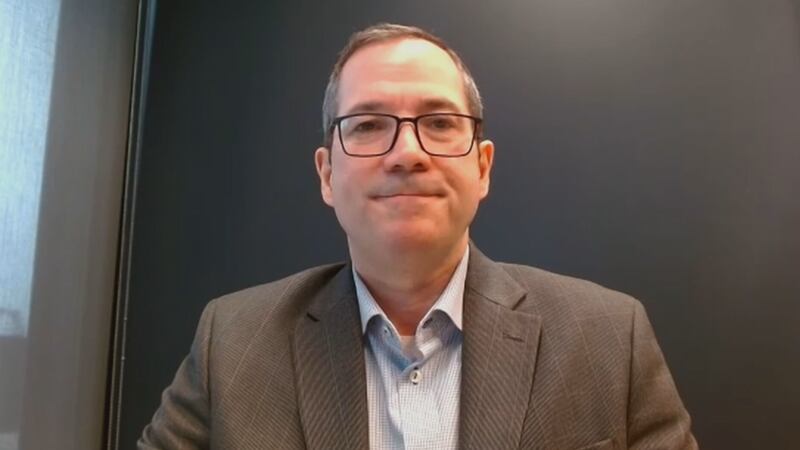
BNN Bloomberg spoke with Sam Labell, portfolio manager at Veritas Asset Management, who said markets are using forward oil pricing to gauge expectations for how the conflict may unfold.
Key Takeaways
- Oil futures for later in the year remain in the $70 range, indicating expectations that geopolitical tensions will ease over time.
- Supply disruptions tied to the Strait of Hormuz are driving short-term price spikes, with Europe more exposed than North America.
- Higher fuel costs are feeding inflation concerns, contributing to rising long-term bond yields and pressure on rate-sensitive sectors.
- Energy equities continue to generate strong free cash flow yields, supporting steady exposure to Canadian oilsands producers.
- Gold demand is shifting from central banks to ETFs, increasing volatility and prompting a move toward streaming companies over producers.
Read the full transcript below:
ROGER: Oil prices are seeing significant movement today after a primetime speech last night in which U.S. President Donald Trump vowed to escalate the war in Iran. Here to discuss this and other trends is Sam Labell, portfolio manager at Veritas Asset Management. Sam, thanks very much for joining us. What were your thoughts on that speech?
SAM: The idea was to tone down the rhetoric. Obviously, that didn’t happen, and it seemed to contradict some of what had been said over the last couple of weeks that made the market a little more comfortable about a possible resolution. What we always point to in these situations is the December oil contract, because by then, hopefully, the conflict will have resolved. That contract reflects what the market expects oil conditions to look like at that time, and it’s still trading in the $70 range. That suggests a return to a relatively balanced and normal market.
As much as we’re focused on the near-term oil price, which has spiked, there are clearly issues right now with the Strait of Hormuz and getting oil to market. But the back end of the curve, particularly December, is still in the $70s. That tells us the market expects some form of resolution over the next several months. Whether that proves correct remains to be seen, but that is the base case.
ROGER: In Europe, we’re seeing diesel futures top $200. Are these two completely different paths for oil?
SAM: North America has its own oil supply. Canada and U.S. production make the region close to self-sufficient, though not entirely. There is still some reliance on Middle East supply. You will see a dislocation between Brent, which reflects European pricing, and WTI in North America. Europe sources more of its oil from the Middle East, so supply disruptions are felt there more quickly.
That spread between Brent and WTI can widen significantly before normalizing. Typically, it might be five or six dollars per barrel, but it has expanded well beyond that.
ROGER: With those price pressures in Europe, could some of that spill over into North America, not just in oil but in other areas?
SAM: Oil and refined products are priced globally. While WTI may trade at a discount due to local supply, final product pricing is tied to global benchmarks. Refiners can sell products at prices linked to Brent while sourcing inputs closer to WTI.
That means higher prices at the pump in North America. These pressures can also feed into industries where fuel is a key input, such as mining and manufacturing. That contributes to inflation concerns, which are already starting to show up in long-term bond yields.
Higher long bond yields can affect a range of investments tied to interest rates, including telecoms, REITs and some utilities. Utilities are also seeing demand from AI-related infrastructure, but we are watching the impact of rising yields closely.
ROGER: Is that what has you lightening up on telecoms and REITs?
SAM: Yes, we’ve been reducing telecom exposure for some time. Population growth has slowed, which affects subscriber growth. The sector had attractive valuations about a year ago, but those have become richer. Combined with concerns about long bond yields, we see pressure building there.
ROGER: There’s been repricing in energy equities alongside oil. Is there more to come?
SAM: If you look at free cash flow yields, most large-cap Canadian oil names are effectively priced for oil in the $70 range. At the same time, they’re generating free cash yields of roughly nine to 15 per cent, which is compelling.
Those returns are being distributed to investors, and oilsands assets provide long life. We’re comfortable holding positions at current levels. We’re not necessarily adding, but if oil trends toward the high $70s, that would be supportive for share prices.
ROGER: A couple of names you still like — Cenovus and Canadian Natural Resources.
SAM: Canadian Natural Resources is a disciplined producer with growth and a strong track record. Cenovus has more integrated exposure and has faced challenges, but its operational turnaround is gaining traction, particularly downstream.
Both are strong long-term holdings with steady free cash flow. We also hold smaller-cap names such as ARC Resources and Tourmaline to round out the portfolio.
ROGER: Just briefly on gold — what are you seeing there?
SAM: Gold has been challenging. We participated in the rally, but we closely watch demand sources. Central banks were key buyers, but more recently, ETF inflows have driven demand, which is more speculative.
We saw strong inflows earlier this year, followed by outflows more recently. That shift is contributing to volatility. If outflows persist, it could pressure prices further.
At the same time, rising diesel costs could increase mining costs, which would pressure producers. As a result, we’ve been shifting toward streaming companies, which don’t carry the same operational risks, and away from large producers like Barrick and Newmont.
ROGER: We’re out of time, but quickly — Finance Minister François-Philippe Champagne’s visit to China. What impact could that have on Canadian industrials?
SAM: It’s an interesting development. With the U.S. stepping back from some engagement with China during the Iran conflict, Canada appears to be maintaining dialogue. Sending the finance minister signals a desire to strengthen ties, even if it’s somewhat under the radar.
Given his background in trade and foreign affairs, discussions likely extend beyond economics. If China takes on a larger role in global trade routes, particularly around the Strait of Hormuz, maintaining a constructive relationship could benefit Canada.
ROGER: Sam, we’ll leave it there. Thanks for your time.
SAM: Thank you.
---
This BNN Bloomberg summary and transcript of the April 2, 2026 interview with Sam Labelle are published with the assistance of AI. Original research, interview questions and added context was created by BNN Bloomberg journalists. An editor also reviewed this material before it was published to ensure its accuracy and adherence with BNN Bloomberg editorial policies and standards.

