Oil is holding near $110 per barrel as the U.S.-Iran conflict stretches into its sixth week, but some investors may be overestimating the duration and economic impact of the war.
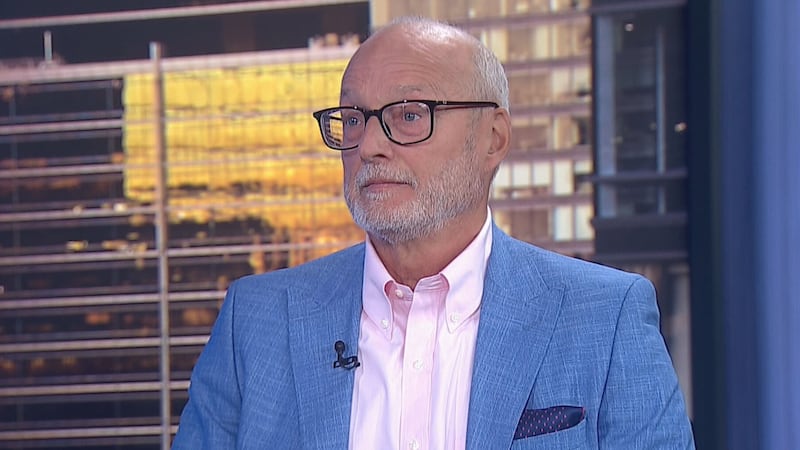
BNN Bloomberg spoke with Jim Thorne, chief market strategist at Wellington-Altus Private Wealth, about why credit markets are signalling a potential resolution and how investors should reposition for a possible cyclical recovery.
Key Takeaways
- Investors may be over-positioned for a prolonged war, while credit markets suggest a higher likelihood of a shorter conflict and eventual resolution.
- Elevated oil prices are not guaranteed to translate directly into stronger energy earnings due to hedging and operational challenges.
- Current positioning reflects recession fears, but improving signals point toward a potential cyclical recovery in the U.S. economy.
- Defensive sectors such as health care and staples remain crowded, while opportunities may emerge in more cyclical areas if risks ease.
- Canadian structural challenges, including weak productivity and policy constraints, could weigh on long-term growth and bank earnings.
Read the full transcript below:
ANDREW: Let’s get more from Jim Thorne, chief market strategist at Wellington-Altus Private Wealth. Good morning. Great to see you. You’re a student of history. Is there anything in the current situation that investors are missing or under-emphasizing?
JIM: I think people are positioning themselves for an elongated war, and I would suggest it’s going to be a shorter war. That’s one. And two, when you go back and look at history — the fall of the Berlin Wall, the end of the Korean War — the period after the war is fantastic for risk returns. So I am suggesting, as we’ve talked previously, that we should be selling the war and positioning for peace.
And, Andy, my north star is the 10-year yield in the United States. Last April, when it got to about 4.5 per cent — because there’s so much debt — Scott Bessent said this is what he anchors off. You saw the Trump administration pivot and soften on tariffs when we got to 4.5 per cent. This time around, recently, the same thing happened.
ANDREW: Sorry, Jim, to interrupt. Let’s have a look at a five-year chart for the 10-year bond. Carry on.
JIM: It’s sitting around 4.3 per cent and is down a touch. So the credit markets are at least indicating there is a fair chance there’s going to be some resolution to the problem. Because if they didn’t think that, I would suggest the 10-year yield would be closer to five per cent. So I’m anchoring off the credit market, saying there is going to be a resolution — and then how do you position your portfolio moving forward?
ANDREW: I’m a bit confused, though. If people were worried about the war dragging on, would they not seek a haven in U.S. bonds, pushing yields down?
JIM: Yes, but at the same time, the counter would be that people get really concerned about the fiscal state of the United States and start selling U.S. bonds. That could be a larger wave of selling as opposed to buying.
ANDREW: It’s incredible, the cost of this war. Some of these missiles cost hundreds of thousands of dollars, and they’re being used to shoot down cheap drones.
JIM: Yes, but if the president is successful — and remember, Andy, he’s using JD Vance as his negotiator, and Vance is anti-war — what I would suggest is when we get this war over, people have to start thinking about these things.
For example, oil is at about $110. Oil companies hedge, so are people really thinking that $110 oil today immediately translates into earnings? The piece you did earlier about Barrick — the easy money in mining has been made. Mining is a difficult business now. It’s about execution.
I think people are positioned the wrong way. They are positioned for a recession in the United States. They are positioned for war. I would suggest you’re going to get a cyclical recovery in the United States, and you want to position for it.
ANDREW: What about sectors like technology and health care?
JIM: I like technology in the sense that it’s the cheapest it’s been in a while. Health care is where people are hiding out — health care, staples, energy. What we need to see is a rebalancing.
Back in the late 1980s and early 1990s, when the Berlin Wall fell, the following year you had about a 30 per cent return in the S&P 500. When I talk about the return of the peace dividend, that’s what I mean.
We’ve also got the July 4, 250th anniversary that Trump is talking about, and the midterm elections. That’s why I say the credit market is signalling an early resolution, and if that’s the case, you want to get pro-cyclical.
ANDREW: There’s been talk of inflation, and we’re going to see at least some because of higher fertilizer and petrochemical costs. But your take is this won’t be sustained?
JIM: Yes. It’s very encouraging that the governor of the Bank of Canada has said he will look through these price increases because of the supply shock, which he should. The same applies to Fed Chair Jerome Powell.
I’m not in the camp of raising rates. I think we need lower rates. But at the same time, Governor Macklem is hoping the real estate market in southern Ontario can recover with rates where they are. We’ll see.
ANDREW: There’s also talk about growth obstacles in Canada’s cities — municipal charges and NIMBYism — being a major problem for the economy.
JIM: We’ve been implementing these policies for decades. This is not a quick fix. It’s a well-known problem. There need to be significant policy changes at the local and federal levels, and I think we’re coming to that — but it takes time.
That’s the problem. People think there’s a magic bullet. We’ve identified the problems, but how long does it take to change policy, and how does that translate into returns for the TSX?
ANDREW: Is it also a cultural issue — a lack of entrepreneurial spirit?
JIM: I’ve spent a lot of time in the United States, and there is an edge there for entrepreneurship. We need to make Canada attractive to capital and for entrepreneurs to stay. Over the past 15 years, that hasn’t been the case.
ANDREW: I read an op-ed from a tech founder who said U.S. investors move faster.
JIM: They move faster, and they’re also willing to cut funding faster. It’s business — fast in and fast out. It’s a completely different pace. There are things I like about Canada, but we need to get back to that entrepreneurial spirit.
ANDREW: Final thought — Canadian banks. Are you overweight?
JIM: They’re among the best-run banks in the world, arguably. That said, I think rates have been kept too high, and you’re seeing a transfer of income from households to banks through mortgage refinancing that ends next year.
Banks are okay this year. Dividends are safe. But I would suggest the real test comes in 2027.
ANDREW: What do you mean by that?
JIM: If Canadian fundamentals don’t improve, that will filter into bank earnings.
ANDREW: Jim, always great to speak with you. Jim Thorne, chief market strategist at Wellington-Altus Private Wealth.
---
This BNN Bloomberg summary and transcript of the April 6, 2026 interview with Jim Thorne are published with the assistance of AI. Original research, interview questions and added context was created by BNN Bloomberg journalists. An editor also reviewed this material before it was published to ensure its accuracy and adherence with BNN Bloomberg editorial policies and standards.

