Markets are rallying as investors respond to signs that tensions between the U.S. and Iran could ease, sending equities higher and oil prices lower on hopes the Strait of Hormuz could reopen.
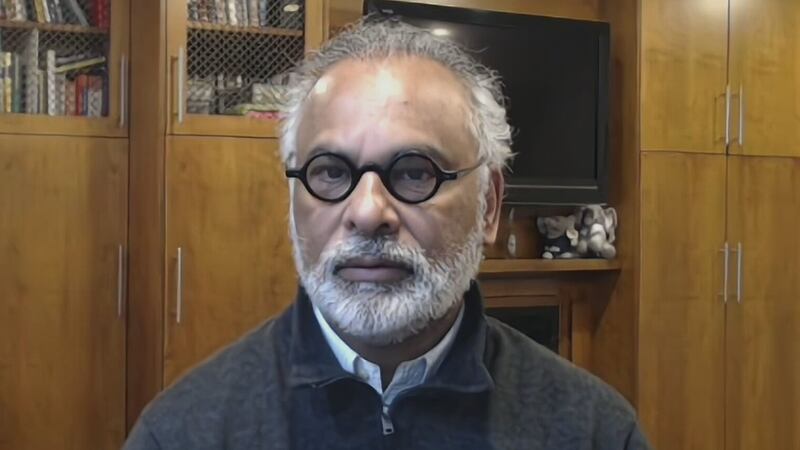
BNN Bloomberg spoke with Paul Harris, portfolio manager at Harris Douglas Asset Management, who says markets remain highly sensitive to geopolitical developments and investors should expect continued volatility as the situation evolves.
Key Takeaways
- Markets are reacting sharply to changing expectations around Iran, driving gains in equities and declines in oil prices.
- Volatility remains elevated, but markets have not shown signs of full capitulation despite ongoing uncertainty.
- Short-term bonds are viewed as a lower-risk option as investors navigate inflation concerns and central bank policy.
- Banking stocks, particularly in the U.S., may benefit from regulatory easing and increased consolidation activity.
- Long-term investors may find opportunities in high-quality companies during periods of market volatility.
Read the full transcript below:
ANDREW: Now investors seem to be betting that U.S. President Donald Trump really wants to end the war in Iran. We’ve seen U.S. equity futures soaring and a major slide in oil futures. There is also a possibility that Iran could reopen the Strait of Hormuz to vessel traffic in the near future.
Let’s get perspective from Paul Harris, portfolio manager at Harris Douglas Asset Management. Paul, great to see you. It’s early days, I know, but so far a pretty euphoric reaction.
PAUL: Yeah. Well, congratulations on your retirement.
ANDREW: Thank you. There’s a euphoric reaction to that as well. Paul, carry on.
PAUL: It’s been a pleasure talking to you. So, a couple of things. When you look at the market, a lot of this has already been priced in. You’ve seen a massive rally, and a lot can happen in two weeks.
One hopes there is some kind of conclusion that allows things to move forward, but there are still a lot of sticky points. Iran’s capabilities have been degraded in some areas, but there are still uncertainties around its military and nuclear capacity. At the same time, the situation may have emboldened Iran, particularly when it comes to the potential to close the Strait of Hormuz.
That creates a very difficult problem globally. Iran has also demonstrated its ability to attack neighbouring countries that are key U.S. allies, which complicates the U.S. commitment to protecting countries like Saudi Arabia, the United Arab Emirates and Kuwait.
So it’s an awkward situation. Two weeks is not a long time, but hopefully there is some resolution. In the meantime, despite the day-to-day volatility, markets have not fallen significantly. The S&P 500 was down about four per cent as of yesterday and roughly flat year to date.
Even the VIX, which measures volatility, never surged to extreme levels. It peaked around the low 30s, meaning markets have not fully capitulated. That reflects the constant flow of news and rapid changes in sentiment.
I think this remains a wait-and-see environment, with more volatility ahead. For long-term investors, it can be an opportunity to buy strong companies during periods of weakness and try to look past the short-term noise.
ANDREW: For money and bonds, do you think investors should minimize risk and stick with short-term fixed income?
PAUL: Yes. If you look at the short end of the yield curve in both the United States and Canada, yields have moved higher. That created an opportunity, as markets were pricing in inflation and central banks staying on hold.
So the short end of the curve backed up, and interest rates rose. That presents a chance to earn a more stable return with lower risk, particularly if the conflict continues.
We’ve seen a rally in the short end today, with yields falling as investors grow more comfortable that inflation may not be as big a concern and central banks can keep rates where they are.
ANDREW: Let’s take a look at Canadian two-year bond yields. We’re seeing buying activity pushing yields down. Now, looking at the TSX banks index, do Canadian banks look like a reasonable bet right now?
PAUL: Yes. I own Canadian banks, so I think they’re attractive. They had a strong year last year and have since pulled back. I expect them to continue performing well.
That said, U.S. banks may offer better opportunities, especially Canadian banks with larger U.S. exposure. Regulatory changes in the U.S. are easing capital requirements, allowing banks to deploy capital more effectively, whether through share buybacks, dividends or business investment.
We’re also seeing increased consolidation in the U.S. financial sector. The current administration appears more open to mergers and acquisitions, and there are still too many banks in the U.S., so consolidation is likely to continue.
That creates opportunities for both regional and large banks. They can expand through acquisitions and reinvest in their businesses with greater flexibility.
In Canada, banks remain strong businesses. They have evolved beyond traditional lending and now generate more income from areas like investment banking, credit cards and asset management, making them more stable overall.
I also expect improvement in the housing market over the next year. We’ve already seen some early signs of recovery, and that should support the banking sector, provided interest rates don’t rise significantly.
ANDREW: Thank you so much, Paul. Paul Harris, portfolio manager at Harris Douglas Asset Management.
---
This BNN Bloomberg summary and transcript of the April 8, 2026 interview with Paul Harris are published with the assistance of AI. Original research, interview questions and added context was created by BNN Bloomberg journalists. An editor also reviewed this material before it was published to ensure its accuracy and adherence with BNN Bloomberg editorial policies and standards.

