The United States and Iran have agreed to a two-week ceasefire, but questions remain over whether both sides can align on key terms outlined in a proposed peace framework.
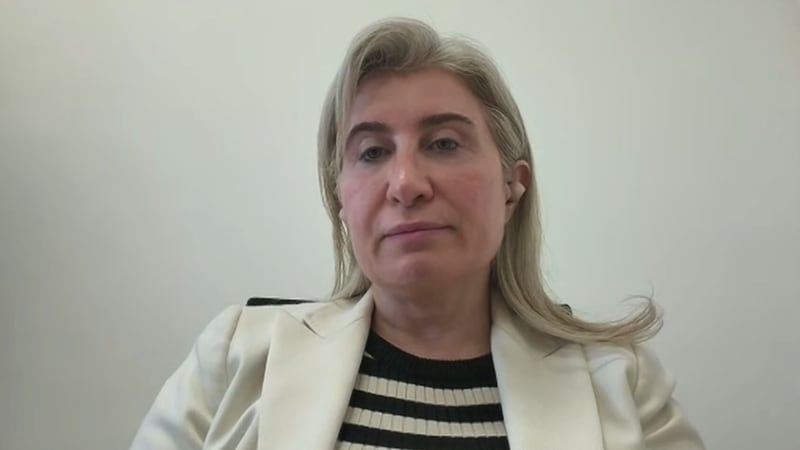
BNN Bloomberg spoke with Bessma Momani, professor of political science at the University of Waterloo and senior fellow at the Centre for International Governance Innovation, who said several of Iran’s reported demands appear unrealistic for the U.S. to accept and suggested the ceasefire may reflect a political effort to de-escalate tensions.
Key Takeaways
- Several reported Iranian demands, including sanctions removal and U.S. troop withdrawal, appear difficult for Washington to accept.
- A significant gap remains between proposed terms and what both sides are likely willing to agree to in practice.
- The ceasefire may serve as a short-term de-escalation rather than a clear path to a lasting agreement.
- Control of the Strait of Hormuz remains a major sticking point given its importance to global shipping and legal constraints.
- The conflict has caused significant damage in Iran, while broader regional stability concerns persist despite the temporary truce.
Read the full transcript below:
ANDREW: U.S. President Donald Trump says a 10-point peace plan put forward by Iran is workable, but our guest says she cannot see how the U.S. could agree to these terms and suspects the ceasefire resembles an effort by Trump to save face. Let’s get more from Bessma Momani, professor of political science at the University of Waterloo and senior fellow at the Centre for International Governance Innovation. Thank you very much for joining us.
BESSMA: My pleasure.
ANDREW: Iran put forward these 10 points, and you say a couple of them are things the U.S. could never really agree to. What are the most salient points here?
BESSMA: Well, quickly, all 10 of them do not look doable by the Americans. But the ones that stand out are compensating Iran for war damages, withdrawal of U.S. combat forces from the entire region, and removing all sanctions. It is really quite difficult to see the Americans agreeing to this, so there is going to be some challenge here. These are 10 points that Trump alluded to but has not gone into much detail about. The one thing he did mention in interviews is that he agreed to, or that the Iranians agreed to, removing all enriched uranium. So there is a wide gap between what is being proposed and where the reality is for the two parties to meet on these points.
ANDREW: President Trump says he has curtailed Iran’s enrichment program. Is there any truth to that?
BESSMA: You will remember that is what was said last June during the 12-day war, when the Americans hit a number of nuclear sites. It is really unclear. When this war started again, there was reference to enriched uranium that was supposedly trapped and could be retrieved. We saw some reports on that from the Americans. So again, it is unclear. The big picture is Trump was looking for an offer. He likely thought his so-called madman theory of making threats would force Iran to concede, but that did not happen. This is an unpopular war on many fronts, particularly among the American public. So it required something from Trump to declare success without getting into the details, and that is what we are seeing here.
ANDREW: Are the Iranians emerging as a winner here with de facto control of the Strait of Hormuz?
BESSMA: That is another one of the supposed 10 points — that Iran would control the Strait of Hormuz and potentially impose some kind of toll system, which is what we are seeing in practice today. Again, I do not see that happening. This is an international waterway that requires free movement under international law. So that will be difficult. It is hard to say anyone won. There has been enormous destruction in Iran, including critical infrastructure and refineries. The Iranian people are likely the biggest losers, having lost significant wealth and future prospects. The regime is still standing, which may be frustrating for many Iranians, but the fact it survived could lead some to argue Iran “won” in the sense that it withstood attacks from two powerful militaries.
ANDREW: What is the fundamental goal of the Iranian regime? Survival, obviously, but Iran is complex, with a broader political structure as well.
BESSMA: It is very complex and a multi-ethnic, multi-religious country. One of the biggest concerns among analysts was the risk of the state collapsing into a failed state. There are many internal fault lines that could be exploited, particularly by separatist movements. A collapse would serve almost no one, except perhaps adversaries seeking a weakened Iran. The rest of the region, along with Europe and the U.S., would not want to see a failed state, because history shows that failed states in the region tend to create significant unintended consequences globally.
ANDREW: One of the key power dynamics in the Middle East has been the rivalry between Saudi Arabia and Iran. How is Saudi Arabia viewing the current situation?
BESSMA: I think they are relieved. Most Gulf countries will be relieved. There has been longstanding tension, but also a degree of detente over the past five years. Mohammed bin Salman has tried to cool foreign policy tensions and focus on economic growth. There is a young population that wants jobs and economic opportunities, and conflict is not in their interest. More broadly, the Gulf region does not benefit from a failed or highly antagonistic Iran. They have already suffered damage to infrastructure and reputations as safe destinations. So they are relieved this has de-escalated. If the choice is between the current regime or a failed state, they would prefer stability.
ANDREW: Bessma, thank you very much. Bessma Momani, professor of political science at the University of Waterloo.
---
This BNN Bloomberg summary and transcript of the April 8, 2026 interview with Bessma Momani are published with the assistance of AI. Original research, interview questions and added context was created by BNN Bloomberg journalists. An editor also reviewed this material before it was published to ensure its accuracy and adherence with BNN Bloomberg editorial policies and standards.

