U.S. inflation accelerated in March, driven by a sharp rise in energy prices, raising uncertainty around the Federal Reserve’s next move and the durability of recent disinflation trends.
BNN Bloomberg spoke with Thomas Simons, chief U.S. economist at Jefferies, who said policymakers are likely to look past energy-driven volatility and focus more closely on labour market conditions before considering rate cuts.
Key Takeaways
- U.S. consumer prices rose 0.9 per cent in March, pushing annual inflation to 3.3 per cent, largely due to a surge in energy costs.
- Gasoline and diesel increases are expected to keep headline inflation elevated in the near term, with further pass-through likely in April data.
- Core inflation remained relatively subdued, with limited food price growth and declines in some categories masking underlying trends.
- Ongoing supply disruptions, including shipping constraints, are expected to keep energy prices elevated through the summer.
- The Federal Reserve is expected to remain in a wait-and-see mode, with potential rate cuts tied more to labour market weakness than inflation alone.
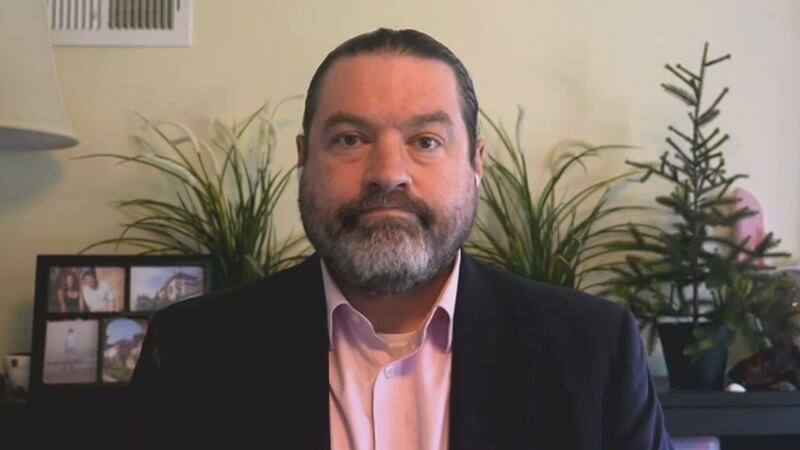
Read the full transcript below:
ROGER: U.S. inflation jumped in March, driven mostly by a surge in energy prices and pushing year-over-year inflation back up to around three per cent. It’s raising questions about the Fed’s path forward and the staying power of the disinflation trend. For more in-depth analysis, we’re joined by Thomas Simons, chief U.S. economist at Jefferies. Thomas, thanks very much for joining us.
THOMAS: Thank you.
ROGER: What do we do with these numbers, considering everything else around them?
THOMAS: Yeah, great question. I mean, looking at these numbers just in a vacuum doesn’t really tell you a whole lot about what we’re going to be looking for on the path forward. We all know that gasoline prices went up quite a lot. Diesel prices went up even more. And when you think about what we see in terms of prices posted at the pump versus what the actual increases were in the data, it feels like there’s probably even more of this to come in terms of realizing those price increases in the overall inflation data.
So we’re probably going to continue to see the headline inflation numbers be quite firm in April. We also saw virtually no food inflation in March, which I think contrasts with most people’s experiences. Considering food tends to be very low margin and needs to be shipped around in vessels fuelled by gasoline, I suspect we’ll see some pass-through by next month as well.
So what does the Fed do with it right now? I think there’s enough past experience that we can rely on to suggest that the energy shock is something they should look through. They’re going to be more cognizant about whether we see some damage on the ground in terms of the labour market. And if they do, I think they’ll cut, because if the labour market is falling apart, there’s no way these higher prices can be sustained outside of energy.
ROGER: There’s a lot of pressure, obviously, for a cut from the White House. How much of a factor would that be? Or will these numbers decide whether they can cut or not?
THOMAS: I think, for the most part, it really does come down to the labour market data. As I said, I’m a firm believer that stagflation is something that can’t really exist. So I wouldn’t be terribly worried about cutting maybe one or two times into high inflation if I knew that the unemployment rate was rising and likely to continue to rise.
I think that more or less dovetails with the administration’s preferences for interest rates, which are quite well known at this point. I do think there is alignment with the incoming Fed chair, Kevin Warsh. He is of the same mind, for the most part, as the administration. So once he is in the seat, they are likely to adjust rates lower modestly, maybe one or two cuts in the second half of the year.
But again, if things start to really change and the labour market shows quite a bit more weakness, I doubt they would hesitate to act.
ROGER: I just want to go back. You mentioned food inflation was unchanged or down — was it down?
THOMAS: Technically, it was down 0.01 per cent, so most people would say it was unchanged.
ROGER: Why do you think that came in the way it did?
THOMAS: It’s a good question. I didn’t take too much time to look at the component breakdown of which foods were up and down. But my suspicion is that it’s a distributional issue. Food prices were up a little bit more in February — I think about four-tenths of a per cent.
So again, one of those things where it’s misaligned with people’s experiences. I don’t think people felt food prices went up too much in January and February, but I suspect it’s a measurement issue and something that’s likely to reverse as we go forward.
ROGER: And now with energy, there are a whole bunch of questions. It depends what happens this weekend, what happens next week — whether prices are sustained or drop. If oil falls to $90 a barrel, what kind of impact does that have?
THOMAS: I think we’re probably locked in for a bit more inflation in energy prices, at least for the next few months in the U.S. Gasoline supply chains globally have been disrupted to the point where shortages will persist for some time.
Even if the Strait of Hormuz reopened tomorrow and normal shipping resumed, we’re basically six weeks short on deliveries through the refining supply chain. So those shortages are going to last at least through the summer and into the fall.
By then, conditions will likely normalize and we’ll start to see some of that energy inflation come off. But it really comes down less to crude oil prices and more to how much gasoline is actually being delivered where it’s needed.
To get gasoline back down to where the administration likely wants it — below $3 — you’d probably need to see oil prices back around $50 a barrel, and I’m not sure that’s realistic anytime soon.
ROGER: Around $50 a barrel?
THOMAS: Something like that. At the beginning of the year, gas was just below $3 on average, and crude was around $58 a barrel. So lower 60s, upper 50s — that’s probably where you need to be to get back to those levels.
ROGER: We’ve heard from others that it may not get back there — maybe $70 is optimistic. If oil stays around $70, what does that mean longer term?
THOMAS: I think that’s actually a tolerable level for most consumers. When gasoline prices started rising, I looked at how recent increases compare historically. Adjusted for inflation, gas prices were around $5.50 in 2022, about the same in the early 2010s, and around $6.50 in 2008.
So if we’re well below those levels, it’s something consumers can handle — especially since the labour market has held up and wage gains remain in the three to three-and-a-half per cent range.
I’m not concerned about an inflation-driven recession unless gasoline prices move substantially higher from here. And if prices fall back to the $3 to $3.50 range, I’d largely take that risk off the table.
ROGER: We’ve got to wrap it up there. Thomas, thanks very much for joining us.
THOMAS: Thank you.
ROGER: Thomas Simons, chief U.S. economist at Jefferies.
---
This BNN Bloomberg summary and transcript of the April 10, 2026 interview with Thomas Simons are published with the assistance of AI. Original research, interview questions and added context was created by BNN Bloomberg journalists. An editor also reviewed this material before it was published to ensure its accuracy and adherence with BNN Bloomberg editorial policies and standards.

