Stocks are moving higher as investors grow more optimistic that renewed talks between the United States and Iran could ease tensions and restore stability to global energy supplies.
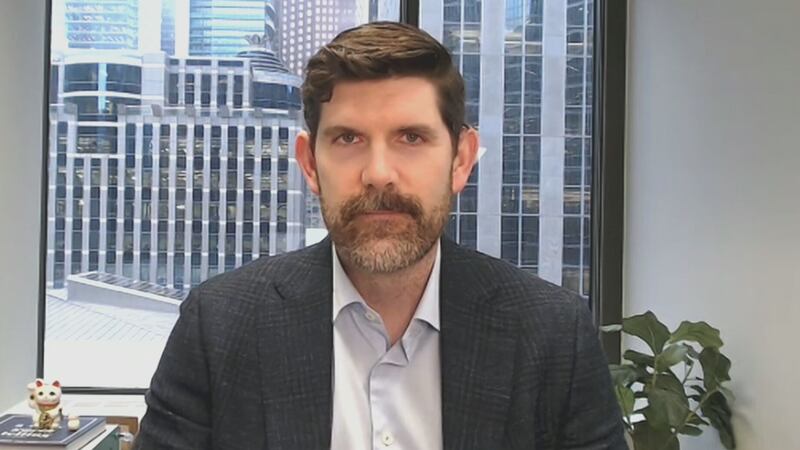
BNN Bloomberg spoke with Jamie Murray, president at The Murray Wealth Group, about how geopolitical developments, bank earnings and stock-specific opportunities are shaping investment strategy.
Key Takeaways
- Markets are pricing in a potential ceasefire, though outcomes remain highly sensitive to any escalation in tensions.
- A prolonged closure of the Strait of Hormuz is viewed as unsustainable given the severe impact on global energy supply.
- U.S. banks remain supported by investment management growth despite volatility in capital markets activity.
- Stock selection is focused on companies that can withstand geopolitical disruption while benefiting from structural demand trends.
- Opportunities highlighted include AI infrastructure, industrial services and chemicals tied to energy and semiconductor supply chains.
Read the full transcript below:
ANDREW: Investors are optimistic that the U.S. and Iran are considering another round of peace talks. Let’s get more from Jamie Murray, president of The Murray Wealth Group. Jamie, thanks very much for joining us. I know it’s a mug’s game betting on whether negotiations will take place, but when it comes to the conflict in the Persian Gulf, how are you reading it right now? What’s most important for you?
JAMIE: Yeah, well, thanks for having me on. It certainly looks like the market is pricing in a prolonged ceasefire or even an end to the conflict, at least in the short term. We’ve all seen the math — the Strait of Hormuz cannot remain closed for weeks or months without parts of the world effectively running out of oil and energy, and we’re not seeing that reflected in pricing. So I think the market is looking for a peace deal, and that’s our view as well. We always thought the Trump administration didn’t have the appetite for a prolonged war. We have midterms coming up, inflation is the number one issue for U.S. constituents, and whatever you believe about the merits of the war politically, it certainly seems unpalatable for Americans.
ANDREW: But you’re cautious in the sense that stocks could take a hit if the fighting drags on?
JAMIE: Yeah, I mean, it’s a bit binary. We are long stocks. We think you want to stick with what’s been working, and there are pockets that are more insulated from the conflict. But certainly, if we see an escalation, we’ll likely see energy prices move higher than the peaks we saw in March, and that would weigh on equities again. Right now, it looks like both sides are working toward at least a ceasefire. I wouldn’t call it long-term peace — these things can flare up every few years — but if we get oil flowing again in the next few weeks or months, we should be okay.
ANDREW: Jamie Dimon of JPMorgan often sounds pessimistic in his economic outlook. What’s your read on U.S. banks? Are you interested right now?
JAMIE: Yeah, Jamie Dimon has been hesitant to offer positive commentary for the last couple of years, despite strong growth tied to AI infrastructure. We’ve highlighted that Morgan Stanley’s leadership tends to be more optimistic, and the share price reflects that. It’s our holding in the U.S. banking sector. It’s less exposed to consumer lending and more focused on capital markets and investment management. That investment management arm, which they’ve built out over the past decade, is a strong driver of return on equity and earnings growth. Investment banking can be volatile year to year, but the underlying business is a steady grower, and that’s what we like.
ANDREW: We’ve seen Morgan Stanley shares rise sharply over the past year and five years, and the company reports earnings tomorrow morning.
JAMIE: That’s right. The Street is looking for about $3. We saw Goldman Sachs report strong results, though there was some disappointment in fixed income given rate volatility. But longer term, the outlook remains strong.
ANDREW: We should note JPMorgan’s traders also beat expectations. You mentioned Chemtrade — could it benefit from disruption in the Persian Gulf?
JAMIE: It could. A lot of chemicals come out of the Middle East and Asia, where we’re seeing supply disruptions due to high energy prices and shipping bottlenecks. But there’s also a new development — Chemtrade has a major chlor-alkali plant in North Vancouver, and city council voted not to extend a bylaw for chlorine production. That plant supplies about 70 per cent of Western Canada’s chlorine and could be forced to shut down by 2030. It’s a significant contributor to revenue and cash flow, so that’s likely to pressure the stock in the near term.
That said, we still like the core business. The company has strong water treatment operations in the U.S. and produces ultrapure sulfuric acid used in semiconductor manufacturing. As production shifts onshore, Chemtrade could benefit. We’ll have to see whether provincial or federal governments step in, given the national importance of that facility.
ANDREW: You also like Broadcom. What’s the thesis there?
JAMIE: The AI trade is still very much intact. A year ago, 2027 revenue estimates were around $100 billion — now they’re closer to $200 billion. EBITDA estimates are rising sharply, but the stock has been relatively flat for much of the past nine months, around the $300 level. We’ve started to see a breakout recently. Demand for AI infrastructure is strong, capacity is tight, and Broadcom is well positioned alongside names like Nvidia and Microsoft. It offers a compelling opportunity, especially given some recent company-specific concerns that we think are overdone.
ANDREW: Quickly on Flowserve — industrial pumps and valves, with exposure to nuclear?
JAMIE: Yes. We’re looking for companies that can perform whether the conflict continues or ends. Flowserve fits that profile. It supplies pumps and valves to LNG facilities and has significant exposure to nuclear. A large portion of its business is aftermarket service, which provides stable, high-margin revenue. There’s also a margin expansion program underway, and we see a long runway for growth. We’ve been buying on recent weakness.
ANDREW: Jamie, thanks very much. Jamie Murray, president of The Murray Wealth Group.
---
This BNN Bloomberg summary and transcript of the April 14, 2026 interview with Jamie Murray are published with the assistance of AI. Original research, interview questions and added context was created by BNN Bloomberg journalists. An editor also reviewed this material before it was published to ensure its accuracy and adherence with BNN Bloomberg editorial policies and standards.

