A potential merger between United Airlines and American Airlines is drawing attention for its potential to reshape the aviation sector, raising questions about competition, pricing and service levels. The scale of such a deal could create a dominant global carrier but also trigger significant regulatory scrutiny.
BNN Bloomberg spoke with Stephen Trent, independent aviation specialist, about the feasibility of the proposal, the challenges it would face and how high fuel costs are already influencing airline capacity decisions.
Key Takeaways
- A United-American merger would likely face significant antitrust scrutiny due to overlapping routes and reduced competition.
- The combined airline could gain global scale advantages, particularly in loyalty programs and international connectivity.
- Higher fuel costs are already pushing airlines to cut unprofitable capacity, reducing the need for mergers to achieve the same effect.
- Consumers could face higher fares and fewer travel options, especially in less profitable routes and regions.
- Labour, regulatory and municipal concerns would add complexity, making approval more difficult than past airline mergers.
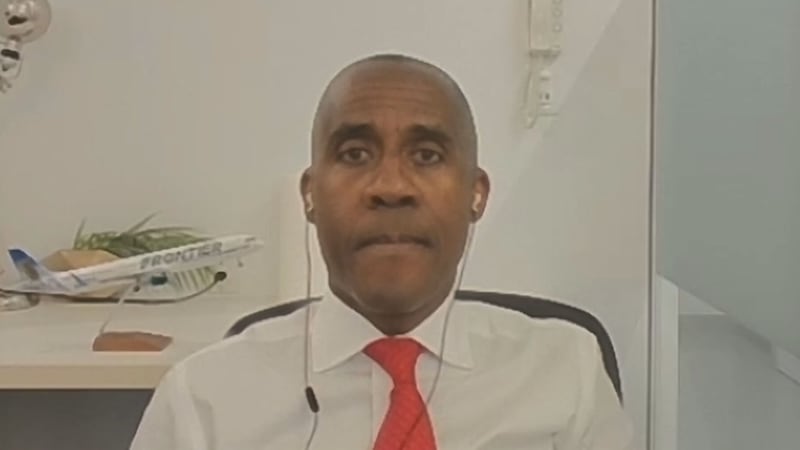
Read the full transcript below:
ROGER: Well, the CEO of United Airlines has reportedly floated the idea of a potential merger with rival American Airlines. The combination would create the largest airline on the planet if it went through, but it might also draw intense scrutiny. Let’s bring in Stephen Trent, independent aviation specialist, to discuss this a little more. Stephen, thanks, as always, for joining us.
STEPHEN: My pleasure.
ROGER: This kind of came out of the blue. Is it realistic at all?
STEPHEN: Yeah, great question. So United definitely seems to be interested in what they can do on the M&A side. We actually heard relatively recently conversations about United and JetBlue, and of course those two carriers already have a strategic partnership. United and American would be a much taller order. That would be a massive combination. To put it mildly, I think it would be quite complex for the two carriers to work something out, not only in terms of market share, but also with respect to the implications for the balance sheet of the combined carrier.
ROGER: What would be some of the concerns? I mean, I imagine they run parallel routes. What would be some of the concerns? And then, of course, anti-competition as well?
STEPHEN: Absolutely, anti-competition would be huge. Parallel routes are also really important. Those two carriers have had quite a go at it in Chicago, for example, where the FAA is actually coming in and leading each carrier to reduce the number of flights they have planned going through there in the summer. High oil prices might actually help alleviate that, as capacity gets cut as a result. But even beyond those factors, we would also have to consider what happens to labour, the reaction from each carrier’s union, and the consumer reaction.
I think all of this is taking place in the context of very high oil prices and very high jet fuel prices. That is already putting upward pressure on airfares and bag fees. When you get this kind of substantial M&A, it is hard to imagine that airfares are not going to rise. On top of that, you would probably have various reactions from municipalities that could lose some service. This would look considerably more complex than any U.S. airline merger we have seen in the last 20 years.
ROGER: OK, let’s pretend, just for fun, that it goes through. What benefits would customers see, and what would be the negatives?
STEPHEN: Yeah, absolutely. I would say if you are a frequent flyer or a relatively well-heeled travelling consumer, it is possible that you are going to like the combined airline. That hypothetical airline would be significant in terms of its global reach, even though it would probably have to choose between staying in Star Alliance or Oneworld Alliance. United, as the likely buyer, could mean a shift toward Star Alliance.
For higher-end consumers, the global reach, frequent flyer benefits, lounge access and what this could mean for combined co-branded cards would be enormous. On the opposite end of the spectrum, lower-income consumers are already under pressure and not travelling much. This would likely mean, all else equal, a net reduction in capacity. I would expect cheaper and unprofitable capacity at today’s fuel prices to come out, which would mean fewer options for some travellers.
ROGER: And it would make it the largest in the world. I was looking — I think it would be bigger than Delta and Lufthansa combined. Is there a benefit on a global scale to being this big?
STEPHEN: Yeah, great question. How big is too big is going to be one of the challenges. Presuming this somehow gets past antitrust scrutiny and rival objections, there could be benefits to scale.
But if you look at a carrier like Delta today, its scale is already very strong, profitability is high and it has an investment-grade balance sheet. Does it need to grow massively more? Probably not. In a merger like this, what we typically see is capacity coming out of the market. Antitrust authorities often require airlines to drop routes or reduce service, and takeoff and landing slots can be reassigned.
So from an operational perspective, could a larger United-American reap global benefits? Yes — one of the most obvious would be the scale of a combined co-branded credit card program. But I would expect capacity to come out and some routes to be dropped.
ROGER: One last quick question — could this be a feint by United, suggesting they are actually looking to buy someone else?
STEPHEN: Yeah, this is a tricky one. We heard United talking recently about JetBlue, and that case is interesting. JetBlue has a lot of leverage and has been burning cash for a couple of years without profitability. From a valuation perspective, how would the market react to a potentially dilutive transaction?
American Airlines is obviously much larger than JetBlue and, in my view, in better shape. But it is possible United is positioning itself to do some kind of deal. If fuel prices remain this high, capacity will likely come out of the market — maybe not through M&A, but simply because airlines will have to cut unprofitable capacity.
ROGER: OK, we have to wrap it up there. Always a pleasure. Stephen, thanks for joining us.
STEPHEN: My pleasure.
ROGER: Stephen Trent, independent aviation specialist.
---
This BNN Bloomberg summary and transcript of the April 14, 2026 interview with Stephen Trent are published with the assistance of AI. Original research, interview questions and added context was created by BNN Bloomberg journalists. An editor also reviewed this material before it was published to ensure its accuracy and adherence with BNN Bloomberg editorial policies and standards.

