U.S. equities are holding near record highs, but investor positioning remains cautious following recent geopolitical volatility and ahead of key earnings catalysts.
BNN Bloomberg spoke with Kate Moore, chief investment officer at Citi Wealth, who said many investors have stayed on the sidelines during recent tensions, while fundamentals, earnings strength and continued AI investment support a constructive outlook.
Key Takeaways
- Investors have largely held back on adding risk during recent geopolitical tensions, limiting broad bullish positioning.
- Geopolitical shocks tend to have short-lived impacts on equities, with markets often rebounding quickly after declines.
- Earnings season is expected to remain strong, supported by healthy consumer spending and solid economic data.
- Macro conditions and corporate fundamentals continue to provide a supportive backdrop for equities.
- Ongoing investment in artificial intelligence is seen as essential for competitiveness, with spending unlikely to slow despite near-term uncertainty.
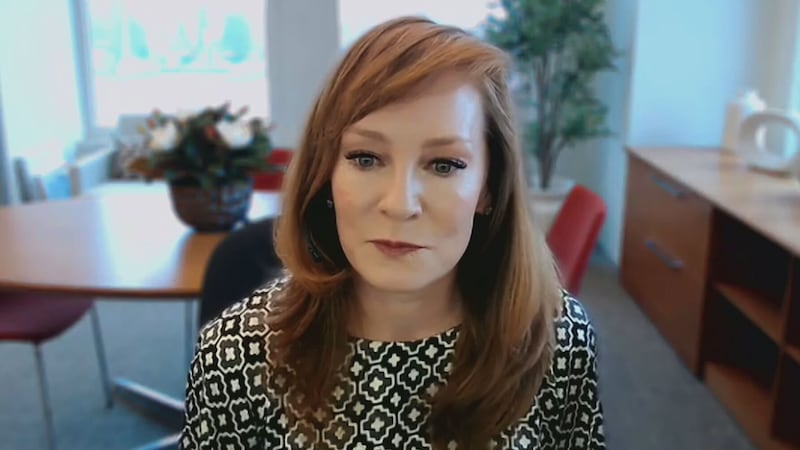
Read the full transcript below:
ANDREW: U.S. markets are higher in early trading, very near record highs. Let’s get more from Kate Moore, chief investment officer at Citi Wealth. Kate, thank you very much indeed for joining us.
KATE: Hi, Andy. It’s great to be here.
ANDREW: The Wall Street Journal is saying today this is a “FOMO market” and also a “taco market” — fear of missing out on stock gains and also confidence that Trump always chickens out, that if he sees the market slide, he’ll reverse course on a policy that’s worrying investors. Do you get a feeling of just underlying bullishness right now?
KATE: I wouldn’t classify the investor base as overwhelmingly bullish. Actually, what I would say is that many people sat out from making significant trades over the course of the Iranian conflict. So far, the biggest participation we saw was across what we call the fast-money community — hedge funds. More traditional investors, more long-only investors, were waiting to see what would happen, perhaps adding a little bit on some pullbacks. We did some rotations in our own portfolios there. But on the whole, everyone has been sitting on their hands a little bit, I think, for the last two months. So I’m not sure that everyone is looking to put on a lot of additional risk at this moment. There are many things, not just around Iran, not just around economic data, but also around earnings, that are going to be very important in order to catalyze an improvement in sentiment.
ANDREW: And history does seem to show that — I know the investment business always likes to say this — keep your money on the table, riding on the turn of the wheel. But generally, the U.S. market, anyway, over the past 10 years and more, has shaken off global geopolitical disturbances.
KATE: Yeah, that’s right. A lot of people have learned this lesson — you may get a significant amount of negative headlines, but they tend to not play into markets or last in markets for long periods of time. I think a lot of people were struck by how fast markets recovered after Trump’s announcement around tariffs last April. That memory was very fresh for a lot of investors — that if they panicked and took money off the table, then when the market recovered, they were unable to participate. I think that was a contributing factor to the stasis over the course of the last two months. But it is also true that throughout history, geopolitical headlines have a strong negative impact, often in terms of markets, but then get washed out over a period of one or two weeks, or sometimes even days. So looking through the noise and staying really focused on the macro and the fundamentals is something that we have tried to do while we continue to build resilient portfolios for our clients.
ANDREW: So far, earnings are pretty decent. We haven’t seen — of course — the shoe yet to drop on these higher energy prices, but generally corporate earnings are pretty strong.
KATE: Yeah, and our expectation is we’re going to get continued strong reports over the course of this earnings season. I think there are a couple of things to take into consideration, Andy. The first is that we entered this year with a really constructive view on the overall U.S. and global macro picture. Despite the geopolitical shocks and a lot of concern about the longer-term effects of higher energy prices, we have had very solid high-frequency economic data released over the last couple of weeks — even data that reflects the environment after the start of the Iran conflict. So the macro backdrop looks quite good.
What we’ve been hearing from companies is that the consumer is in good health, spending continues, and investments in core secular areas like AI and technology continue unabated. I think we’re going to see more of that over the course of earnings season, with more companies — particularly those aligned to the tech and AI trade — raising their guidance for full-year 2026.
ANDREW: I know this is a ridiculously broad question, but what are you telling clients about AI? What’s the most important thing?
KATE: The key message we’ve been giving clients is that we are not concerned about a bubble — whether in investment, attention or corporate discussion. Investing in AI and adopting AI tools is existential for every business.
One of our core messages has been that if you don’t hear from companies that they have a strong AI strategy, you should be concerned. To stay competitive with their peers and attract future investment, they need to be making that spending now — even if it doesn’t generate immediate returns in the quarter. That shouldn’t give investors pause. Instead, it should be seen as foundational work to transform businesses in what is an incredibly disruptive and critical technology.
It’s essential. And I get worried when people think there will be a pullback in spending. In fact, any company that says they are cutting AI investment is a bit of a red flag for me.
ANDREW: Thanks very much indeed, Kate. Kate Moore, chief investment officer at Citi Wealth. I really appreciate it.
---
This BNN Bloomberg summary and transcript of the April 22, 2026 interview with Kate Moore are published with the assistance of AI. Original research, interview questions and added context was created by BNN Bloomberg journalists. An editor also reviewed this material before it was published to ensure its accuracy and adherence with BNN Bloomberg editorial policies and standards.

