Hopes for a near-term resolution in the Persian Gulf are fading, with disruptions in the Strait of Hormuz weighing on investor sentiment. Despite the uncertainty, markets remain near record levels, supported by a steady earnings backdrop.
BNN Bloomberg spoke with Paul MacDonald, president and co-chief investment officer at Harvest ETFs, about positioning in a volatile environment and why healthcare is starting to show early signs of strength.
Key Takeaways
- Investors are being advised to stay invested despite geopolitical uncertainty, with markets still near all-time highs.
- Healthcare is showing early signs of a rebound after a prolonged period of underperformance.
- Strong earnings surprises in pharma and medical names are signalling a potential bottoming process in the sector.
- Covered call strategies are helping generate income and offset volatility in uncertain market conditions.
- Diversification within healthcare remains critical as leadership shifts between subsectors such as pharma and medtech.
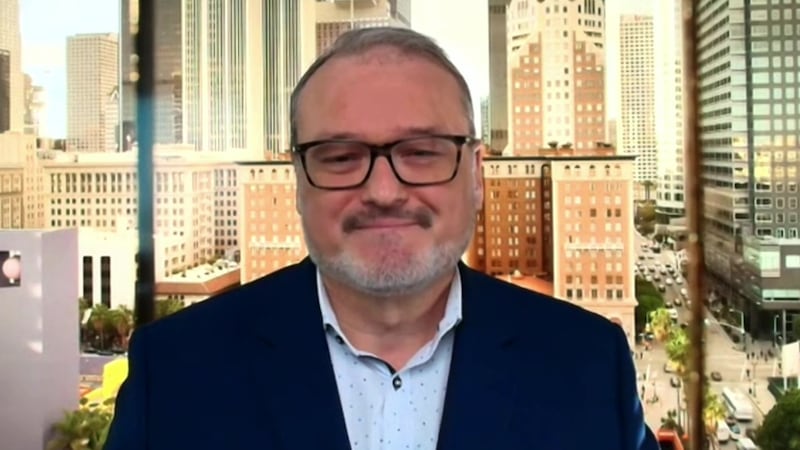
Read the full transcript below:
ANDREW: Hopes for a near-term resolution to the conflict in the Persian Gulf are dimming. Traffic through the Strait of Hormuz is still largely stalled. We are seeing some selling today. Let’s take a look at a sector — we’ll focus on the broad market, but also on the health-care sector, which is traditionally seen as defensive. People still get sick. Doctors still send in bills. We’re joined by Paul MacDonald, president and co-chief investment officer at Harvest ETFs. Great to see you, and thanks very much.
PAUL: Nice to see you as well, Andy.
ANDREW: Before we talk about health care, how are you positioning yourselves in the broad market?
PAUL: First and foremost, there are reasons to be optimistic. The bears have had control of the narrative over the past month or so, and for good reason. There are a lot of known unknowns about the outcome of the war and its implications for broader markets.
But when we take a step back, the market was consolidating through November, December and into February, and we saw a lot of positive signs. Market breadth was expanding. So I think there are reasons to be constructive. The market is telling us that — we’re within a couple of per cent of all-time highs despite a relatively negative narrative.
At the same time, we can’t ignore those uncertainties, particularly around the duration and implications of the Middle East conflict. That’s likely to remain unclear in the near term. As we navigate this foggy macro environment, our view hasn’t changed — stay invested.
You need some defensive areas — utilities are still working, for example — but also exposure to growth. The AI infrastructure buildout is not going away. We’re seeing that in earnings, including from companies like Texas Instruments. There are reasons to be optimistic, and this earnings season is starting to provide early confirmation.
ANDREW: Tell us about one of your ETFs — the Harvest Healthcare Leaders Income ETF. This is one that uses options to generate additional yield.
PAUL: That’s right. It’s a covered call strategy on 20 large-cap health-care stocks. It’s been around for more than 10 years, and we’ve maintained — and even increased — the distribution.
When we think about positioning, we see it as a barbell strategy. You want defensive exposure, like health care, alongside growth exposure, particularly in technology, which has been a leadership area both before and after the March correction.
Health care had been performing well before the recent pullback, but it’s been a challenging environment over the past 18 months, with the sector in consolidation. There have been headwinds, particularly in managed care and from policy concerns.
That said, this earnings season is showing some strong upside surprises. We’re looking for early signs of a bottoming process, and we’re starting to see those “green shoots.”
Volatility isn’t going away, either in the broader market or in health care. The options strategy allows us to monetize that volatility, which can be beneficial for investors.
ANDREW: Bloomberg data shows the five-year return for this ETF is down about 14 per cent on a capital basis, but the dividend has kept total returns in line with benchmarks, at around 30 per cent over five years.
PAUL: That’s right. In environments where returns are harder to generate, options strategies become a more meaningful component of total return.
We have more than 10 years of consistent distributions, and those have been additive to returns. We’re seeing similar opportunities across the market right now, where volatility premiums are elevated.
People sometimes say we must love volatility — I wouldn’t go that far — but we do like it, because it creates opportunities to generate income.
ANDREW: It’s a fairly concentrated portfolio — about 20 large global health-care companies.
PAUL: That’s right — 20 names consistently, with relatively low turnover. We aim for diversification within the health-care space because the science can change quickly, creating winners and losers across the sector.
We diversify across subsectors and look for exposure to areas with the strongest growth potential.
ANDREW: I notice a heavier weighting in pharmaceutical companies — names like AstraZeneca, Merck, AbbVie, Johnson & Johnson and Amgen — rather than U.S. health insurers.
PAUL: The portfolio is equally weighted, so that skew reflects relative performance. Interestingly, if you had asked me at the start of the year, I would have expected medtech names like Intuitive Surgical or Boston Scientific to lead.
Instead, pharmaceuticals have been among the best performers, including AstraZeneca and Johnson & Johnson. That reflects a shift in market leadership within the sector, and it highlights why diversification is so important.
ANDREW: Thank you very much, Paul. Paul MacDonald, president and co-chief investment officer at Harvest ETFs.
---
This BNN Bloomberg summary and transcript of the April 23, 2026 interview with Paul MacDonald are published with the assistance of AI. Original research, interview questions and added context was created by BNN Bloomberg journalists. An editor also reviewed this material before it was published to ensure its accuracy and adherence with BNN Bloomberg editorial policies and standards.

