Uncertainty is rising for Canadian companies as the CUSMA review approaches, with no formal negotiations underway and trade tensions continuing to escalate. A shifting U.S. stance on tariffs and trade policy is adding to concerns about how the agreement could evolve.
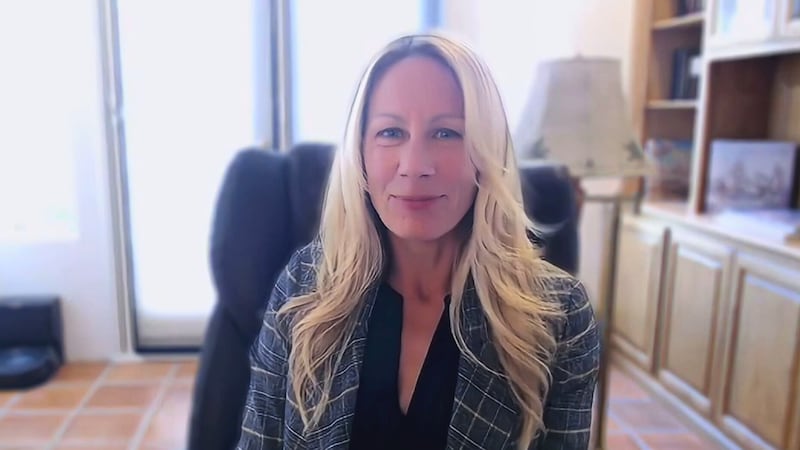
BNN Bloomberg spoke with Wendy Wagner, head of international trade at Gowling WLG, who says negotiations are unfolding in a more politicized environment, with sector-specific disputes and tariffs shaping the path forward.
Key Takeaways
- The upcoming CUSMA review is taking place without formal talks, increasing uncertainty for businesses reliant on cross-border trade.
- Sector-specific tariffs, including steel, aluminum and autos, remain a major source of tension and economic risk.
- A growing shift toward protectionism is changing the nature of negotiations away from traditional free trade principles.
- Long-standing and emerging trade irritants, including dairy and digital policy, are expected to feature prominently in discussions.
- A trilateral approach with Mexico is seen as strategically important to balance U.S. negotiating power.
Read the full transcript below:
ROGER: With CUSMA negotiations approaching, uncertainty is building for companies that depend on cross-border trade. Ottawa says it’s ready to talk, but formal negotiations have yet to get underway. To break down where things stand and what it means for Canadian businesses, we are joined now by Wendy Wagner, head of international trade at Gowling WLG. Wendy, thank you very much for joining us.
WENDY: You’re welcome. Thanks for having me.
ROGER: There’s no official talks? Are they chatting, though, or are they meeting in little private rooms, off in corners somewhere, and trying to figure out where this is going to go?
WENDY: I’m sure there’s discussions at some level, but we haven’t heard a lot about that. So right now, we’re hearing mostly from the Canadian side and what they’re doing in terms of putting together the advisory council and other preparations on our end.
ROGER: And what do you think of that advisory council? Is that a good choice?
WENDY: Yeah, I think it’s great. I mean, I think we’ve seen that a lot of the tensions that Canada is dealing with, and the most serious irritants, are on a sectoral level. And the council has very good representation from each of those industries, so you can see where that would be very important to have those interests represented and providing the information that the negotiating team will need.
ROGER: All right, I like the term irritants. It’s very polite. Dairy comes to mind. Booze maybe. What are some of the irritants, and what are some of the realities we may have to face with them?
WENDY: Yeah, I mean, I think it’s a really challenging environment, because a lot of what the Carney administration is doing is reactive to what we’ve faced in terms of trade challenges from the United States. So, you know, we’ve imposed retaliatory tariffs on steel and aluminum and certain derivative products, and that’s obviously an irritant, but one that is in retaliation for what our industries are facing. And then there’s some of those more traditional issues, like dairy. And then some of the newer digital issues, like the Online Streaming Act, Online News Act, and, you know, even the data sovereignty initiatives that we’ve heard of in the past couple of months.
ROGER: Are they all on the table? Or would we be willing to give up one of them, or all of them?
WENDY: I can’t say what we’d be willing to give up, but I imagine that each of those issues will be a focus of the U.S. administration. They’ve already signalled what they consider to be of concern, so I’m sure they’re issues that will be brought forward. But that’s how the negotiations unfold in terms of what each party is willing to consider giving up or making some changes in relation to.
ROGER: And do we have irritants? I mean, we have a lot of things I think we’re worried about, but do we have irritants like that, that there might be a tit for tat?
WENDY: Oh, absolutely. I mean, the greatest challenge that our economy is focusing on right now is some of those sectoral issues — the steel and aluminum tariffs, you know, 50 per cent. It’s a huge impact on those industries in Canada. Copper as well, lumber, automobiles, of course, completely unresolved, and, you know, really quite devastating to our economy. So although we’re still enjoying duty-free treatment for most of the products we send to the United States, we can’t de-emphasize the impact of some of those very significant tariffs.
ROGER: And any indicators on what might happen with those, or is it still a bit of a wild card with who’s in the White House right now?
WENDY: I think it’s always a wild card, but I haven’t heard anything that’s particularly positive from the U.S. administration side in terms of their willingness to consider lifting some of those very significant tariffs, sectoral tariffs. And in fact, I think the signals that have been sent are that those are there to stay, and in some sense not negotiable — maybe in some sense — but we have heard that tariffs will remain in some sense as well. So it’s hard to say if there’s a prospect of reduction and what that would look like.
ROGER: And what are our bargaining chips going into this?
WENDY: Well, I mean, I think it’s interesting. You know, we’ve heard talk about an entry fee into negotiations and a very sort of one-sided approach. One would have thought our bargaining chip is that if tariffs are imposed by the U.S., they’re paid by U.S. businesses and ultimately U.S. consumers. So the theory behind free trade negotiations in the past has always been that free trade benefits both countries. So you’re willing to come into the negotiations on that premise. If that premise is no longer one that the U.S. administration is committed to or believes in, the negotiations become much more difficult and much different in character.
ROGER: And I know, I mean, all these talks are obviously focused on the U.S. Do we have any concerns with Mexico? Are there anything that could suddenly rear its head and throw a spanner in the works?
WENDY: Yeah, I mean, I think our major concern in terms of Mexico, in the context of the CUSMA negotiations, is that we’ve always considered those trilateral negotiations to provide a better path forward for us in terms of negotiating with the United States. I think we have to remember, in terms of our own trade with Mexico, we are both members of the CPTPP, which is a separate free trade agreement. And so we would still have free trade with Mexico, even if CUSMA took a different form or ceased to exist.
ROGER: And with the idea of us negotiating with the U.S. and Mexico negotiating with the U.S. separately, would that be good for Canada, or could that be detrimental?
WENDY: I think it’s difficult to say in terms of outcomes. I think the desired process on the part of the Canadian administration is to do this on a trilateral basis, and Mexico has also voiced that as being a strong preference. I think there’s a perception that, you know, together we’re a bit of a counterweight to the United States.
ROGER: All right, Wendy, we have to wrap it up there. But thank you very much for joining us.
WENDY: You’re welcome. Thanks so much for having me.
ROGER: Wendy Wagner, head of international trade at Gowling WLG.
---
This BNN Bloomberg summary and transcript of the April 27, 2026 interview with Wendy Wagner are published with the assistance of AI. Original research, interview questions and added context was created by BNN Bloomberg journalists. An editor also reviewed this material before it was published to ensure its accuracy and adherence with BNN Bloomberg editorial policies and standards.

