The Bank of Canada is expected to keep interest rates unchanged at its latest decision, as policymakers assess the impact of rising oil prices and a steady economic backdrop. Investors are watching closely for any shift in tone that could signal future tightening.
BNN Bloomberg spoke with Jason Daw, head of North America rates strategy at RBC Capital Markets, about market expectations, the outlook for inflation and growth, and how oil price volatility could influence the central bank’s next moves.
Key Takeaways
- Markets are pricing no change in interest rates at the Bank of Canada’s latest decision.
- The central bank is expected to remain on hold through 2026, with potential rate hikes beginning in 2027.
- There is some risk that rate hikes could be brought forward if economic data strengthens.
- Oil price gains are lifting headline inflation, but the broader impact on core inflation remains uncertain.
- Canadian economic growth around 1.5 per cent is seen as stable given trade pressures and weak population growth.
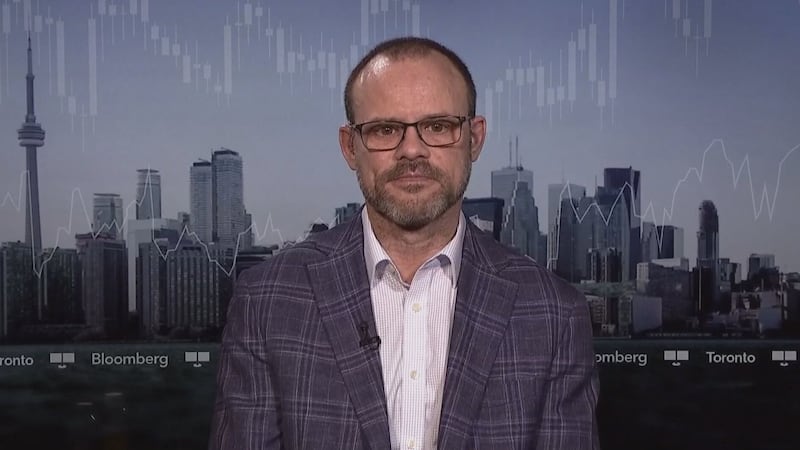
Read the full transcript below:
ANDREW: We get an interest rate announcement from the Bank of Canada tomorrow. Let’s get more from Jason Daw, head of North America rates strategy at RBC Capital Markets. Jason, thanks for giving us the time. Just remind us, what is the market betting on from the Bank of Canada tomorrow?
JASON: Well, for this meeting tomorrow, the market is priced for nothing, so there are no expectations for a rate change. As we go further into the year, the market is looking for the bank to possibly raise rates in the second half.
ANDREW: Right. So we get this news at 9:45 a.m. Eastern time tomorrow, and there are eight policy decisions. The bank schedules eight each year. Later on in the year, do you, or does the market, anticipate any change in rate policy?
JASON: Well, our base-case scenario is that the Bank of Canada is on hold for the duration of 2026, that they would start raising interest rates in 2027. But there is a risk that those hikes get brought forward into the second half of this year, and potentially that tightening cycle starts in the back half of this year. When you think about the other policy options, I think the chance of rate cuts is pretty low at this point, given how the economy has been evolving.
ANDREW: The oil-induced inflation — I know that’s the $60-million question, or $60-billion question. How long will this last, this jump in energy prices?
JASON: That is the very uncertain aspect of what’s happening in the Middle East. We know that oil prices are pushing towards the highs they had a few weeks ago. And you know what that means for Canada — it is a complicated outlook. People tend to think that high energy prices, high oil prices, are good for the Canadian economy, but when you think about all the different factors — how it affects consumers, how it affects businesses, all the economic agents across the economy — the net impact could ultimately be close to neutral. Maybe it’s a small positive, maybe it’s a small negative. We know headline inflation has gone up. Gasoline prices at the pump are higher. That has induced a big jump in headline inflation, but whether that filters down through the supply chain into core prices, that is the unknown. And we think, at least with the current state of the economy, with some excess capacity in product and labour markets, that there probably won’t be a big inflationary impulse to the broader economy.
ANDREW: So the Canadian economy ticking along right now, but the growth rate below two per cent. Would the bank, in theory, like to see higher growth?
JASON: There are a lot of constraints at the moment, and to be honest, growth around 1.5 per cent is a good outcome for Canada. Last year it was around 1.7, Q1 we’re tracking around 1.5. This is a good outcome, given the trade shocks and particularly what’s been happening with population growth. Population growth was zero last year. It’s going to be zero this year. One to two per cent GDP — that’s a good outcome.
ANDREW: That’s interesting. So things could be a lot worse. The government talks a lot about affordability and does things like cut excise tax on fuel, for example, temporarily. Is there much the government can really do on that front, though?
JASON: The excise tax reductions are helpful. There can be other targeted measures to low- and middle-income households. They can definitely cushion the blow, but they can’t fully solve it, and neither can monetary policy, to be honest.
ANDREW: What is your take on the Canadian dollar? Can you give us your base case for our currency?
JASON: Well, the currency is pushing up to the highs we’ve seen over the past year. Energy prices are definitely helping. Rate differentials could be moving more in Canada’s favour if the Bank of Canada did start raising interest rates. And we had a risk-off scenario during the U.S.-Iran war — that’s starting to be dialled back, and people are questioning whether they want to be long U.S. dollars. It seems like the market is starting to gravitate to being short. So over the medium term, maybe there’s a little bit more upside for the currency. But we also have to understand that over the past year, we have been bounded in some pretty tight ranges.
ANDREW: And just finally, it sounds like you’re not anticipating a significant move in mortgage rates — longer-term mortgage rates?
JASON: Mortgage rates are going to be related to the market’s expectations for the Bank of Canada. So if they’re on hold this year, if the market is only pricing a modest hiking cycle, then maybe there’s a little bit of upside, but not too much necessarily.
ANDREW: Thank you very much indeed. Really appreciate it. Jason Daw, head of North America rates strategy at RBC Capital Markets.
---
This BNN Bloomberg summary and transcript of the April 28, 2026 interview with Jason Daw are published with the assistance of AI. Original research, interview questions and added context was created by BNN Bloomberg journalists. An editor also reviewed this material before it was published to ensure its accuracy and adherence with BNN Bloomberg editorial policies and standards.

