Celestica delivered strong quarterly results and raised its outlook, but shares declined as broader concerns around artificial intelligence growth weighed on investor sentiment.
BNN Bloomberg spoke with Diana Avigdor, vice-president, portfolio manager and head of trading at Barometer Capital Management, about the reaction to Celestica’s results and how positioning is shifting across sectors including rails and financials.
Key Takeaways
- Celestica reported strong earnings and improved visibility, but its stock declined amid broader concerns about AI growth and sector sentiment.
- A report on weaker-than-expected growth at OpenAI weighed on technology stocks and suppliers across the AI ecosystem.
- Investors are increasingly focused on results from heavy capital spending, rather than future expectations alone.
- Portfolio positioning has shifted, with cash reduced to about 10 per cent and redeployed into financials, rails and select equities.
- Market volatility, inflation concerns and price action remain key drivers of investment decisions, with flexibility to raise cash if conditions worsen.
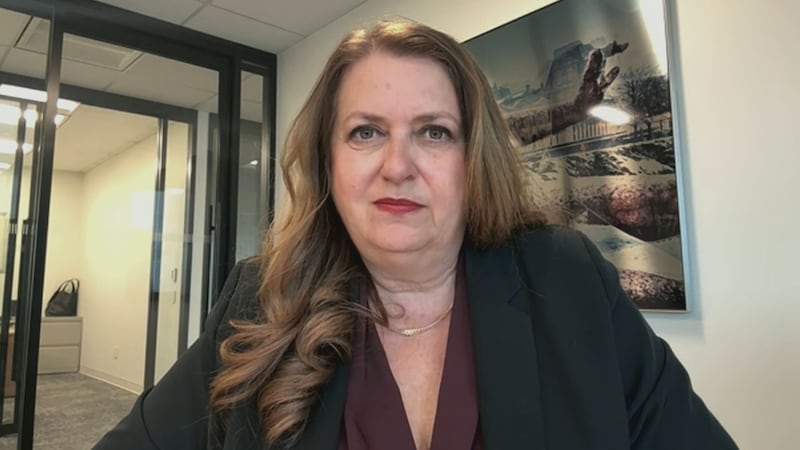
Read the full transcript below:
ANDREW: Well, let’s take a closer look now at Celestica, just not delighting investors sufficiently, it seems, even though they beat in the latest quarter. Let’s get more from Diana Avigdor, vice-president, portfolio manager and head of trading at Barometer Capital Management. Diana, great to see you. Thanks for joining us.
DIANA: Thanks, Andy. Treacherous markets today.
ANDREW: It’s not a great day for AI sentiment. We heard OpenAI posting slower growth. Is this just one of those days, or do you read a lot into this Celestica selloff?
DIANA: You know, it coincides with an unfortunate article in The Wall Street Journal that is talking about ChatGPT apparently missing its internal growth targets. So it would have put the whole AI space and its suppliers into a little bit of a tailspin today, even if Celestica did not report. It is what we call on the trading desk an “adult swim only” day, because there are so many moving parts. Celestica reported a great quarter. I would bring you back to the previous quarter, where they also reported a great quarter and traded down. But what took them down last quarter was that they went from one to six per cent spending on capex. Now the market these days doesn’t trade on optimism alone. It wants to see results from this spending. And last, when I left the desk to come and talk to you, the stock was coming off its lows. I don’t know whether it’s still there, but on the call, the company said that they have much greater visibility out to 2027. So these guys are getting orders, and that is important in the context of this article that was out there talking about OpenAI not meeting targets. Because, you know, a year ago, when all the headlines were around all this capex spending, it was a bit of a head-scratcher, because those are plans, and now the market wants to see the actuals. So we’ll see what the Mag Seven report tomorrow. You mentioned it, and Apple to a lesser extent on Thursday. But I think that’s going to paint some of the picture.
ANDREW: Just to switch to an older industry, rails. CSX is a stock, the U.S. carriers on your radar. Is that a stock you’ve been buying lately, Diana?
DIANA: Yeah, so you know, we spoke last time in our interviews, we were in about 30 per cent cash. We’re now down to about 10 per cent cash. We’ve redeployed money into financials and rails, CSX being one of them, and that was a good investment, because they printed a great quarter. They raised revenue and they raised margin guidance, and this came at a time when there is elevated fuel input. So for them to be able to raise guidance despite this headwind is a testament to their operational efficiency and a well-managed company.
ANDREW: What about the Canadian rails, CP and CN? Do you like those as well?
DIANA: Yeah, I think that the whole sector is benefiting from a resurgence in this mode of transport. And I think that if you look at the charts of all of the rails, you will see that they’re also doing very, very well.
ANDREW: What about the banks? Start off with the U.S. banks, if you would, Diana. Are they attractive right now? Do they look like decent value for the growth you’re getting?
DIANA: Yeah. So we are long Citigroup and Morgan Stanley, and some of the Canadian banks as well. You know, you have this tech sector that is very high growth, but lots of moving parts. And you have these banks that have printed in the U.S. an EPS beat of about six per cent. They increased loan growth in aggregate about two per cent, and one of the good things there is that some of the loan growth came from commercial, which bodes well for the local economy. Now this is a good setup for the Canadian banks when they are going to report, probably another month or so. We could see some higher reserves being built, given a softer Canadian economy. But valuation-wise, they’re a little bit on the high side. But in this environment, which is really shaped by volatility, inflation concerns and shifting investor sentiment, the dividend growth, dividend stability, and generally cost control and discipline — we like the financials here, and we continue to be invested there.
ANDREW: Leave us with a final thought, Diana. Is there something that investors are ignoring for the rest of the year? Is there some factor that you think people should be paying more attention to? Does anything leap to mind?
DIANA: You know, Andy, we speak about this many times. We continue to watch pricing — how stocks trade — as an important factor. It could be a great story, and you can handle a little bit of downside for all investments. But we’re not here to pick bottoms and tops. If the pricing doesn’t work, if this market — and it’s been very volatile — what has happened over the last month has been really quite incredible. In the face of all the geopolitical news and all that, for stocks to make new highs at this time, it’s really quite incredible, and it’s driven by earnings. But the pricing and how stocks trade matters to us, so we will go back to 30 per cent cash if conditions don’t behave. And I think that’s a very important input.
ANDREW: Thank you very much, Diana. Always great hearing from you.
DIANA: Andy, I just want 10 more seconds. I want to say on air, thank you very much for everything that you’ve done for all your guests. I hear that the next couple of days are your last ones. You are the OG of BNN, an incredible interviewer. You’ve made all your guests very comfortable. Thank you, and I hope to see you around. Thank you for all of us.
ANDREW: Thanks, Diana. That’s very kind. Diana Avigdor of Barometer Capital Management. I really appreciate it.
---
This BNN Bloomberg summary and transcript of the April 28, 2026 interview with Diana Avigdor are published with the assistance of AI. Original research, interview questions and added context was created by BNN Bloomberg journalists. An editor also reviewed this material before it was published to ensure its accuracy and adherence with BNN Bloomberg editorial policies and standards.

