With the April 30 tax filing deadline approaching, Canadians are being urged to file on time and avoid common mistakes that could lead to missed refunds or penalties. Experts say failing to report income or skipping a return altogether can have lasting financial consequences.
BNN Bloomberg spoke with John Natale, Head of Tax, Retirement & Estate Planning Services, Wealth at Manulife Investment Management, who outlined key filing errors, overlooked credits and recent tax changes affecting Canadians.
Key Takeaways
- Not reporting all income or failing to include every tax slip can trigger penalties and reassessments.
- Skipping a tax return altogether can mean losing access to government benefits such as GST/HST credits and child-care support.
- Commonly missed deductions include child-care costs, moving expenses, charitable donations and certain investment-related fees.
- The lowest federal tax bracket has been reduced, but this also lowers the value of some tax credits.
- Programs like the first home savings account offer tax advantages, while alternative minimum tax changes may affect higher-income filers.
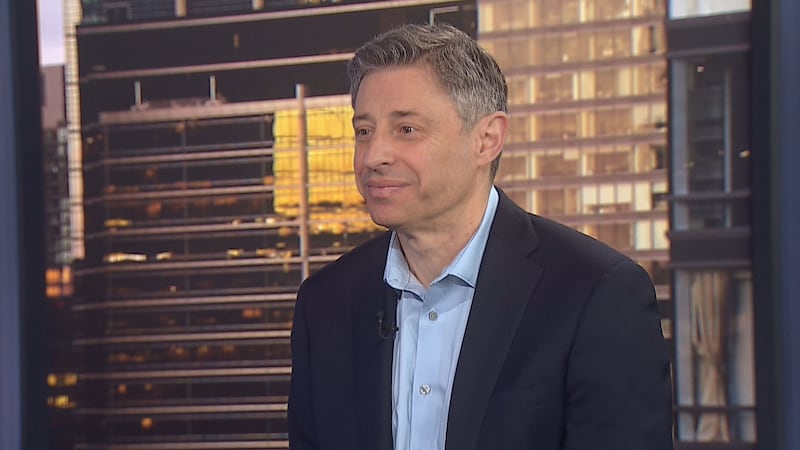
Read the full transcript below:
ANDREW: The deadline to file your taxes is Thursday. Let’s get some last-minute tips from John Natale, head of tax, retirement and estate planning services in wealth at Manulife Investment Management. John, thank you very much indeed for joining us.
JOHN: Thanks for having me, Andy.
ANDREW: Give us one or two mistakes people make when they’re filing, please.
JOHN: Well, I think one of the biggest mistakes that people make is not having all their information, their tax slips, eligible expenses and so forth, and missing out on those. So you want to make sure you claim everything on your tax return to maximize your deductions and credits, but you also want to make sure you don’t miss reporting any income, because obviously the taxman is going to come after you for that, and they have all those slips.
The other thing that I think a lot of people don’t realize, if you’re in a lower tax bracket, you may think, “Well, I’m not going to have to pay any taxes anyway, so what’s the point of filing my tax return?” There can be significant value to filing your tax return. In fact, the government has introduced a program for low-income earners for automatic tax filing, because you may be missing out on government benefits or tax credits. Or, if you have a little bit of earned income, you may be generating some RRSP contribution room that you can use in the future when it’s most tax advantageous for you.
ANDREW: I think the government is mounting something of a push to get these people who feel, “Well, I’m outside the system, I don’t need to file,” to get them to file, because they are sometimes lower-income people who are missing out.
JOHN: Absolutely. I think that’s probably the largest cohort of people who are missing out on filing their tax return. So the government, I do think it’s a good initiative to try and help and encourage individuals to file their tax return to make sure they’re not missing out on these government benefits that have been introduced for a specific reason. If you’re below a certain tax bracket, the government has introduced this program to allow for automatic filing.
ANDREW: Yeah, I wonder why we couldn’t just do automatic filing across the board for Canadians. I know it might not work for entrepreneurs, but people who are in jobs — couldn’t it just be automatic? I would love that.
JOHN: I think if we compare Canada versus other countries around the globe, generally speaking, we’re behind the curve a little bit on that. Our tax system is very complicated. There are lots of people complaining about the complexity and the amount of work required to file a tax return. It keeps a lot of us in the tax profession employed — that’s a good thing — but I think for the average Canadian, they would appreciate a little bit of simplicity when it came to filing their tax return.
ANDREW: Especially somebody who’s in a regular job and they don’t really have much in the way of special deductions.
JOHN: One hundred per cent. I couldn’t agree more, Andy.
ANDREW: Remind us of a couple of deductions or credits that people are at risk of missing out on.
JOHN: Well, if you don’t file your tax return, you could miss out on a GST/HST credit, you could miss out on child-care benefits. For other individuals, you want to pay attention to things like child-care expenses, which could include even summer camps. Interest expenses — make sure you claim all your interest expenses — investment counselling fees, moving expenses if you move more than 40 kilometres closer to your job.
Now you do want to be careful if you get reimbursed by your employer for those moving expenses, that would be double-dipping. Charitable receipts is another one as well — make sure you claim your charitable receipts and have those on hand in case you get audited.
ANDREW: Are there any notable tax rule changes we should watch out for here?
JOHN: This year, the 2025 tax year, was actually a pretty quiet year, and personally I’m grateful for that. I think the biggest change that applies to almost everybody is the federal government reduced the lowest tax rate. It should go down to 14 per cent, but it’s 14.5 per cent for 2025 and will go down to 14 per cent in 2026.
That is good news because it reduces the tax you pay in the lowest tax bracket, but there is a counterpoint — it’s a double-edged sword — it also reduces the amount of tax credit you get for some federal tax credits.
ANDREW: Remind us what they’ve done with this alternative minimum tax, which is the system designed to ensure that people pay at least some tax.
JOHN: The alternative minimum tax is not an easy thing for people who are not in the tax field to understand. It’s basically a second layer of tax. We all file a regular tax return, and there’s this other second set of rules to calculate your tax. It applies to individuals and certain trusts.
What the government is trying to do is, if you’ve taken advantage of certain deductions, exemptions or credits and they feel you haven’t paid your fair share of tax, they apply this other set of rules. They’ve changed those rules recently. For the average Canadian, it’s probably easier to avoid alternative minimum tax, but for higher-income individuals, there may be greater exposure.
The big thing that just happened recently — Bill C-15 was passed about a month ago — is they confirmed that for investment counselling fees, for AMT purposes, you only get a 50 per cent deduction. That’s going to apply to 2024 and 2025 tax returns. So there are individuals who may have to go back and refile their 2024 return or adjust it.
ANDREW: The government a few years ago brought in this pretty generous benefit for first-time homebuyers. Are you noticing a lot of people taking advantage of that?
JOHN: Are you talking about the first home savings account?
ANDREW: Yes, that’s the one.
JOHN: Yeah, absolutely. That is — to borrow someone else’s quote — almost like the wonderful birth child of a TFSA and an RRSP, because you make a contribution to your FHSA. You have an $8,000 annual limit and a $40,000 cumulative limit, but you get a deduction for that.
If you qualify as a first-time homebuyer, you can withdraw it and not have to pay tax on the withdrawal. And unlike the homebuyers’ plan under the RRSP rules, you don’t have to pay it back. So it is a fantastic strategy.
ANDREW: What if you build up money in it, though, and you end up not buying a house? What happens?
JOHN: There are options. You can transfer it over to your RRSP on a tax-deferred basis.
ANDREW: That’s pretty sweet. You get the deduction going in like an RRSP, but you have flexibility when taking the money out.
JOHN: You do. It is an amazing tax planning strategy.
ANDREW: John, thank you very much.
JOHN: Andy, thank you. And I just want to congratulate you and wish you all the best in your retirement. I did notice your April 30 date — I found that interesting from a tax perspective.
ANDREW: Oh yeah, my advisers in Switzerland said we’d do it like that. John, thank you very much.
JOHN: Thank you for having me.
ANDREW: John Natale, head of tax, retirement and estate planning services in wealth at Manulife Investment Management.
---
This BNN Bloomberg summary and transcript of the April 28, 2026 interview with John Natale are published with the assistance of AI. Original research, interview questions and added context was created by BNN Bloomberg journalists. An editor also reviewed this material before it was published to ensure its accuracy and adherence with BNN Bloomberg editorial policies and standards.

