AI-related stocks have faced bouts of volatility, but strong corporate earnings across sectors continue to underpin investor confidence.
BNN Bloomberg spoke with Sadiq Adatia, CIO at BMO Asset Management, who says resilient consumer demand and broad earnings growth could drive a more diversified global rally despite geopolitical risks.
Key Takeaways
- Broad-based earnings strength, supported by resilient consumer spending, is expected to help push equities to new highs.
- AI stocks remain volatile but continue to benefit from strong earnings, with valuations resetting after recent pullbacks.
- Markets may be underestimating geopolitical and oil-related risks, which could still affect inflation and interest rate timing.
- Rate cuts are being pushed further out, reducing the near-term outlook for bonds and interest rate-sensitive sectors.
- A more diversified rally is unfolding, with continued strength in the U.S. alongside growing opportunities in emerging markets.
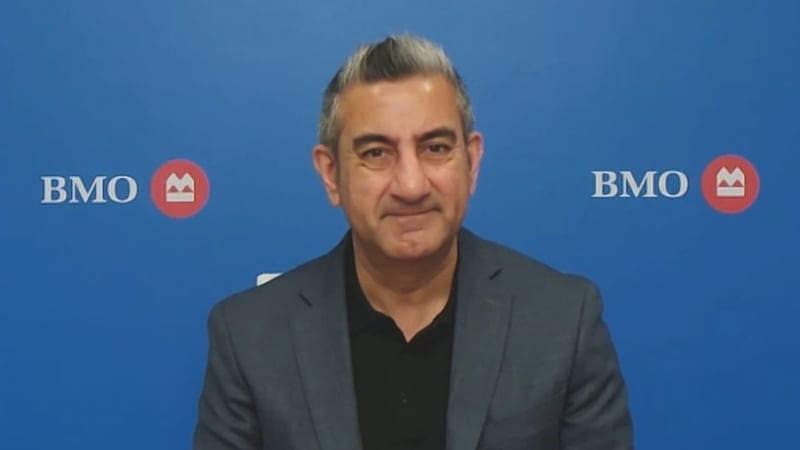
Read the full transcript below:
ANDREW: A huge week for corporate earnings, and efforts continue to reach a permanent or semi-permanent ceasefire in the Persian Gulf. Our guest points out that strong earnings across the broad markets could still push stocks to new highs this year, and we could be in for a more diversified global rally. Let’s get more from Sadiq Adatia, CIO at BMO Asset Management. Sadiq, great to see you as ever.
SADIQ: Thanks for having me.
ANDREW: The big story seems to be, as you highlight, corporate earnings, certainly south of the border, holding in just fine.
SADIQ: Yeah, we’ve got some big earnings coming up this week, obviously on the tech side, but overall we have seen pretty strong earnings across the board, with little conversation about the fact that the inflation story, or obviously oil prices, is significantly impacting earnings. And I think that’s important, because when we think about the broader earnings story, it comes down to how consumer spending is going to react to what’s going on. And so far, short-term noise is there, but not really a lot that’s determining a big impact on the earnings front. So we expect things to continue to play out this way. Again, it’s on the premise that we don’t see a long, drawn-out scenario here, but the way things are progressing at the moment, it should have minimal impact on earnings, and that should be very positive and support valuations and where markets are today.
ANDREW: Every so often, though, the market seems to get cold feet about AI and the massive amounts that’s being spent?
SADIQ: Yeah, that’s a great question. If you remember last year and the early part of this year, there was a lot of concern about whether AI was a bubble and whether valuations were getting too extreme. And we did see pressure on those names. But when the U.S.-Iran conflict started, we saw a lot of markets pull back, and AI stocks were one of those, so valuations came down quite a bit. What we’ve seen since then is that people have jumped back into those names and they have taken off again. So the valuation part was partly solved by this Iran situation. And when you think about the oil situation and maybe some inflation, the AI story really is not impacted tremendously. So that might be a safe-haven spot for the time being. But the question will be, once we start to see a resolution and oil starts to move again, does that broadening-out story continue to play out? Do people start moving away from AI stories again and back to the broader economy? We’ll see that gradually over time, but I still think earnings are going to be relatively strong here, and that should support continued movement in the tech sector in particular.
ANDREW: You’re broadly overweight the U.S. equity market.
SADIQ: Yeah, we’ve remained overweight the U.S. for quite a bit of time, but we have taken profits last year and earlier this year as well, as we are also broadening our story into emerging markets, for instance. But we still believe the U.S. is a strong economy with strong companies. Again, we’ll see from the earnings story that that’s going to be relatively strong, and the U.S. consumer looks really good. Even though we’re seeing elevated oil prices, don’t forget the U.S. is now a net exporter of oil, so it’s not as impactful on their economy today as it may have been five or 10 years ago. So when you take that into consideration and look at the global landscape compared to international markets, the U.S. looks significantly stronger. So we would tilt more to the U.S. and less to international markets, but we would still be tilting quite a bit to emerging markets.
ANDREW: What about bonds? Because I see that you’re slightly underweight utilities and real estate. Sadiq, are you slightly apprehensive that bond yields are going to go up and bond prices drop?
SADIQ: Yeah, I wouldn’t say we think bond yields are going higher, just that we have seen interest rate cuts get deferred out a little bit more. Coming into the year, we were expecting Fed rate cuts, and we still believe in that, but we think it’s deferred quite a bit now and might even run into 2027. So with that scenario, that’s not as bullish for bonds. On the utility side, we’ve seen valuations go up a little bit there, and the same with real estate. Given that we are going to see deferral of rate cuts, that also has an impact on the real estate market. So generally, where we’re tilting our dollars on the sector side is technology and financials. As you said earlier, underweight real estate, utilities and even consumer staples. We think those have gotten a little expensive as well. We really want to focus on growth areas, and those are the areas where we see a lot of growth. On the inflation side, I don’t think inflation will be a big problem, but it does cause people to wait and see the impact of oil. That means interest rate decisions have to get pushed out further, and that is not necessarily positive for bonds.
ANDREW: You reckon Canadian stocks are a bit cheaper than their American counterparts, but you are neutral Canada?
SADIQ: Yeah, for the last few years we have been underweight Canada, and I think rightfully so, just from an economic perspective. Now Canada has a great tailwind because of what’s going on on the energy side, and obviously the last few years on gold. Financial stocks have had a great run as well. When we look at the underlying economy, we’re still a little bit concerned there. Oil prices are going to give a boost from the standpoint of earnings broadly in the oil sector, and of course to Canada’s economy, but there will be headwinds on the consumer side as a result. Carney’s excise tax removal is a positive to help on the consumer side, but there’s still the USMCA deal, and who knows what that looks like a year from now. That will have a very big impact on how Canada’s economy moves forward. If it’s positive, we could see Canada bounce back strongly. If not, it could impact the Canadian dollar, growth and employment. So all these things are still on pause at the moment, which holds us back from being exceptionally bullish on Canada, because no one is really investing a lot in Canada at the moment until the USMCA deal gets done. And while what Carney has been doing is positive, the timing of a USMCA negotiation is going to make things a little trickier as well. That puts a cloud over Canada from that side. But valuations look really good, and if we had another downturn, I think Canada outperforms because of its energy and exposure to commodities, which provides a defensive edge.
ANDREW: Sadiq, thank you very much indeed.
SADIQ: Thanks for having me.
ANDREW: Sadiq Adatia is chief investment officer at BMO Asset Management.
---
This BNN Bloomberg summary and transcript of the April 28, 2026 interview with Sadiq Adatia are published with the assistance of AI. Original research, interview questions and added context was created by BNN Bloomberg journalists. An editor also reviewed this material before it was published to ensure its accuracy and adherence with BNN Bloomberg editorial policies and standards.

